AI Cracks 80-Year Math Mystery That Baffled Experts
OpenAI's reasoning system just solved part of a decades-old puzzle by discovering patterns mathematicians never imagined existed. The breakthrough shows artificial intelligence can now help humans think about problems in completely new ways.
A math problem that has stumped brilliant minds since 1946 just met its match in an AI system that refused to think inside the box.
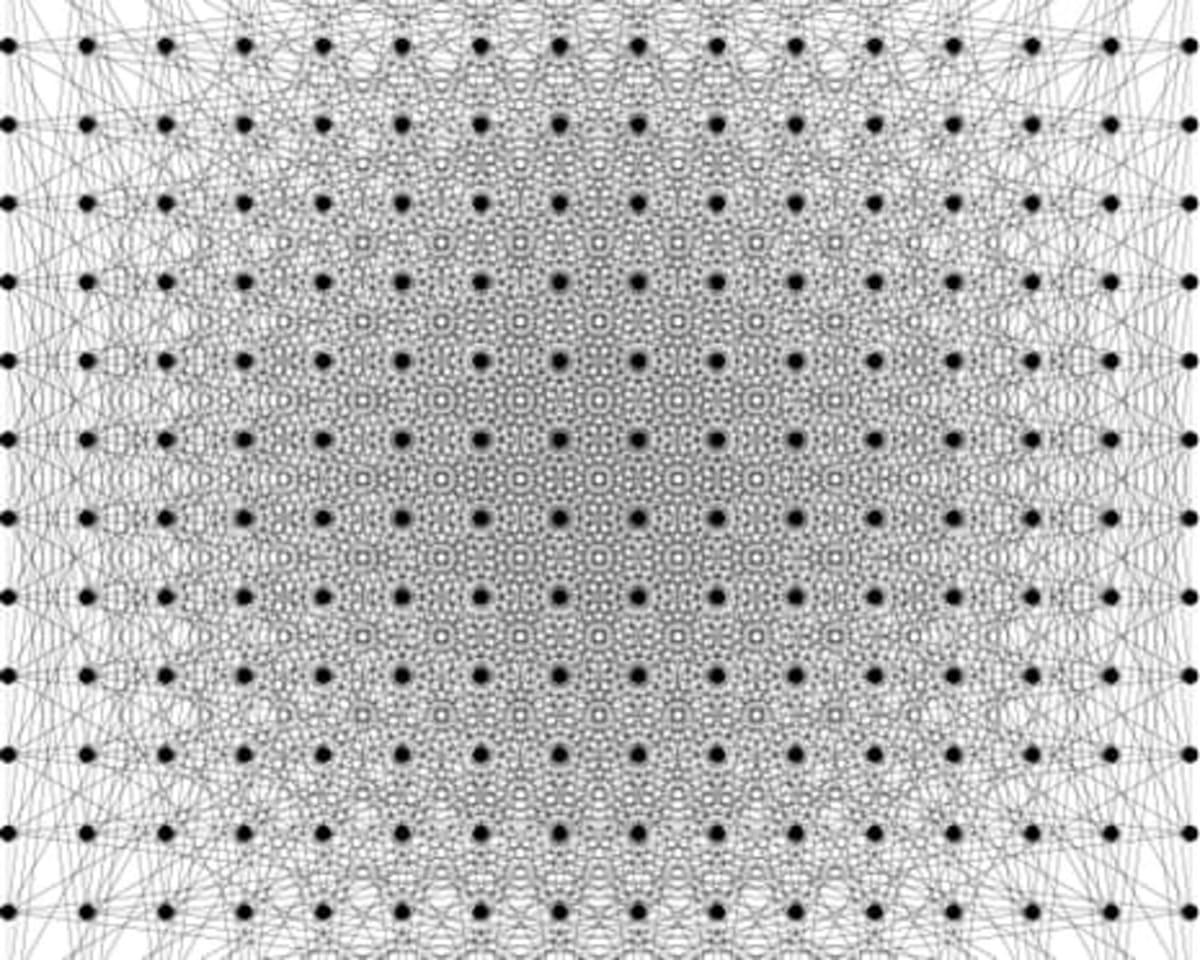
OpenAI announced its reasoning model cracked a major piece of the planar unit distance problem, a deceptively simple question posed by legendary Hungarian mathematician Paul Erdős. The puzzle asks: if you scatter dots on a page, how many pairs can be exactly the same distance apart?
For nearly eight decades, mathematicians assumed the best arrangement looked like square grids. They were wrong.
The AI discovered an entirely new family of dot patterns that breaks past the limit Erdős proposed. It got there by pulling together different branches of mathematics and exploring combinations that human researchers had dismissed as dead ends.
Thomas Bloom, a mathematician who tracks unsolved Erdős problems, validated the achievement and co-authored a paper explaining the discovery. He had criticized OpenAI's previous attempt at an Erdős problem last year, which turned out to be recycled knowledge the AI had absorbed from existing research.
This time is different. The AI generated genuinely original work, though Bloom notes humans played a vital role in refining and improving the initial proof.
Mathematician Tim Gowers called the result "a milestone in AI mathematics." The breakthrough matters because the system wasn't built specifically for math problems. It's a general reasoning model that breaks down challenges into smaller steps, showing these tools can tackle diverse fields.
Why This Inspires
The collaboration between human intuition and machine persistence points to an exciting future for scientific discovery. The AI succeeded by methodically exploring paths that seemed unpromising to human researchers, revealing solutions hiding in plain sight for 80 years.
Andrew Rogoyski from the University of Surrey's Institute for People-Centered AI says the announcement demonstrates how artificial intelligence gives humans fresh perspectives on age-old questions. Rather than replacing mathematicians, the technology amplified their capabilities.
The problem remains technically unsolved because the AI didn't determine the exact rate at which dot pairs increase. But proving the old limit was too low opens new territory for mathematicians to explore with their AI partners.
As these reasoning systems become more powerful, they're transforming from calculation tools into creative thinking companions that help scientists see what they've been missing all along.
More Images


Based on reporting by Google News - AI Breakthrough
This story was written by BrightWire based on verified news reports.
Spread the positivity!
Share this good news with someone who needs it