AI Cracks 80-Year Math Problem Experts Called Impossible
An AI model just solved a mathematics puzzle that stumped human experts for eight decades, marking the first time artificial intelligence has independently cracked a major open problem in math. The breakthrough shows AI can now tackle frontier research questions that require genuine creativity.
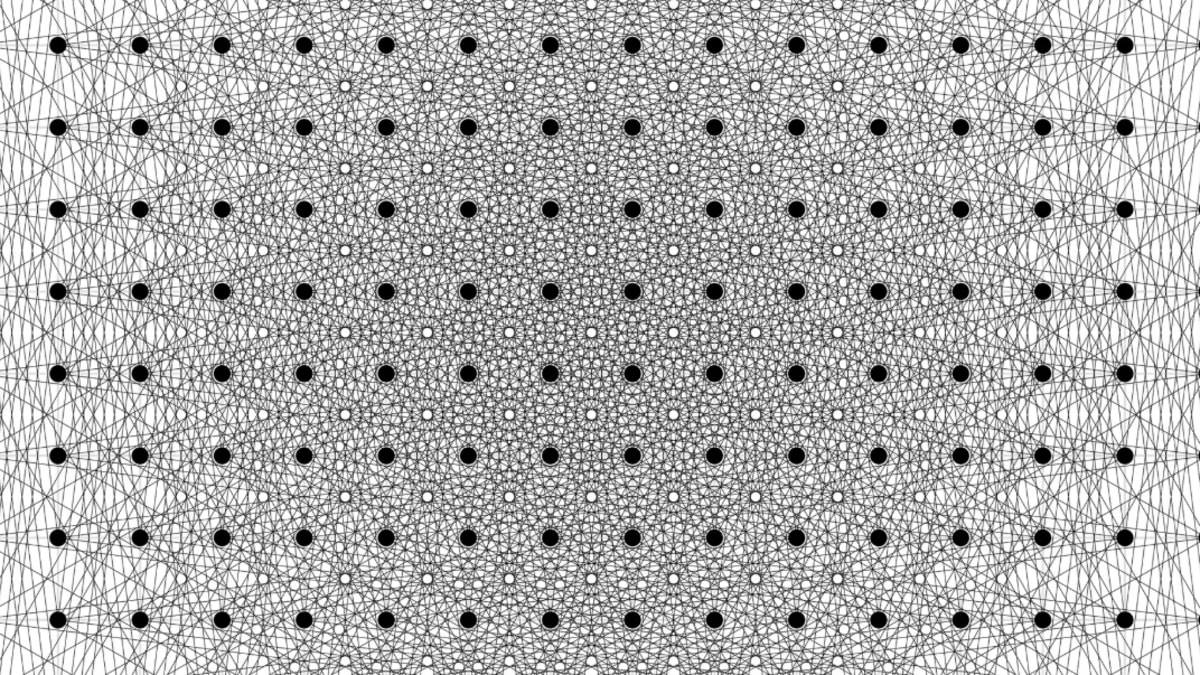
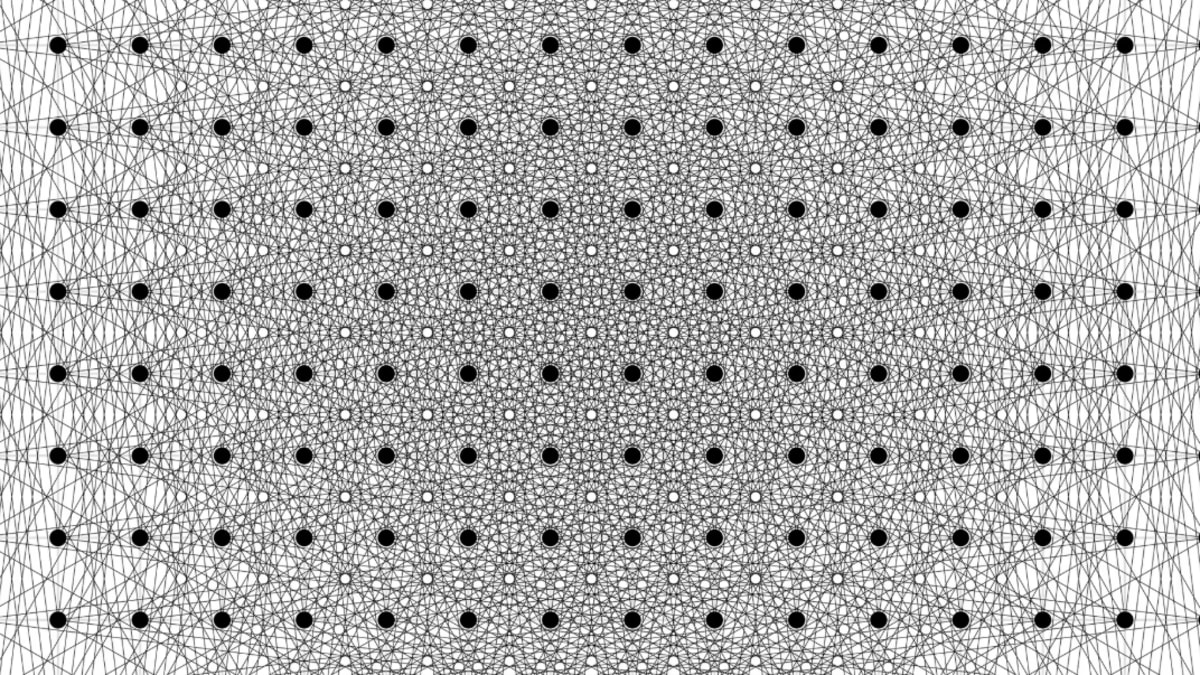
For 80 years, mathematicians wrestled with a deceptively simple question: How many pairs of points can you fit on a flat surface exactly one unit apart? This week, an AI model found the answer.
Hungarian mathematician Paul Erdős posed the planar unit distance problem in 1946. Humans set the best upper limit in 1984, and there it stayed for four decades.
OpenAI announced last week that one of its AI models cracked the problem, discovering new arrangements that broke past the longstanding limit. The model wasn't even trained specifically for mathematics.
"This proof is an important milestone for the math and AI communities," OpenAI representatives wrote. The AI used a completely novel approach that surprised even expert mathematicians in the field.
What makes this different from previous AI achievements is that the model solved the problem autonomously. It didn't just calculate faster or search harder through known methods. It created a genuinely new mathematical approach.
The AI pulled ideas from algebraic number theory and applied them to geometry in ways human mathematicians hadn't considered. "It came as a great surprise that these concepts have implications for geometric questions," OpenAI noted.
Why This Inspires
Human mathematicians reviewed and confirmed the AI's work, then wrote a companion paper explaining the context and implications. Their role proved essential in refining and improving the original proof.
"While the original proof produced by AI was completely valid, it was significantly improved by the human researchers," wrote Thomas Bloom, a mathematician at the University of Manchester who maintains the Erdős problems website.
Tim Gowers, a professor at the University of Cambridge, called it groundbreaking. "If a human had written the paper and submitted it to the Annals of Mathematics, I would have recommended acceptance without any hesitation," he wrote. "No previous AI-generated proof has come close to that."
The breakthrough suggests AI could become a powerful research partner for scientists tackling other unsolved problems. Rather than replacing human mathematicians, the technology enhanced what they could accomplish together.
One 80-year-old puzzle down, and a new era of human-AI collaboration just beginning.
More Images

Based on reporting by Live Science
This story was written by BrightWire based on verified news reports.
Spread the positivity!
Share this good news with someone who needs it