AI Cracks Rules of 2,000-Year-Old Roman Board Game
A mysterious carved stone found in the Netherlands has been identified as an ancient Roman game board, with AI successfully recreating its long-lost rules. Players can now download and play the same game Romans enjoyed centuries ago.
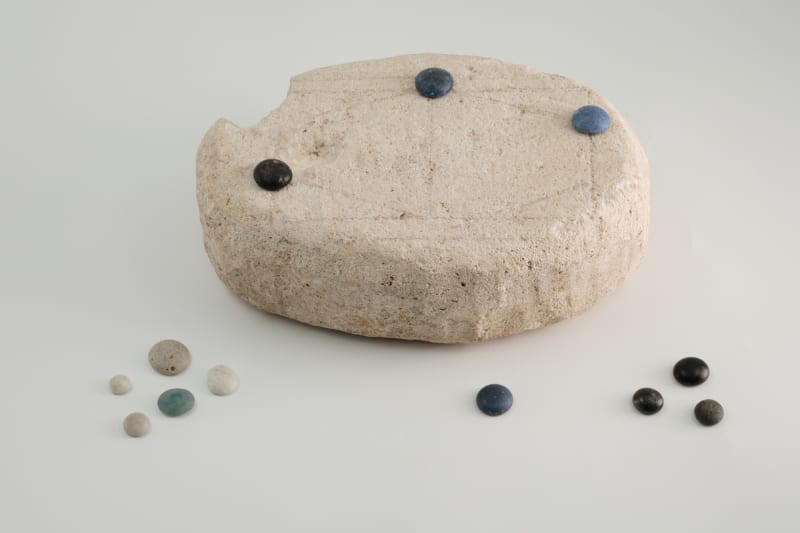
A carved stone that puzzled Dutch archaeologists for over a century has finally revealed its secrets, thanks to artificial intelligence that brought a forgotten Roman game back to life.
The white limestone board was discovered near Roman baths in Heerlen, Netherlands, back in the 1890s. For decades, experts knew it was something special but couldn't figure out exactly what they were looking at.
The stone's pattern of carved lines didn't match any known Roman games. But telltale signs of wear in specific spots suggested people had played it intensively, moving tokens across its surface over and over again.
"The stone is very thick and has a neat finish," said museum curator Karen Jeneson. "It may have been fitted into the surface of a table at one time, perhaps at an inn where people came together to play games and gamble."
The breakthrough came when researchers created 3D scans of the stone. The scans revealed that some lines were carved deeper than others, showing which moves players made most often during gameplay.
Then came the truly innovative step. Researchers at Maastricht University fed the stone's pattern into an AI system called Ludij, training it on rules from a hundred ancient and medieval games.
The AI played thousands of games against itself, testing different rule combinations. Eventually, it discovered a set of rules that created the exact same wear pattern found on the original stone.
Why This Inspires
This story shows how cutting-edge technology can unlock secrets from our past. The same AI tools shaping our future are now giving us windows into how people lived, played, and connected thousands of years ago.
The game appears to focus on blocking your opponent's tokens, a strategy that remained popular throughout the Middle Ages. Romans gathering at inns were playing the same types of competitive games we enjoy today, reminding us that the desire for friendly competition spans centuries.
Researcher Dennis Roemer cautioned that while Ludij found rules that fit the evidence, Romans might have played slightly differently. Still, the reconstruction gives us the closest thing possible to sitting down at a Roman tavern for game night.
The Romeins Museum has made the game freely available online so anyone can download and play it. A game that went silent for nearly two thousand years is now being played again, connecting us directly to the Romans who carved those lines into limestone and gathered around tables to challenge their friends.
Based on reporting by Dutch News
This story was written by BrightWire based on verified news reports.
Spread the positivity!
Share this good news with someone who needs it