AI Creates DNA Sequences to Reactivate Cancer-Fighting Genes
Scientists built an AI that designs synthetic DNA switches capable of turning genes on and off in specific cells, potentially transforming how we treat diseases like leukemia. In lab tests, these AI-generated sequences actually outperformed natural DNA at reactivating a protective gene in leukemia cells.
Scientists just taught artificial intelligence to write DNA code that could revolutionize gene therapy, and early tests show it works better than nature's own blueprint.
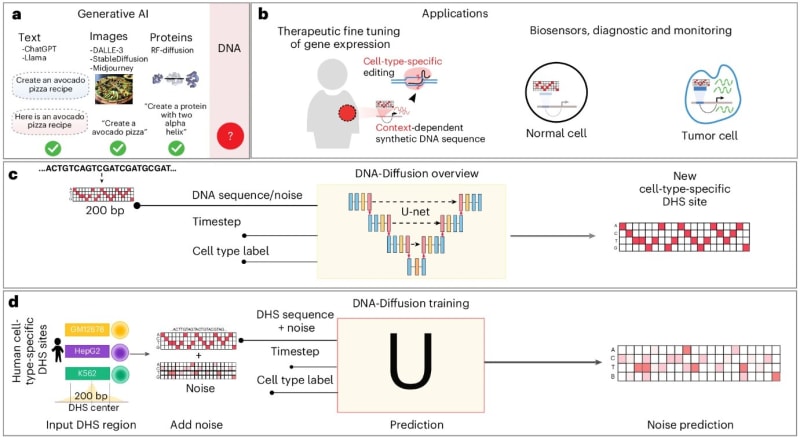
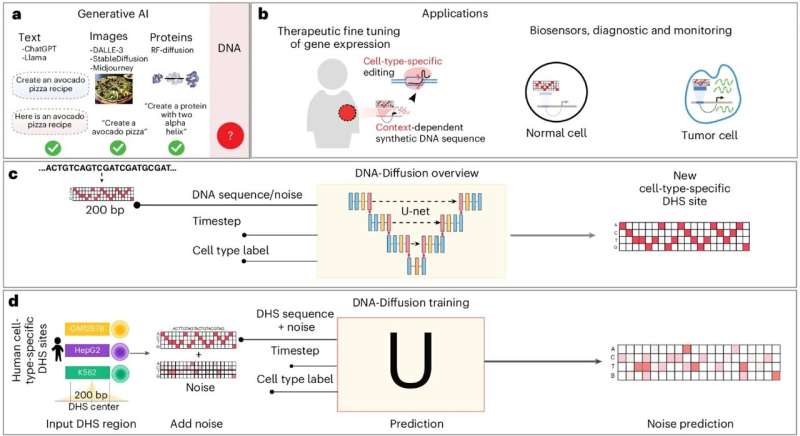
Researchers at the Broad Institute and Mass General Brigham created DNA-Diffusion, an AI model that generates tiny segments of DNA called regulatory elements. These sequences act like switches, controlling when and where genes turn on or off in the body. The team published their breakthrough in Nature Genetics this month.
The technology borrows from the same AI approach that powers image generators like DALL-E. Instead of learning patterns in pixels, this model learned patterns in DNA by analyzing thousands of genetic regulatory sequences from different cell types.
After training, the AI created more than 5,800 synthetic DNA switches. When tested in actual cells, these artificial sequences maintained their ability to control genes in specific cell types, exactly as designed.
The real test came with AXIN2, a gene that protects against chronic lymphocytic leukemia but often gets switched off in patients with this blood cancer. The researchers generated 60 synthetic sequences targeting this gene in B cells, the white blood cells affected by the disease.
Many of the AI-designed sequences did more than just work. They actually switched on the AXIN2 gene more effectively than natural DNA sequences, potentially offering stronger protection against cancer progression.
The cell-type specificity proved crucial. Sequences designed for B cells activated the gene successfully, while sequences designed for other cell types did nothing. This precision matters enormously for future treatments, ensuring therapies reach only their intended targets in the body.
Why This Inspires
This breakthrough addresses one of gene therapy's biggest challenges: getting therapeutic changes to happen in the right cells at the right time. Current gene therapies can modify DNA, but controlling where and when those modifications activate has remained difficult.
Lead researcher Luca Pinello explains it simply: "If you think about DNA as a language, you cannot master the language just by removing letters or inserting words into a sentence. To learn a language, we should be able to create whole new sentences."
The team is now expanding their model and exploring combinations with existing gene therapy technologies, including genome editors and viral delivery systems. Scientists worldwide are already working on ways to modify the genome therapeutically, and these AI-generated regulatory elements could make those treatments far more precise and effective.
The implications stretch beyond cancer. Any disease involving genes that need reactivating or silencing could potentially benefit, from genetic disorders to chronic conditions where gene activity plays a role in disease progression.
AI just learned to speak DNA fluently, and it might write better medicine than we ever could alone.
More Images


Based on reporting by Phys.org
This story was written by BrightWire based on verified news reports.
Spread the positivity!
Share this good news with someone who needs it