AI Cuts Battery Explosion Risk Without Retraining
Scientists developed AI that predicts battery health and explosion risk across any electric vehicle or storage system without needing new training for each setup. The breakthrough could make EVs and renewable energy storage far safer and more efficient.
Electric vehicles and renewable energy storage are about to get a lot safer thanks to a smart AI that knows when batteries are heading toward failure.
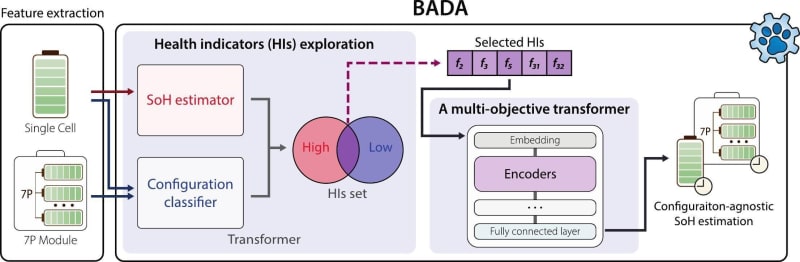
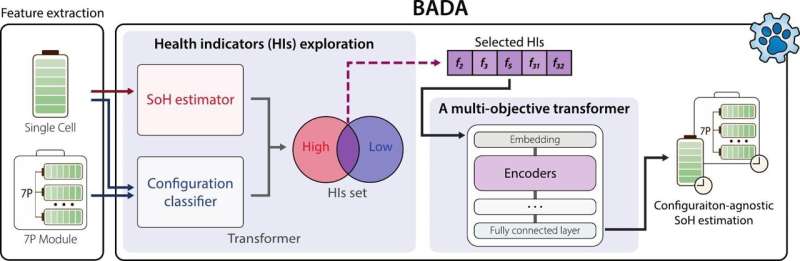
Researchers at South Korea's UNIST created an AI system that can predict battery health and explosion risk using only voltage, current, and temperature data. Unlike current tools that need to be retrained for every new battery configuration, this model works on everything from single cells to massive storage systems right out of the box.
The breakthrough matters because batteries are everywhere now. As more people drive electric vehicles and homes store solar energy, we need reliable ways to know when batteries are losing capacity or becoming dangerous. Current assessment tools waste time and money collecting new data and retraining for each battery type, creating dangerous gaps in safety monitoring.
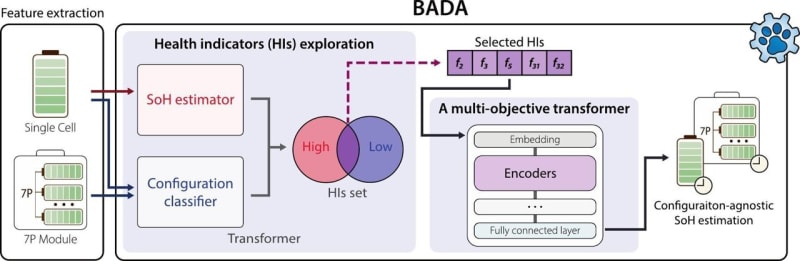
The AI uses the same transformer technology that powers ChatGPT to automatically identify five critical health signals from 62 different data patterns. These signals reveal a battery's true condition regardless of whether cells are connected in series, parallel, or complex combinations. The system essentially learned to see through the noise and focus on what actually matters for battery health.
Testing proved the approach works remarkably well. When researchers trained the AI only on data from single battery cells, it could still accurately predict the lifespan of a module containing seven connected cells. The prediction error dropped to just one-third of traditional methods, a huge leap forward in accuracy.
Professor Donghyuk Kim explained the system identifies genuine health signals that aren't affected by how batteries are connected. This means one versatile model can diagnose different battery systems reliably, from the pack in your electric car to massive grid storage facilities.
The technology arrives at a critical moment. Electric vehicle sales continue climbing while utilities install more battery storage to balance renewable energy grids. Both applications desperately need better safety monitoring, especially as aging batteries enter their high-risk years.
The Bright Side
Beyond preventing explosions, this AI could transform how we handle used batteries. The system makes it easy to assess whether retired EV batteries still have useful life in less demanding applications like home solar storage. That extends battery value and reduces electronic waste.
The technology also promises to make battery recycling more efficient by quickly identifying which components remain valuable. As battery production scales up globally, smart recycling will become essential for managing raw material costs and environmental impact.
The research team sees applications extending across the entire battery lifecycle, from manufacturing quality control to end-of-life processing. A single AI model that works everywhere could finally give us the universal safety monitoring that growing battery use demands.
One smart AI is about to make the electric future not just cleaner, but considerably safer for everyone.
More Images
Based on reporting by Phys.org - Technology
This story was written by BrightWire based on verified news reports.
Spread the positivity!
Share this good news with someone who needs it