AI Designs Virus From Scratch to Fight Superbugs
Scientists at Stanford used artificial intelligence to create a completely new virus that kills drug-resistant E. coli bacteria, opening doors for faster vaccines and personalized cancer treatments. The breakthrough combines AI genome design with precision DNA assembly, showing promise for tackling antibiotic resistance while raising important questions about biosafety.
Scientists have crossed a milestone in biology that sounds like science fiction: they've created a working virus designed entirely by artificial intelligence, and it could help save lives threatened by antibiotic-resistant infections.
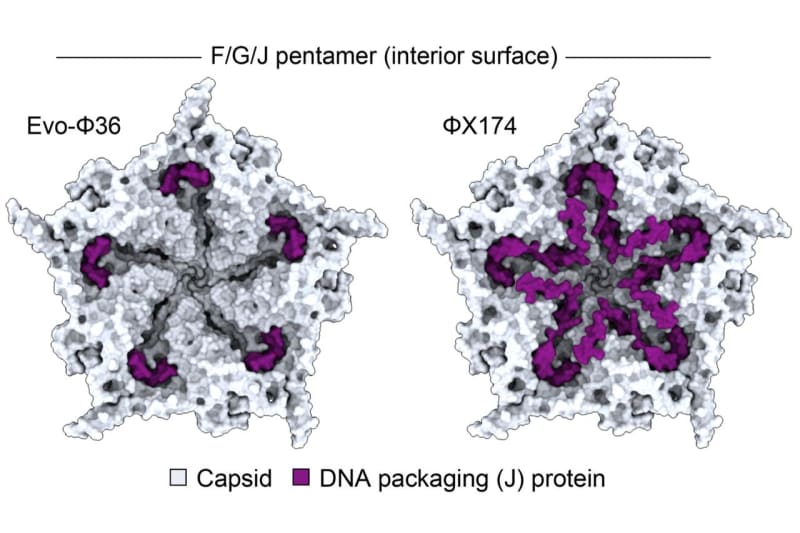
Researchers at Stanford University used an AI model called Evo2 to generate the complete genetic code for a new virus named Evo-Φ2147. Built from scratch in the lab, the virus successfully targets deadly strains of E. coli bacteria that resist traditional treatments.
The AI learned patterns from nine trillion DNA building blocks, the same way language models learn from text. Instead of copying nature, it created something entirely new based on what it learned about how genes work together.
Out of 285 AI-designed virus genomes, 16 could infect bacteria. The most successful versions killed resistant E. coli 25 percent faster than naturally occurring viruses.
To turn digital code into living biology, scientists used a new technique called Sidewinder that assembles DNA sequences with 100,000 times greater accuracy than older methods. The technology could make genome construction 1,000 times cheaper and faster.
The virus itself is remarkably simple: just 5,386 genetic base pairs and 11 genes. For comparison, human DNA contains 3.2 billion base pairs and roughly 200,000 genes.
The Ripple Effect
The medical possibilities extend far beyond fighting bacterial infections. Researchers believe this approach could revolutionize how quickly we respond to health threats.
During the COVID-19 pandemic, developing the first mRNA vaccine took 42 days. Scientists estimate that with today's AI and DNA assembly tools, that timeline could shrink to 62 hours.
Personalized cancer vaccines, which currently take eight to 12 weeks to produce for each patient, could be manufactured much faster. British molecular biologist Adrian Woolfson calls it a turning point in the history of life itself.
"For the last 4 billion years, all life on Earth has evolved by trial and error," Woolfson explained. "Natural evolution now has a co-author."
The Stanford team designed their virus specifically to combat antibiotic resistance, one of the world's growing health crises. As bacteria evolve to resist existing treatments, AI-designed therapies could adapt just as quickly.
To address biosafety concerns, researchers excluded all human pathogen data from Evo2's training. The system cannot generate sequences for viruses that harm humans, preventing both accidental mistakes and intentional misuse.
Kaihang Wang of the California Institute of Technology sees vast potential ahead. "If you can control the source code of life, you can create almost anything," he said.
The breakthrough reminds us that human ingenuity keeps finding new ways to solve old problems, turning cutting-edge technology into hope for healthier tomorrows.
Based on reporting by Google News - AI Breakthrough
This story was written by BrightWire based on verified news reports.
Spread the positivity!
Share this good news with someone who needs it