AI Finds 800 Hidden Wonders in 35 Years of Hubble Images
Scientists used AI to scan 35 years of Hubble Space Telescope images and uncovered more than 800 cosmic objects never documented before. The breakthrough shows how artificial intelligence can help astronomers discover treasures hiding in plain sight.
Thirty-five years of space telescope images just revealed hundreds of secrets no one had ever noticed before.
Two researchers at the European Space Agency built an AI tool called AnomalyMatch and let it scan nearly 100 million images from the Hubble Space Telescope archive. The result was a treasure map pointing to more than 1,300 unusual cosmic objects, with over 800 that had never appeared in scientific literature.
David O'Ryan and Pablo Gómez published their findings in the journal Astronomy & Astrophysics in December 2025. Their tool ran for two and a half days, sorting through tiny image cutouts to find anything that looked different from what it had been trained to recognize.
The AI didn't make discoveries on its own. Instead, it ranked images by how unusual they looked, then handed the most interesting candidates to the astronomers to examine with their own eyes. Think of it as a super-powered assistant that made an impossible task manageable.
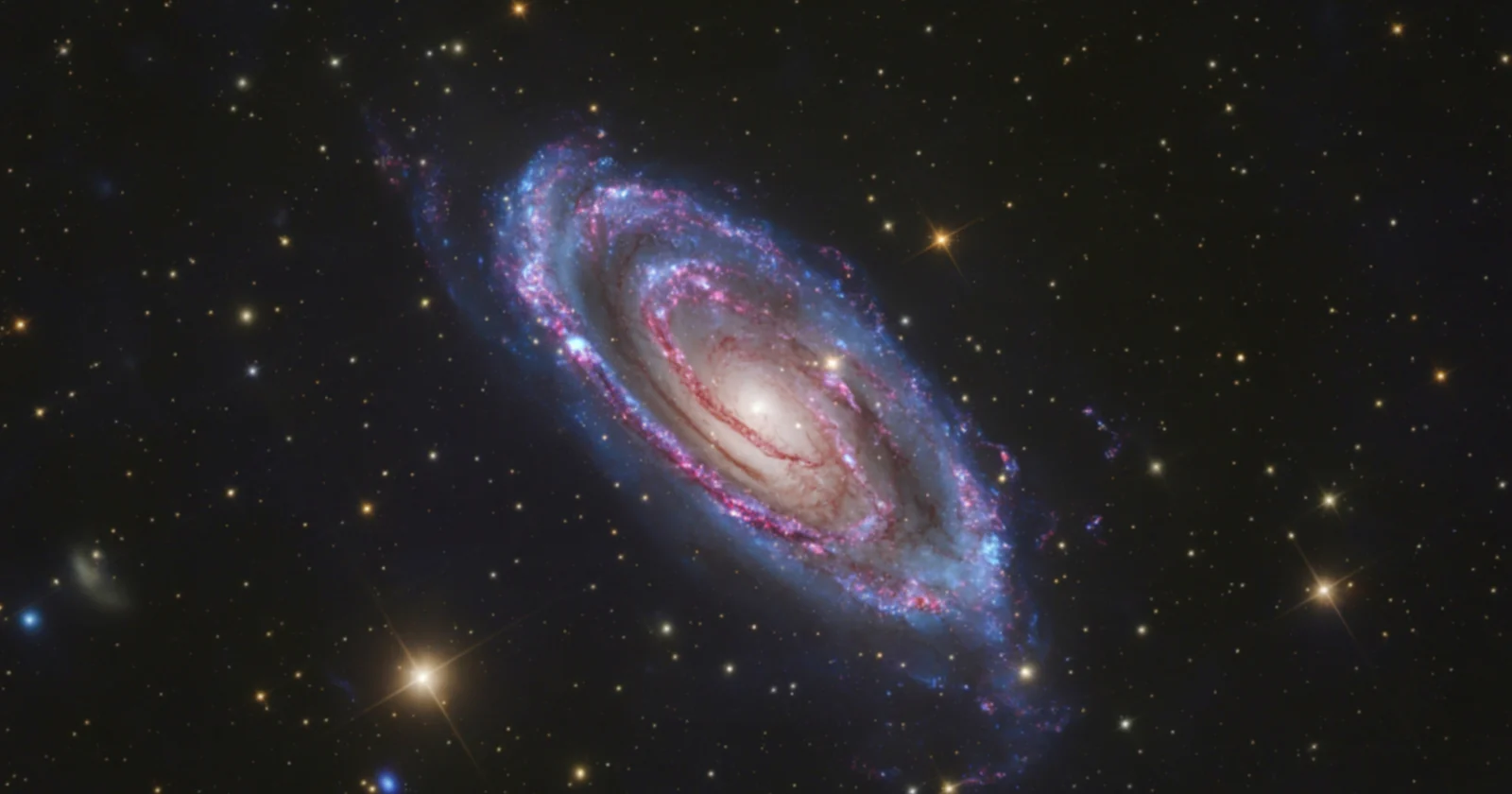
What turned up reads like a cosmic catalog of wonders. The team found more than 400 galaxies caught in the act of merging, their shapes twisted and streaming with stars and gas. They spotted 86 new gravitational lens candidates, where massive galaxies bend light from distant objects into beautiful arcs and rings.
The list also includes collisional ring galaxies, jellyfish galaxies trailing filaments of gas, and edge-on planet-forming disks within our own galaxy. A few dozen objects didn't fit any known classification at all.
The Bright Side
This discovery proves something hopeful about both technology and human curiosity. The Hubble archive has been publicly available for decades, but no human team could practically examine every image looking for oddities. The data was always there, but we needed new tools to make it searchable.
The real breakthrough isn't the 800 objects themselves. It's showing that AI can help scientists find needles in cosmic haystacks without replacing human judgment. The machine ranked possibilities, but people made the final calls about what mattered.
Even better, this is just the beginning. Upcoming surveys from the Euclid mission and Vera C. Rubin Observatory will produce image volumes many times larger than Hubble's archive. This successful test run shows astronomers are ready for that flood of data.
The universe has been posing for its portrait for 35 years, and we're only now learning to see what was there all along.
More Images


Based on reporting by Google News - Science
This story was written by BrightWire based on verified news reports.
Building Something New? Try the BrightWire Tech Stack Advisor
Compare modern frameworks, cloud hosting, and AI tools tailored to your project budget and scale.
Spread the positivity!
Share this good news with someone who needs it