AI Finds 'Hidden Sperm' for Men Told They Were Infertile
A new AI-powered system is finding sperm in men previously told they had none, giving couples struggling with infertility a real chance at parenthood. The technology has already helped bring hundreds of hopeful parents off waiting lists.
When Penelope answered her phone during the drive home last November, she finally heard the words she'd been waiting two and a half years to hear: she was pregnant. Her husband Samuel, who has a condition that leaves most men infertile, had been given just a 20% chance of ever having a biological child.
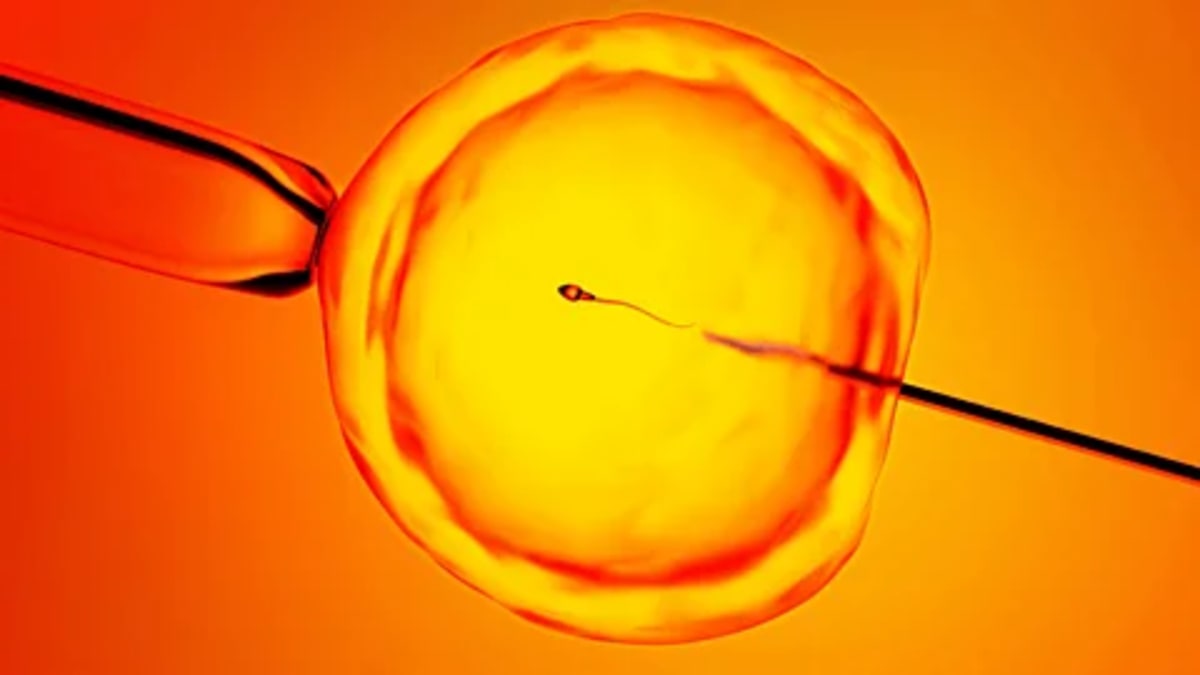
Their baby became possible thanks to a breakthrough called the Star system, developed at Columbia University. The technology uses artificial intelligence to locate individual sperm cells in men with azoospermia, a condition affecting about 10% of infertile men where little to no sperm appears in their samples.
The challenge is staggering. A typical semen sample contains tens of millions of sperm per milliliter, but men with azoospermia might have just one sperm cell in their entire sample, hidden among debris and cell fragments. Finding it manually is like searching for a single star in the night sky.
That comparison inspired Dr. Zev Williams, director of Columbia University Fertility Center, to adapt the same AI technology astronomers use to scan telescope images. His team developed microfluid chips with channels as thin as human hair, allowing sperm samples to flow through while high-powered cameras capture 300 images per second.
Machine learning algorithms scan these images in real time, detecting and gently isolating any sperm cells before they pass through. In tests comparing the AI to trained human technicians, Star found 40 times more sperm.
The first Star baby arrived at the end of last year, born to parents who had struggled with infertility for nearly two decades. Williams and his team jumped for joy when they got the news.
Since that first success, the technology has been used regularly at the fertility center. Based on the latest 175 patients, the system finds sperm in just under 30% of cases where men had been told they had no chance of fathering a biological child using their own sperm.
The Ripple Effect
Infertility affects one in six people of reproductive age worldwide at least once in their lifetime. Male infertility contributes to up to 50% of these cases, meaning potentially millions of men globally have been told they cannot father biological children.
The waiting list at Columbia's fertility center has grown to hundreds of couples from around the world, all hoping this technology might give them the family they've dreamed of. Each success story represents years of heartbreak finally finding hope.
For Samuel and Penelope, who welcomed their baby after having just one embryo to work with, the technology meant everything. "I thought that I wasn't going to be able to have my own kid, which is a really big part of my life," Samuel says.
Now there's a baby girl, and hopefully many, many more to come.
More Images


Based on reporting by Google News - Technology
This story was written by BrightWire based on verified news reports.
Spread the positivity!
Share this good news with someone who needs it