AI Finds Smarter Solar Layouts Could Save Major Land
New research using artificial intelligence reveals that solar energy can power the world while using far less land than expected. Strategic placement in sunny regions and compact designs could dramatically reduce solar's footprint as it becomes our largest renewable energy source.
The race to solar power just got a whole lot smarter, and the planet's land could be a big winner.
Researchers at McGill University used artificial intelligence to analyze nearly 69,000 solar installations across 65 countries, uncovering a surprisingly hopeful truth. Even as solar energy prepares to become the world's largest renewable power source by 2029, it won't require nearly as much land as many feared.
"Solar projects can result in substantial environmental impacts locally, but our results found that reaching net-zero emissions with high growth in solar requires a negligible amount of land globally," said Sarah Marie Jordaan, Associate Professor at McGill's Department of Civil Engineering. Her team published their findings in two companion studies that offer a roadmap for smarter solar expansion.
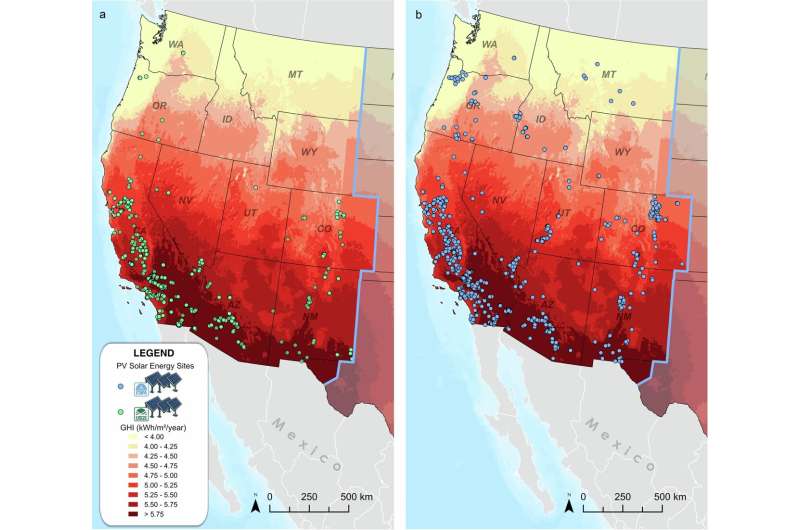
The research team applied computer vision and deep learning to examine 719 large solar projects across the western United States. They discovered that location and design choices make an enormous difference in how efficiently solar panels use land.
Sunnier regions need less space to generate the same amount of electricity. More compact layouts also dramatically reduce the land footprint per unit of power produced.
The global analysis revealed another bright spot: rooftop solar systems offer massive land-saving potential. By comparing rooftop installations with ground-mounted solar farms, researchers found that the cost gap between the two options varies widely by region, creating opportunities for smart, location-specific policies.
This matters because land is finite, and competition for it is fierce. Agriculture, housing, conservation, and energy production all vie for space.
The Bright Side
The findings challenge a common concern that solar expansion would consume vast tracts of land. Instead, the research shows that thoughtful planning can meet our clean energy goals without sacrificing precious landscapes.
Regional differences in sunlight, costs, and available space mean there's no one-size-fits-all solution. In some areas, rooftop solar makes perfect economic and environmental sense. In others, strategically placed ground-mounted systems in sunny locations work best.
The AI-powered approach also created a consistent, replicable method for measuring solar projects' land use. This benchmark gives policymakers and energy planners the tools they need to make informed decisions about where and how to build solar installations.
As the world races toward net-zero emissions, these insights prove we don't have to choose between clean energy and protecting our landscapes. With smarter choices about location and design, we can have both.
More Images

Based on reporting by Phys.org - Technology
This story was written by BrightWire based on verified news reports.
Spread the positivity!
Share this good news with someone who needs it