AI Fixes James Webb Telescope From Earth, No Spacewalk Needed
Two Australian scientists used artificial intelligence to repair blurring in NASA's James Webb Space Telescope without leaving Earth. Their software breakthrough restored crystal-clear vision to the telescope's infrared camera, achieving what once would have required a costly astronaut mission.
When the James Webb Space Telescope started showing blurry images, scientists feared they'd need another Hubble-style rescue mission. Instead, two researchers in Sydney fixed it from their desks using artificial intelligence.
Professor Peter Tuthill and his team at the University of Sydney noticed faint electronic distortions affecting the telescope's Australian-designed Aperture Masking Interferometer. The fuzzy images reminded everyone of Hubble's early optical flaw that required astronauts to fix in space back in 1993.
This time, the solution came through code instead of spacewalks. The researchers created AMIGO (Aperture Masking Interferometry Generative Observations), a software system that uses neural networks to understand exactly how the telescope's optics and electronics behave 1.5 million kilometers from Earth.
The team pinpointed a phenomenon called the "brighter-fatter effect," where electric charges slightly spread to neighboring pixels in the infrared camera. Their algorithms digitally corrected these distortions, restoring the instrument's full precision without touching a single piece of hardware.
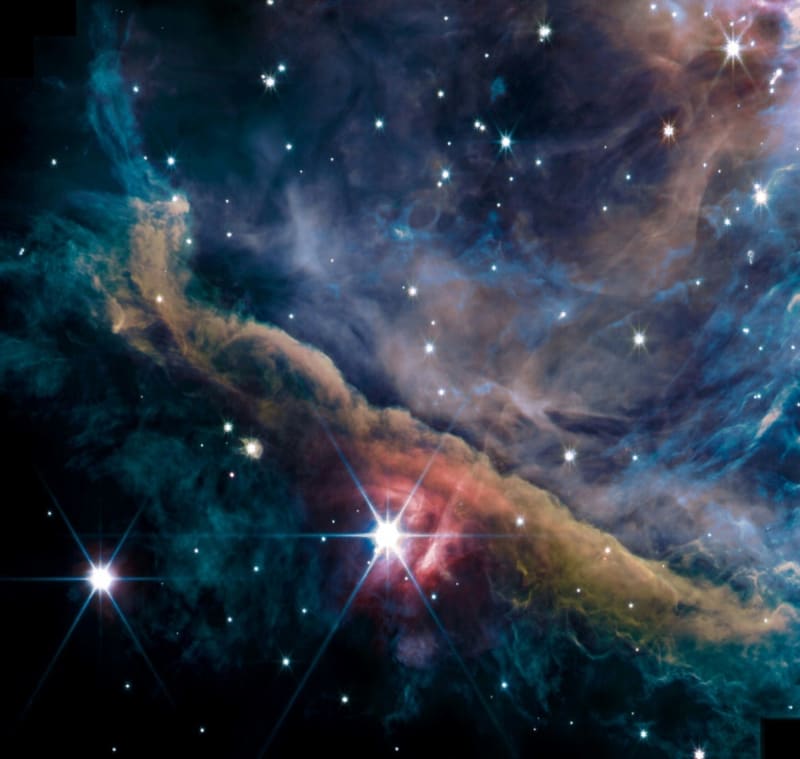
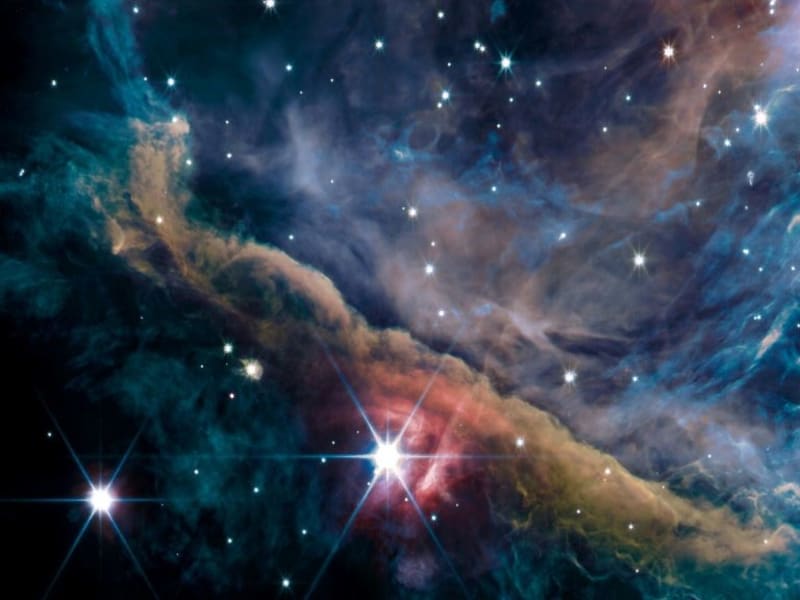
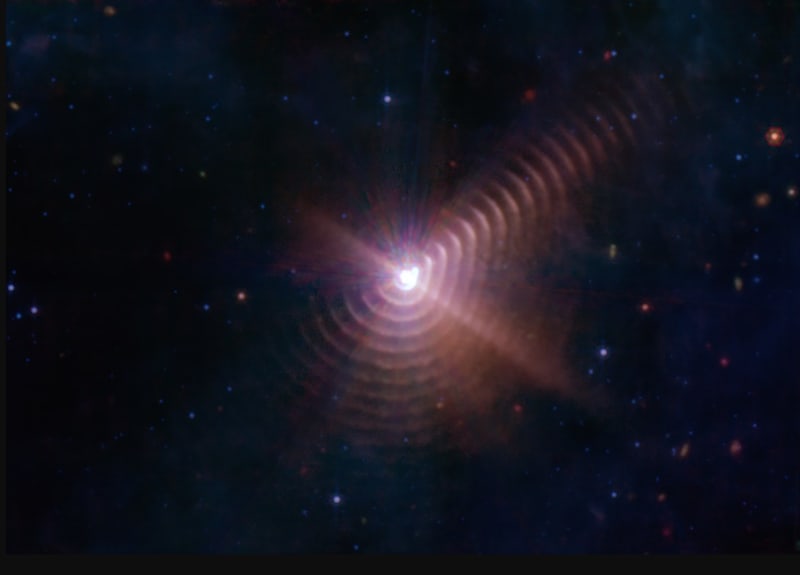
The results speak for themselves. The telescope recently captured direct images of a dim exoplanet orbiting HD 206893, a star 133 light years away. It also delivered sharp images of a black hole jet, the volcanic surface of Jupiter's moon Io, and stellar dust clouds that were previously too faint to see clearly.
The Ripple Effect shows how Earth-based innovation can extend the life and capabilities of space missions. This breakthrough means scientists can now push the telescope deeper into its observational limits, capturing fainter and more distant objects than originally planned.
Two team members, Louis Desdoigts and Max Charles, were so proud of their achievement they got tattoos of the instrument inked on their arms. Their celebration captures the human joy behind scientific breakthroughs.
The software fix demonstrates how modern space exploration increasingly relies on the partnership between advanced hardware in orbit and clever problem-solving on the ground. What once required billion-dollar repair missions can now be solved with innovative thinking and artificial intelligence.
The James Webb Space Telescope continues its mission to observe the universe's oldest and most distant objects, now with vision as sharp as its designers intended.
More Images


Based on reporting by Google: James Webb telescope
This story was written by BrightWire based on verified news reports.
Spread the positivity!
Share this good news with someone who needs it