AI Headset Gives Singapore's Blind Community Independence
A new $380 AI-powered headset developed by NUS researchers is helping visually impaired Singaporeans shop, commute, and navigate daily life without assistance. The device answers questions in real time and alerts users when their bus or ride arrives.
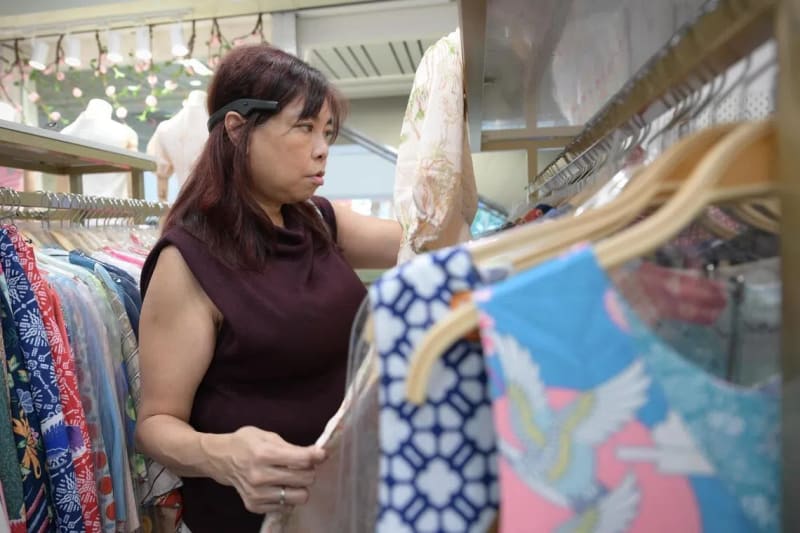
Teresa Ng has spent decades asking strangers to help her spot her bus number, sometimes facing rejection from people who couldn't tell she was partially blind. That's about to change.
The Singapore resident is getting a complimentary AiSee headset, a new AI-powered device that acts as her eyes. Developed by researchers at the National University of Singapore, the $380 headset uses a camera, speakers, and large language models like ChatGPT to answer questions about the world around her.
Ng can now ask "When is bus 190 arriving?" and get an instant answer. The device tracks her location using GPS, pulls real-time data from Singapore's transit system, and verbally alerts her when her bus approaches. The same feature works for private-hire vehicles.
For Ng, who works as a consultant promoting inclusion for the special needs community, shopping trips will transform completely. The headset can identify prices, sizes, colors, and even suggest what occasions an outfit suits. No more feeling obligated to buy from store promoters she asks for help.
After two years of development since the 2024 prototype, NUS has launched a spinoff company to commercialize AiSee. The device connects to the internet through Wi-Fi or a phone hotspot, with SIM card functionality coming in future versions. The team is seeking endorsement from SG Enable, Singapore's national disability agency, which could help users access subsidies of up to $40,000 for assistive technology.
The Ripple Effect
The impact reaches beyond vision loss. AiSee is now being tested at Singapore's Botanic Gardens to lead sighted visitors on curated audio tours. Guests can learn about landmarks like the handkerchief tree or ask questions about trees planted by Singapore's founding prime minister Lee Kuan Yew.
The device's open-source code has attracted 17 developers who recently gathered to design new features. They're building applications that search LinkedIn based on faces captured in real time and suggest conversation starters during networking events.
Lead researcher Suranga Nanayakkara, an associate professor at NUS School of Computing, sees AiSee as part of the next wave of computing. He envisions a shift from button phones to touchscreens to screen-free devices that serve as virtual guides helping us understand more than what our eyes can see.
Ng knows many people with vision loss who won't leave home without a companion, their worlds shrinking to whatever feels safe and familiar. With AiSee, independence becomes possible again.
More Images

Based on reporting by Google News - Singapore Technology
This story was written by BrightWire based on verified news reports.
Spread the positivity!
Share this good news with someone who needs it