AI Heart Scans Catch Disease Early in 6,000 Kenyan Patients
Researchers paired artificial intelligence with simple heart tests to detect heart failure early in nearly 6,000 patients across Kenya, where expensive diagnostic equipment is scarce. The technology caught warning signs with over 99% accuracy using tools clinics already have.
A simple heart test powered by artificial intelligence is helping doctors in Kenya catch heart disease before it becomes deadly.
Researchers at UT Southwestern Medical Center tested AI-enhanced electrocardiograms across eight hospitals and clinics in Kenya with nearly 6,000 patients. The results showed the technology could spot early warning signs of heart failure using equipment that already exists in most facilities.
Heart disease kills more people worldwide than any other condition. In sub-Saharan Africa, the problem hits even harder because patients develop the disease younger and face worse outcomes, despite having fewer complications than patients in wealthier countries.
The main reason for these tragic outcomes is simple: doctors can't catch heart problems early enough. By the time symptoms appear, the damage is often severe.
Most heart failure starts with left ventricular systolic dysfunction, where the heart's main pumping chamber weakens. The gold standard test is an echocardiogram, which uses ultrasound to create images of the heart. But these machines are expensive and rare across much of Africa, along with the trained specialists needed to operate them.
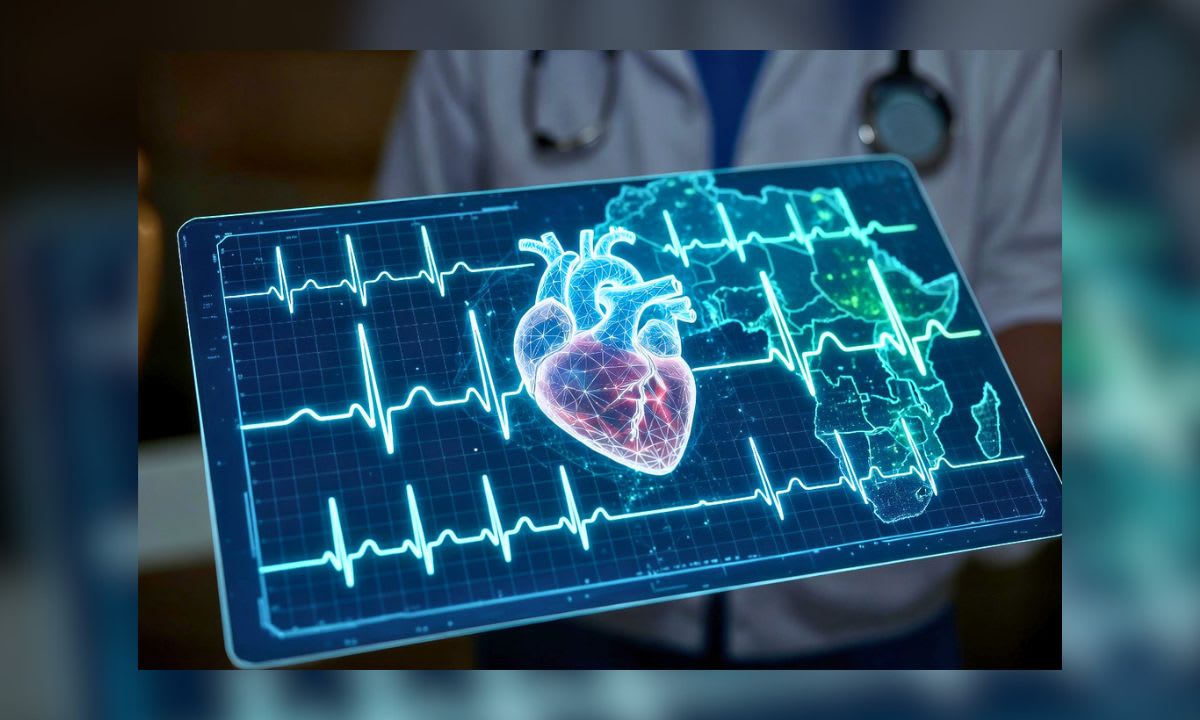
That's where AI steps in. A standard ECG measures the heart's electrical activity and costs a fraction of an echocardiogram. The AI analyzes those results for patterns linked to heart dysfunction, extracting more information from a test clinics can already afford.
Among 1,444 patients who received both the AI-ECG and a confirmatory echocardiogram, the algorithm identified dysfunction in about 14% of cases. When the AI found no problems, follow-up testing confirmed that finding 99.1% of the time.
The system correctly identified over 95% of patients with precursor conditions and accurately cleared over 79% of those without risk. "These findings support AI-ECG as a practical, scalable screening tool that can effectively identify individuals at risk for heart failure in resource-limited settings," said Dr. Ambarish Pandey, associate professor at UT Southwestern.
The Ripple Effect
This breakthrough could transform healthcare far beyond Kenya. Millions of people in underserved regions worldwide lack access to expensive cardiac imaging but have access to basic ECG machines.
If validated at larger scales, this technology gives doctors an affordable way to monitor patients before silent conditions turn fatal. It's not replacing specialists but extending their reach to places they can't physically be.
The approach works because it meets communities where they are, using tools already in their hands to save lives that might otherwise be lost.
One affordable test, powered by smart technology, is helping hearts keep beating across Kenya and showing the world a better path forward.
Based on reporting by Google News - AI Breakthrough
This story was written by BrightWire based on verified news reports.
Spread the positivity!
Share this good news with someone who needs it