AI Helps Doctors Save Baby With Ultra-Rare Disease
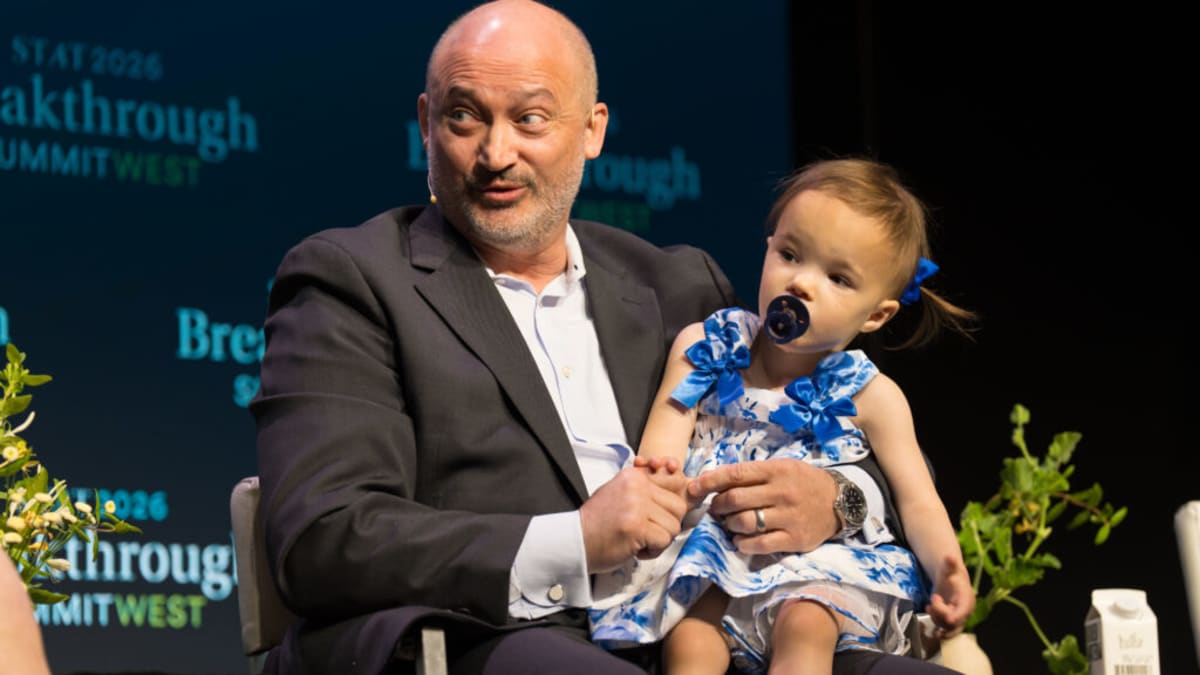
A newborn who spent 73 days in intensive care got a second chance at life when AI helped doctors discover an unexpected treatment. Now nearly three, Jorie Kraus can play, talk, and plan her birthday party.
For the first 73 days of her life, Jorie Kraus fought just to breathe. Her heart struggled, her muscles wouldn't work, and doctors feared she might not survive.
Jorie was born with an ultra-rare condition caused by missing genes on chromosome 10. Her body simply couldn't function the way it should, leaving her parents watching helplessly as their daughter faced developmental plateaus through her first two years.
Then something remarkable happened at Mayo Clinic. Doctors used an AI tool called Biomedical Data Translator to search through vast databases of medical research and available treatments. The system identified an unexpected solution: Klonopin, a widely available muscle relaxer typically used for seizures and panic attacks.
"The results were so fast," Jorie's mother Joanie told an audience at a medical summit in San Francisco. "It was almost like a light switch."
Suddenly, the child who couldn't move freely began maneuvering around obstacles. She picked up a Fisher-Price toy and said "quare" (dropping the s from square). Her parents could hardly believe what they were seeing.
Dr. Whitney Thompson, who helped identify Jorie's treatment, said the breakthrough wouldn't have been possible without AI. "It's able to make inferences across all the biomedical literature, things that we wouldn't have been able to connect otherwise," she explained.
The AI tool was built by researchers funded by the National Institutes of Health. It creates connections across different medical databases that human doctors might never spot on their own.
The Ripple Effect
Jorie's story is already changing lives beyond her own. Her parents started the Jorie Effect organization to help other families facing the same condition.
Just this week, a five-year-old child with a similar genetic deletion received the same treatment after their neurologist followed Jorie's example. The child went from not talking to speaking in sentences.
"It's huge," Joanie said.
Challenges remain before this approach can help every child who needs it. Genomic sequencing isn't widely available everywhere, and rapid laboratory testing to confirm treatments takes time and resources.
But for Dave Kraus, Jorie's father, sharing their story is worth reliving the darkest moments when doctors warned them about long odds. Now his daughter is planning her third birthday party, something they once feared might never happen.
"The whole reason we continue to talk about it is hope," he said. "I will continue to keep talking about it as long as someone will listen, because parents need it."
More Images



Based on reporting by STAT News
This story was written by BrightWire based on verified news reports.
Spread the positivity!
Share this good news with someone who needs it