AI Helps Mathematicians Solve Problems in Just Days
Artificial intelligence is now helping mathematicians discover and prove new results in a single day that would have previously taken weeks or months. By early 2026, AI models successfully solved over half of 10 research-level math problems chosen specifically because they'd never been encountered before.
Mathematics is experiencing a quiet revolution, and it's happening faster than anyone expected.
In summer 2025, AI models shocked the math world by solving five out of six problems at the International Mathematical Olympiad, a competition designed for the world's brightest high school students. But the real breakthrough came next: mathematicians discovered these tools could help them crack genuinely new problems, not just solve existing puzzles.
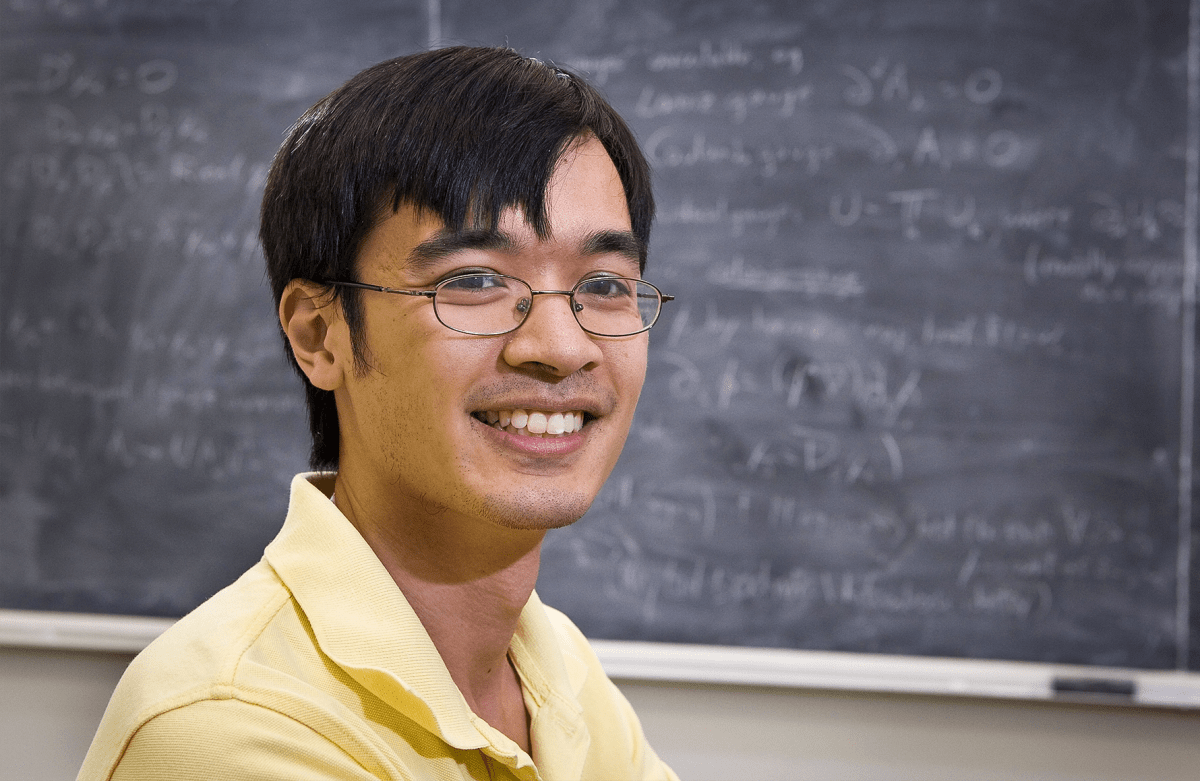
Terence Tao, one of the world's most respected mathematicians at UCLA, started using AI as a research partner. What he found changed his perspective completely.
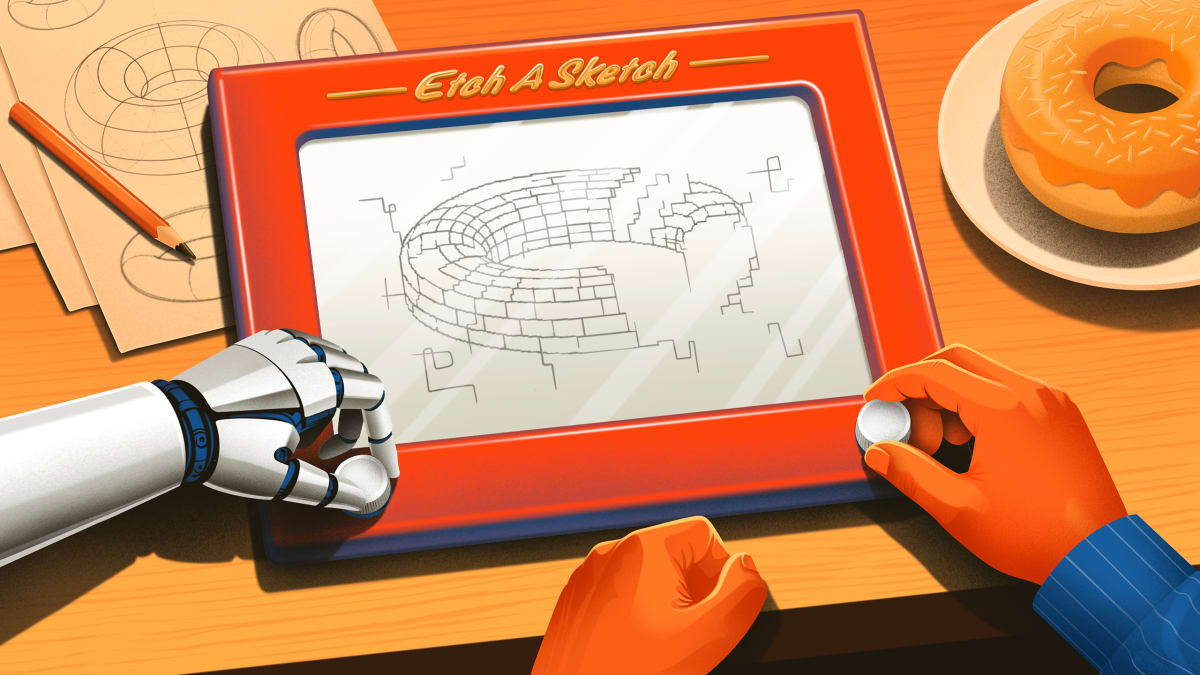
"This guy's got a shovel. This guy's got a pickax. Together we can bore a tunnel," Tao explained. Tasks that once consumed weeks now take a day.
By February 2026, AI had essentially graduated from college math to research level. In a challenge called First Proof, models tackled 10 research problems specifically chosen because they'd never appeared in training data. The AI succeeded on more than half.
Daniel Litt of the University of Toronto put it simply: even by solving easier problems, AI "is changing how mathematics is done." Mathematicians can now study thousands of problems simultaneously instead of wrestling with one at a time.
The tools work like collaborative partners. Sometimes algorithms formulate a conjecture, prove it, and verify the proof with minimal human help. Other times, extended conversations with ChatGPT, Claude, or Gemini lead researchers to novel proof strategies they hadn't considered.
The Bright Side
This isn't about replacing mathematicians. It's about giving them superpowers.
Think of it like the difference between building a house with hand tools versus power tools. The craftsperson's skill still matters, but suddenly they can accomplish far more. Jeremy Avigad, who directs the Institute for Computer-Aided Reasoning in Mathematics at Carnegie Mellon, notes that combining machine learning's insights with mathematics' precision might be the key to advancing artificial intelligence itself.
The changes are attracting talent and investment too. New startups focused on mathematical AI are emerging, and some mathematicians are leaving academia to develop these tools further. The results they're achieving now match discoveries published in professional journals.
Nobody expects AI to work alone. Akshay Venkatesh of the Institute for Advanced Study, another Fields Medal winner like Tao, emphasizes preserving what's valuable in mathematical culture even as the field evolves. The goal is partnership, not replacement.
Math has always been about solving problems that seem impossible until someone finds the right approach. Now mathematicians have a new partner in that ancient quest.
More Images

Based on reporting by Google News - Technology
This story was written by BrightWire based on verified news reports.
Spread the positivity!
Share this good news with someone who needs it