AI Helps Scientists Create Better Fuel Cell Catalysts
Researchers combined artificial intelligence with lab experiments to discover a new fuel cell catalyst that outperforms current technology and exceeds 2025 clean energy targets. The breakthrough could make hydrogen fuel cells cheaper and more efficient for vehicles and power systems.
Scientists just cracked a major barrier in making clean energy more affordable, and they had an unusual research partner: artificial intelligence.
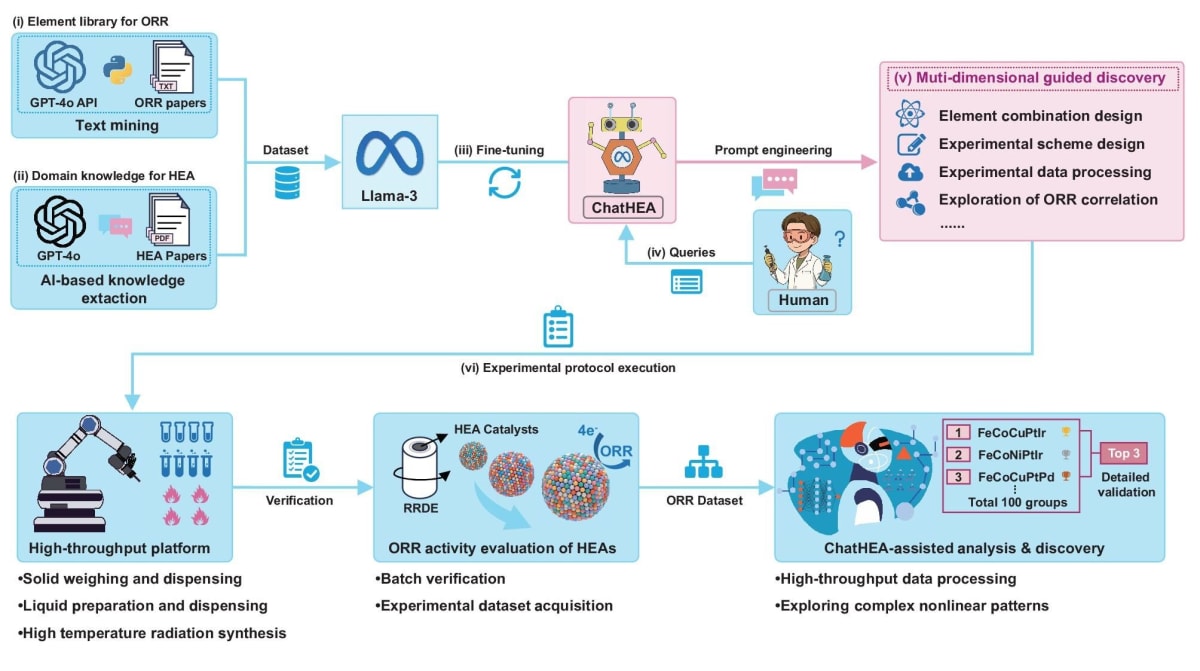
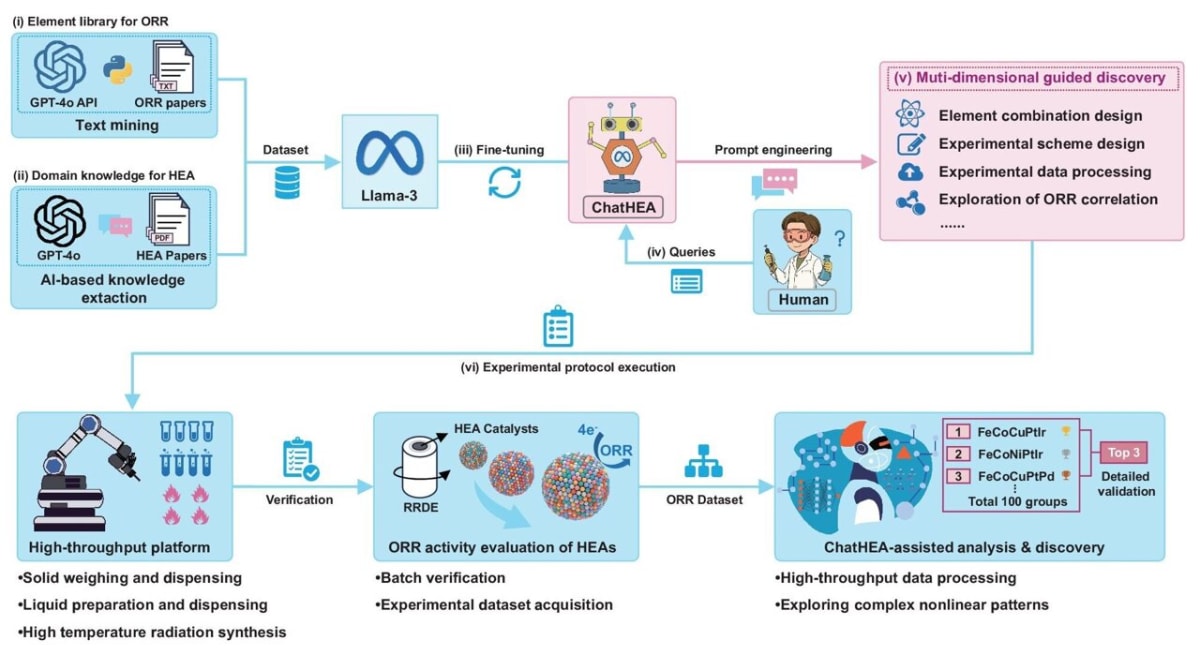
Researchers at Tohoku University in Japan developed an AI assistant called ChatHEA that helped them discover 100 new catalyst materials for fuel cells in record time. The best performer, a five-element alloy called FeCoCuPtIr, exceeded the U.S. Department of Energy's 2025 activity targets for fuel cells.
Traditional catalyst discovery takes years because scientists must test countless element combinations one by one. High-entropy alloys, which blend five or more metals, create even more complexity since their performance depends on how elements interact together, not just individually.
ChatHEA changed this game completely. The AI assistant analyzed scientific literature, suggested promising element combinations, guided experiments, and helped interpret results. It worked alongside researchers throughout the entire discovery process, not just as a prediction tool.
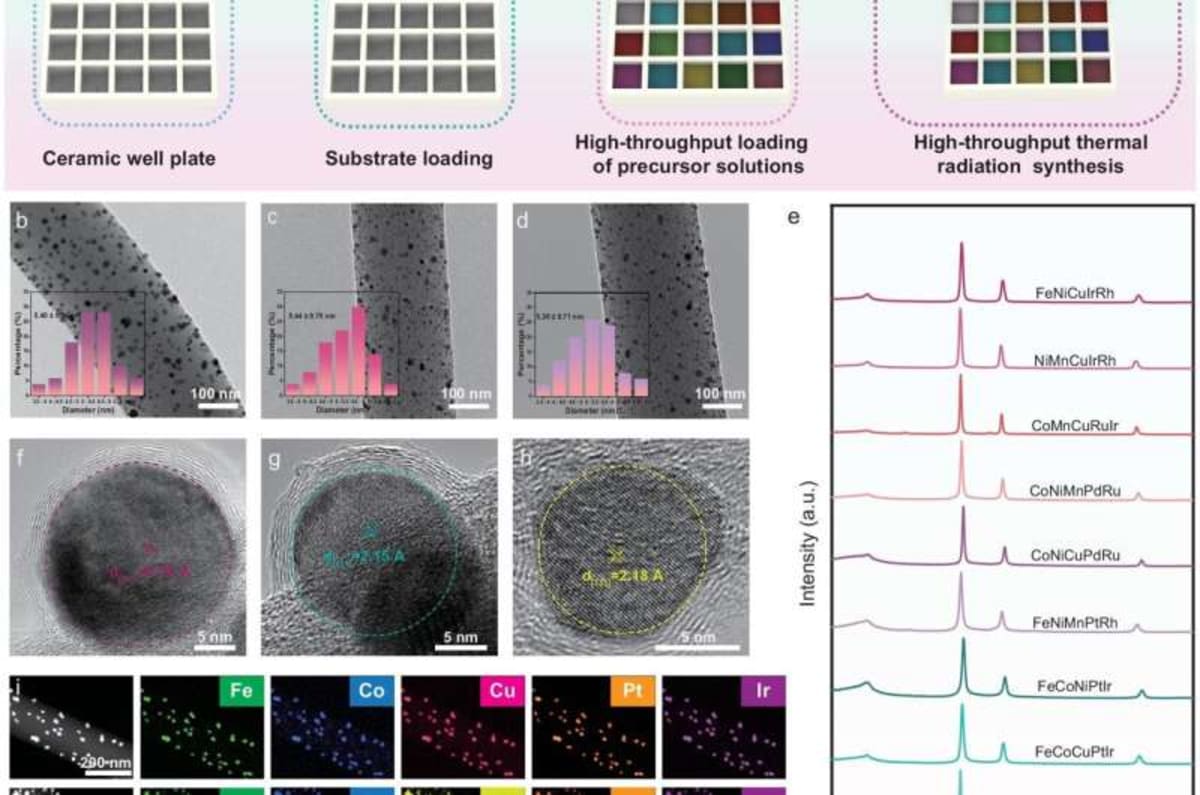
The team tested 100 different five-element catalysts using high-throughput methods that evaluate multiple reactions simultaneously. Their analysis revealed something surprising: the best catalysts emerged from specific element partnerships like iron-cobalt-copper and platinum-iridium working together synergistically.
The winning catalyst achieved a peak power density of 0.789 watts per square centimeter in fuel cell tests. Even better, it showed excellent durability, outperforming the commercial platinum-on-carbon catalysts currently used in fuel cells.
The Ripple Effect
This breakthrough extends far beyond one successful catalyst. The AI-guided framework can now accelerate discovery of other complex materials for clean energy applications.
More efficient catalysts mean fuel cells need less precious metals like platinum, making the technology more affordable. Cheaper fuel cells could transform transportation, bringing hydrogen-powered vehicles within reach for more people.
The approach also supports development of backup power systems and low-carbon energy infrastructure. As countries work toward climate goals, tools that speed up clean energy innovation become increasingly valuable.
Distinguished Professor Hao Li from Tohoku University's Advanced Institute for Materials Research emphasized the comprehensive role AI played. ChatHEA supported everything from mining knowledge in research papers to analyzing why certain element combinations worked better than others.
The research, published in National Science Review, demonstrates how artificial intelligence can work as a true research collaborator. Rather than replacing human scientists, the AI enhanced their capabilities and dramatically shortened the path from hypothesis to breakthrough.
Future applications could include discovering better batteries, solar cell materials, and other technologies needed for the transition to sustainable energy. Each advancement brings the world closer to affordable, clean power for everyone.
More Images

Based on reporting by Google News - Clean Energy
This story was written by BrightWire based on verified news reports.
Spread the positivity!
Share this good news with someone who needs it