AI Now Predicts Best Catalysts Before Scientists Build Them
Scientists can now use artificial intelligence to predict which catalyst materials will work best before ever stepping into a lab. This breakthrough could slash years off the timeline for developing clean energy and pollution control technologies.
Imagine knowing which experiments will succeed before you even start them. That's the reality researchers at Tohoku University are creating with artificial intelligence that's transforming how we discover materials for clean energy.
Catalysts are the unsung heroes of modern life. They speed up chemical reactions in everything from fuel cells to pollution scrubbers to hydrogen production. But discovering new ones has always been painfully slow, requiring years of trial and error testing in labs.
Now, AI is changing the game completely. In a review published in Angewandte Chemie International Edition, researchers revealed how large AI models can predict how well a catalyst will perform before scientists even create it in the lab.
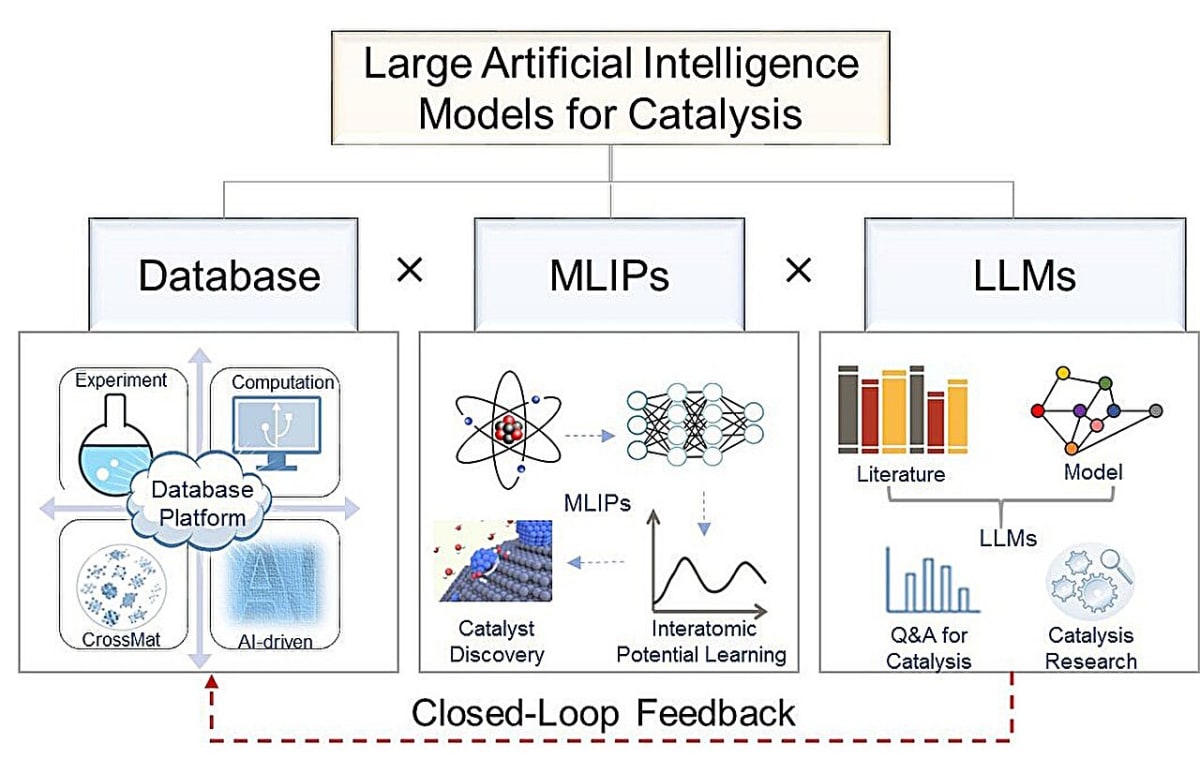
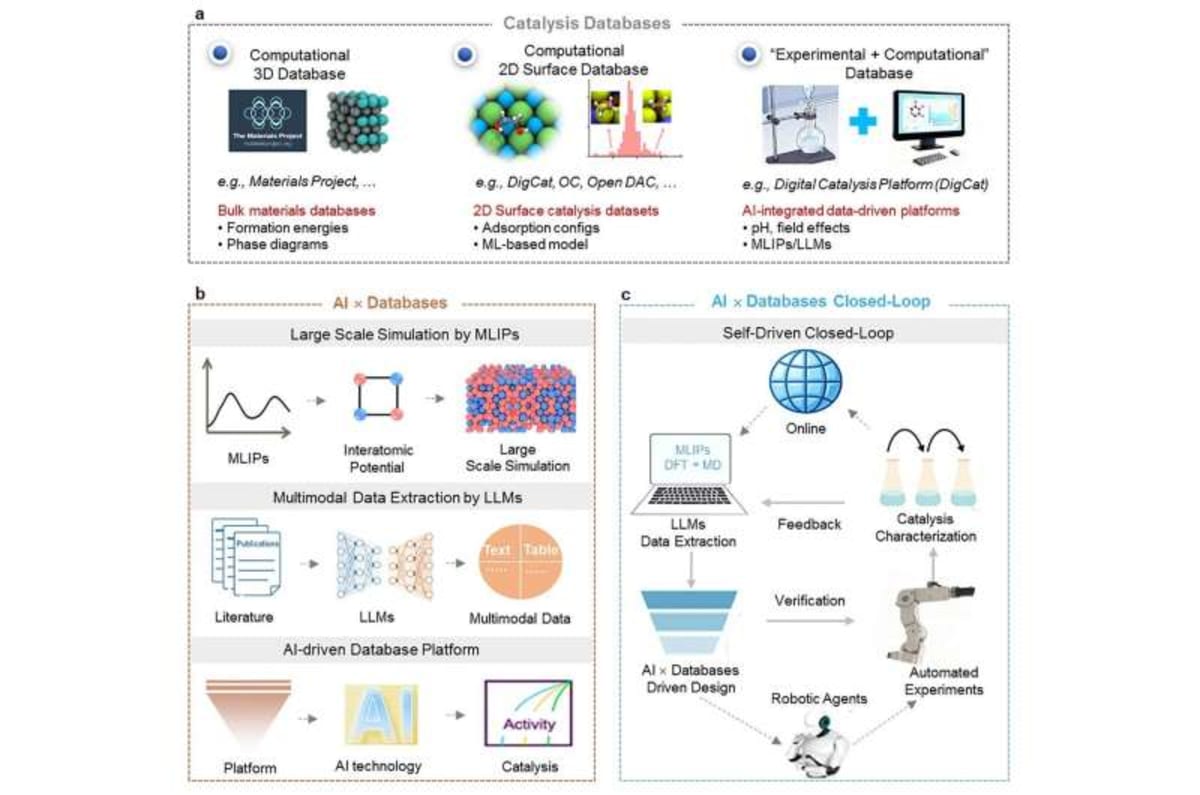
The secret lies in combining massive databases of catalyst research with two powerful AI tools. Universal machine learning interatomic potentials simulate how atoms behave and interact with remarkable speed and accuracy. Meanwhile, large language models analyze decades of scientific literature, connecting patterns humans might miss.
Together, these tools create a unified workflow that connects scientific knowledge, computer simulations, and real-world testing. Instead of testing materials one by one over months or years, researchers can now run large-scale simulations and quickly identify the most promising candidates.
The impact goes far beyond saving time. This approach dramatically reduces wasted materials and resources while increasing the odds of breakthrough discoveries.
"We are moving toward a future where catalyst discovery becomes a continuously accelerating process rather than a slow, incremental one," said Hao Li, a Distinguished Professor at Tohoku University's WPI-AIMR. The shift could dramatically shorten the gap between scientific insight and real-world application.
The Ripple Effect
The implications extend well beyond catalysts. The research team is already expanding these AI-driven strategies to batteries and hydrogen storage materials, building what they call "digital materials ecosystems" that could revolutionize multiple clean energy technologies at once.
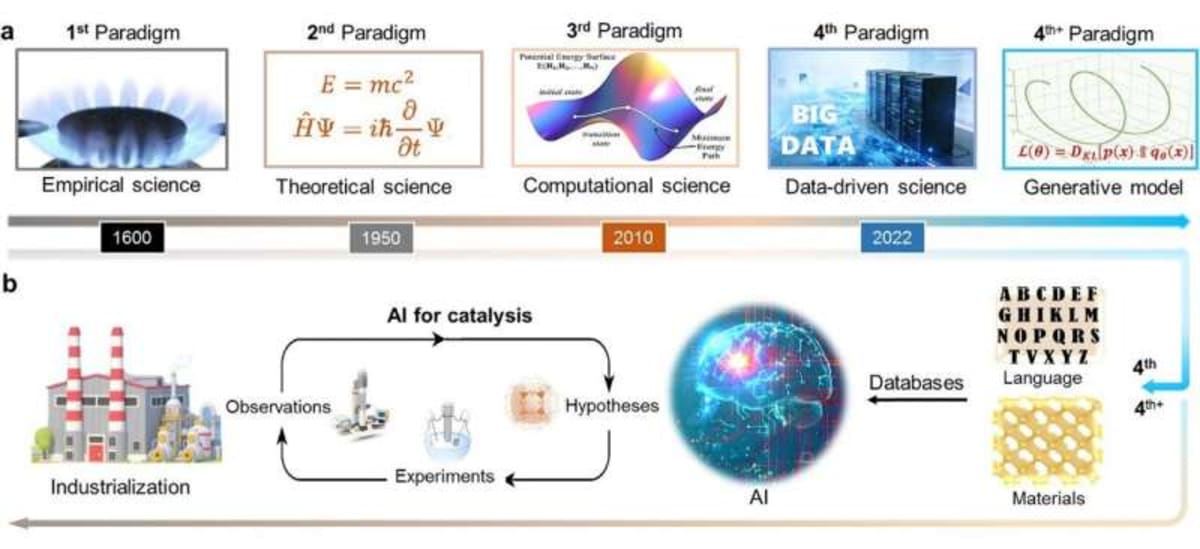
The ultimate vision is even more ambitious: fully integrated, closed-loop platforms where AI systems predict promising materials, robots synthesize and test them, and the results feed back into the AI to make even better predictions. These self-improving cycles could continuously accelerate discovery without human bottlenecks.
This kind of perpetual acceleration represents a fundamental shift in how science works. What once took years of educated guessing could soon take months or even weeks of AI-guided precision.
For anyone concerned about climate change or clean energy, this breakthrough offers genuine hope that solutions may arrive faster than we dared imagine.
More Images

Based on reporting by Phys.org
This story was written by BrightWire based on verified news reports.
Spread the positivity!
Share this good news with someone who needs it