AI Predicts Metal Failure Hotspots for Safer Aircraft
Engineers at the University of Illinois created an AI tool that spots stress hotspots in metal before failure happens, making aircraft and structures safer. The breakthrough uses crystal images to predict where cracks will form.
Imagine if engineers could see exactly where a metal structure might fail before it ever leaves the factory. That future just got closer thanks to a team at the University of Illinois.
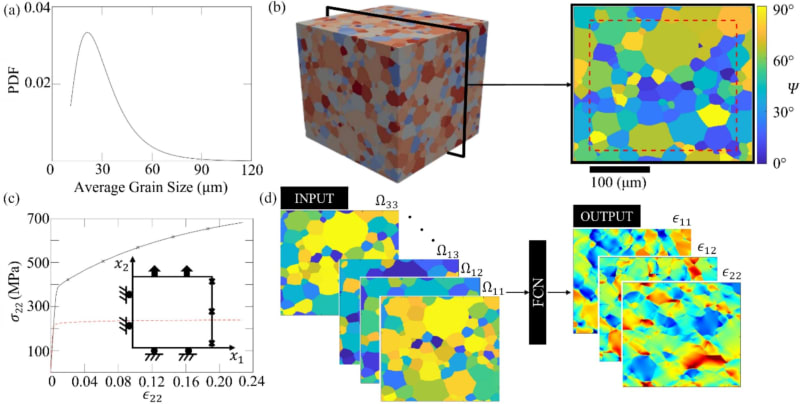
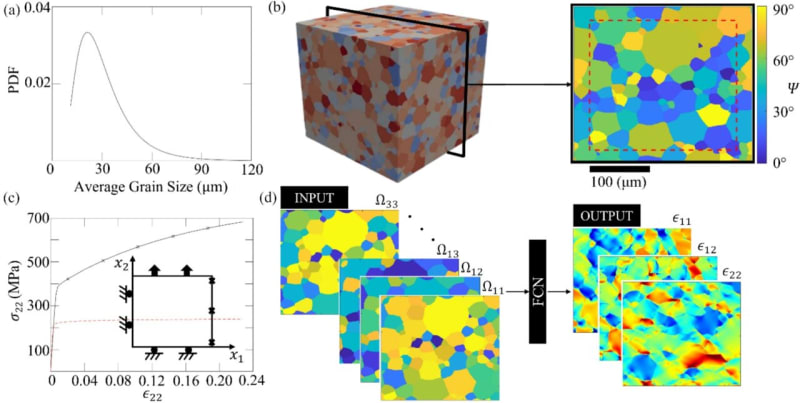
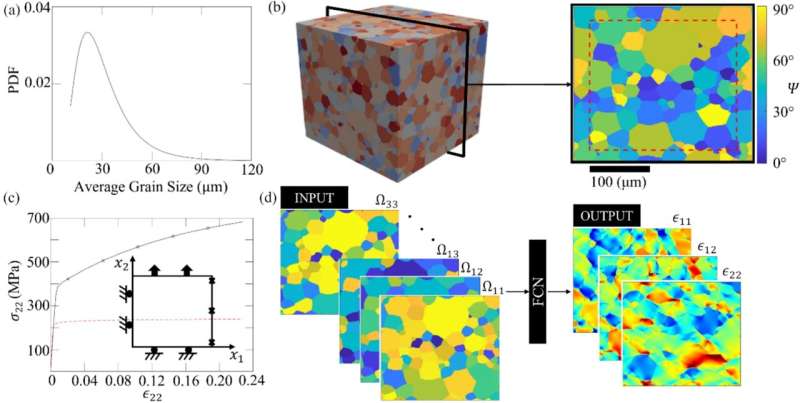
Aerospace engineers developed a machine learning tool that predicts stress hotspots in metal at an incredibly detailed scale—equivalent to over 600 million dots per inch. The AI analyzes how tiny crystals are arranged inside metals and identifies exactly where cracks are most likely to start.
Metals might look smooth to our eyes, but under a microscope they're made of randomly oriented crystals facing different directions. These endless configurations make it nearly impossible to predict how specific patterns will respond to stress. Traditional simulations are expensive and time consuming.
William Noh, a Ph.D. student who led the study published in the International Journal of Solids and Structures, trained the AI using crystal orientation images and stress data. The algorithm learned to spot trouble zones where materials fail first. Best of all, it needs surprisingly little information to make accurate predictions.
The team started with real experimental data from failed materials to teach the AI what to look for. Unlike human eyes, the machine learning model doesn't need color images. It just needs to understand crystal orientation and stress levels.
The results are impressive. The model captures 80% of stress hotspots and works across different metals with minimal retraining. For smaller crystal sizes, predictions match reality almost perfectly.
Why This Inspires
Professor Huck Beng Chew says the ultimate goal is designing stronger materials from the ground up. Engineers can now identify which crystal combinations to avoid and predict where cracks will start in aircraft structures and other critical applications.
This matters for anyone who flies, drives over bridges, or relies on metal structures. The tool could revolutionize how we design everything from airplane wings to building frames, catching potential failures before they happen instead of after disasters occur.
The breakthrough also shows how AI can solve problems that stumped engineers for decades. By combining materials science with machine learning, the team created a practical tool that makes our world measurably safer.
The next time you board a plane, there's a good chance AI like this helped ensure the metal holding you up will do its job perfectly.
More Images
Based on reporting by Phys.org - Technology
This story was written by BrightWire based on verified news reports.
Spread the positivity!
Share this good news with someone who needs it