AI Solves Million-Dollar Math Problem in Historic First
For the first time ever, artificial intelligence has cracked one of the world's most famous unsolved math problems, earning a $1 million prize. OpenAI's breakthrough on the Navier-Stokes equations marks a new era where AI can tackle humanity's deepest scientific mysteries.
Computer programs just achieved what human mathematicians couldn't do for over two decades: solving one of the seven legendary Millennium Problems that have stumped brilliant minds since the year 2000.
OpenAI announced on September 8th that its AI system cracked the Navier-Stokes problem, which deals with how fluids like water and air move. The solution comes with a $1 million prize from the Clay Mathematics Institute and represents a historic moment for both mathematics and artificial intelligence.
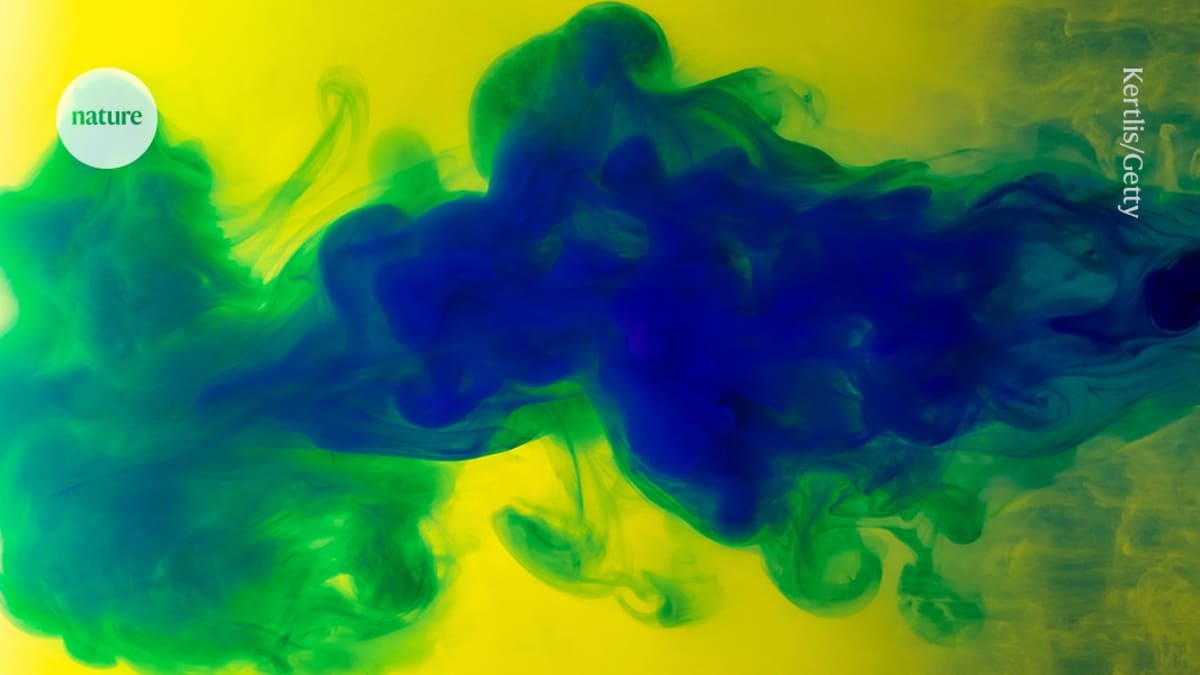
The breakthrough shows that under certain conditions, the equations used to predict fluid motion can actually break down. OpenAI's proof demonstrates that some fluids starting out completely normal could theoretically reach infinite speed in a finite amount of time, which is physically impossible in the real world.
"This is certainly an exciting day, as we contemplate the announcement of major advances in the human understanding of mathematics," says Martin Bridson, president of the Clay Mathematics Institute. The achievement caps off a year of AI systems tackling increasingly complex problems across multiple fields.
The race to solve this puzzle heated up dramatically in early September. After hearing rumors that two Harvard and NYU mathematicians were close to a solution using AI, OpenAI mobilized unprecedented computing power. They deployed 10,000 AI agents working together, first solving a simplified version in 50 hours before tackling the full problem.
Two other research teams also announced related solutions around the same time. Harvard's Levent Alpöge and NYU's Tristan Buckmaster released their work on September 7th, while a Caltech team led by Anima Anandkumar published their approach using a different AI method.
Why This Inspires
This breakthrough shows how AI can become humanity's partner in expanding knowledge rather than just automating existing tasks. These equations have real-world importance for predicting everything from weather patterns to how blood flows through our bodies.
Mathematician Terence Tao called the achievement "remarkable," and OpenAI's Sebastian Bubeck described it as "the spectacular culmination" of AI's growing ability to help solve problems that matter. The work proves that machines and humans together can push the boundaries of what we understand about our universe.
The fact that three independent teams reached solutions around the same time suggests we're entering a new era where AI accelerates discovery across all scientific fields. What once seemed impossible for human minds alone became achievable when we combined our creativity with computational power.
This moment opens doors to solving the remaining five unsolved Millennium Problems and countless other mysteries waiting to be unlocked.
More Images
Based on reporting by Google News - Business
This story was written by BrightWire based on verified news reports.
Spread the positivity!
Share this good news with someone who needs it