AI Spots Lost Soviet Lander 60 Years After Moon Landing
Scientists may have finally found Luna 9, the first spacecraft to safely land on the Moon in 1966, using artificial intelligence to scan thousands of lunar images. The discovery could help preserve space exploration history and proves AI can spot tiny artifacts from orbit.
📺 Watch the full story above
A Soviet spacecraft that made history 60 years ago might finally be coming home, at least on our maps.
On February 3, 1966, Luna 9 became the first spacecraft ever to softly touch down on another world. The mission changed everything we knew about the Moon, proving its surface wasn't dangerous quicksand and paving the way for astronauts to walk there just three years later.
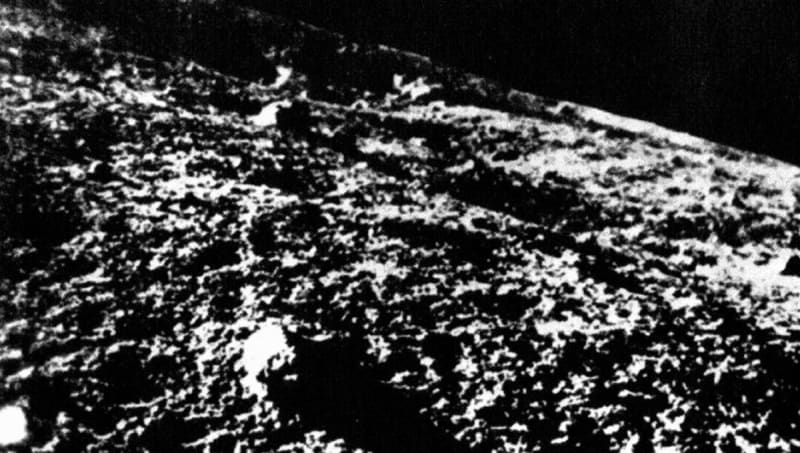
Luna 9 bounced across the lunar surface before settling down and opening four petal-like panels to steady itself. For three incredible days, it sent back humanity's first photos taken from another celestial body before its batteries died and contact was lost forever.
The problem? Scientists only knew roughly where it landed. The coordinates published in the Soviet newspaper Pravda could be off by tens of kilometers, and in 60 years of searching, no one could spot the small spacecraft among countless lunar craters and rocks.
Enter YOLO-ETA, a machine learning tool with a name straight out of science fiction: "You-Only-Look-Once—Extraterrestrial Artifact." Researchers trained the AI to recognize human-made objects on the Moon by studying images from NASA's Lunar Reconnaissance Orbiter, which has photographed the surface continuously since 2009.
The AI aced its test run, successfully identifying known landing sites it had never seen before, including the later Luna 16 mission. Then scientists turned it loose on the mystery of Luna 9's whereabouts.
The Ripple Effect
The algorithm detected a cluster of objects near coordinates 7.03° N, –64.33° E that match what scientists would expect to find from Luna 9. The site appears under different lighting conditions, the pieces are scattered in a pattern consistent with the landing sequence, and the local terrain matches the flat horizon visible in Luna 9's original photos.
While not definitive proof, it's the most promising lead in six decades. Researchers are calling for targeted high-resolution imaging to confirm whether they've truly found this piece of space exploration history.
Beyond Luna 9, this breakthrough shows AI can systematically survey the Moon's technological artifacts, helping preserve our legacy in space. As more missions launch to the Moon in coming years, knowing where historic spacecraft rest becomes crucial for protecting these irreplaceable sites.
The technology that brought us our first glimpses of another world may soon be relocated, thanks to the very innovation it helped inspire.
More Images


Based on reporting by Google News - Science
This story was written by BrightWire based on verified news reports.
Spread the positivity!
Share this good news with someone who needs it