AI Tool Speeds Up Discovery at 7 National Science Labs
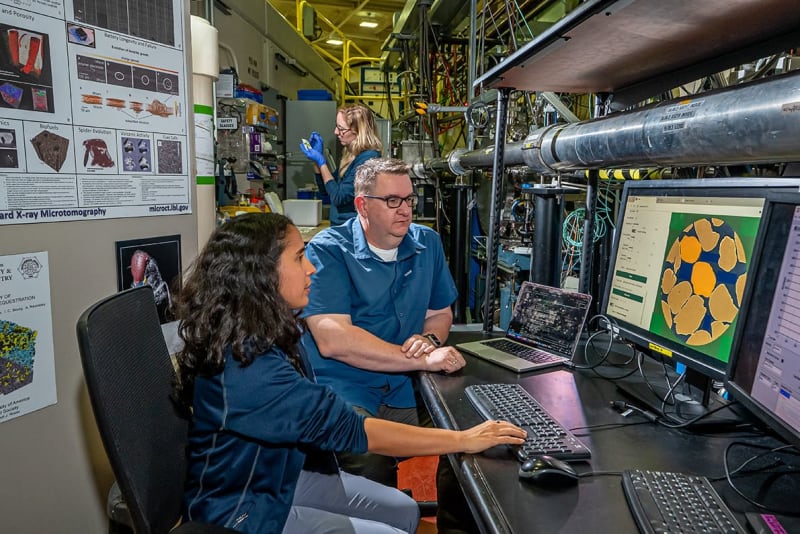
Scientists at Lawrence Berkeley National Lab just launched an AI system that will dramatically speed up breakthroughs in energy, medicine, and materials science. The tool analyzes data from powerful microscopes in minutes instead of weeks.
Scientists working on tomorrow's batteries and medicines just got a powerful new assistant that could cut months off their research timelines.
Lawrence Berkeley National Laboratory has launched SYNAPS-I, an artificial intelligence system that analyzes complex experimental data from seven national science facilities across the country. The initiative is part of the Department of Energy's Genesis Mission to accelerate discovery in fields ranging from clean energy to semiconductors.
Right now, researchers use advanced X-ray and neutron microscopes to peek inside materials at the atomic level, revealing how batteries charge or how new drugs interact with cells. But analyzing that data has been painstakingly slow, with scientists sometimes spending weeks manually identifying features in a single image.
"Our national lab facilities are already world leaders in scientific discovery. SYNAPS-I will radically accelerate the path from experiment to insight by embedding AI directly into the analysis workflow," said Alex Hexemer, a senior scientist at Berkeley Lab who leads the initiative.
The system tackles a specific challenge called image segmentation, which is like picking out individual puzzle pieces in a massively complex picture. Available AI tools work great for everyday photos but struggle with scientific data showing nanoscale structures invisible to the human eye.
SYNAPS-I brings together expertise from Berkeley Lab, Argonne, Brookhaven, SLAC, and other facilities to build AI capabilities that no single lab could create alone. By pooling their data and knowledge, researchers are training models that understand the unique patterns in scientific imaging.
Why This Inspires
This collaboration represents a fundamental shift in how science gets done. Instead of each facility working in isolation, they're sharing resources to build tools that benefit researchers everywhere.
The timing couldn't be better. Berkeley Lab's Advanced Light Source just completed a major upgrade that will generate far more data than ever before. Without AI assistance, that flood of information would overwhelm human analysts.
A decade ago, researchers at the facility used a technique called ptychography to image structures just 5 nanometers wide in battery materials, revealing how defects form during chemical reactions. Now SYNAPS-I will make those kinds of insights available in real time as experiments run.
"With the upgrade, we'll gain an unprecedented view into the inner workings of nature and technology," said Dimitrios Argyriou, Interim Director of the upgrade project.
The system promises to accelerate work on crucial challenges like developing better batteries for electric vehicles, creating more efficient solar panels, and understanding diseases at the molecular level. Researchers who previously waited weeks for results can now iterate faster, testing more ideas and making discoveries that might otherwise take years.
This is science moving at the speed of artificial intelligence, and the breakthroughs are just beginning.
More Images


Based on reporting by Google: scientific discovery
This story was written by BrightWire based on verified news reports.
Spread the positivity!
Share this good news with someone who needs it