AI Tracks Icebergs to Predict Climate Change
Scientists just closed a massive gap in climate research with AI that tracks icebergs from birth to their final melt. The breakthrough reveals where billions of gallons of freshwater enter our oceans, transforming how we predict future climate patterns.
For decades, scientists watched helplessly as icebergs broke into thousands of pieces and disappeared into the ocean, taking crucial climate data with them.
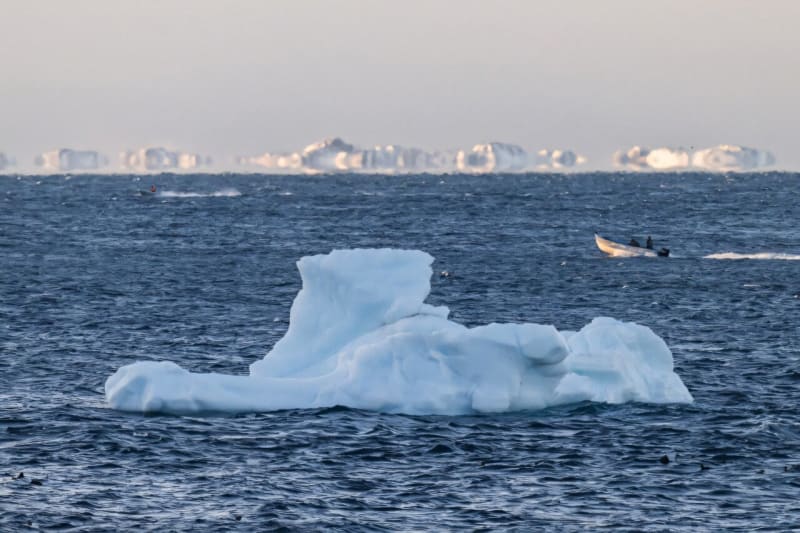
The British Antarctic Survey just changed that. Their new AI system can identify individual icebergs the moment they break off from glaciers and follow each fragment throughout their entire journey, sometimes lasting decades.
Here's why that matters. When massive icebergs melt into the open ocean, they release enormous volumes of freshwater that reshape ocean currents, alter ecosystems, and influence global climate patterns. But once these giants shatter into smaller pieces, scientists lose track of them completely.
The old method required researchers to manually scan satellite images and track only the largest icebergs one by one. It was like trying to follow a single raindrop in a thunderstorm.
The new AI tool captures each iceberg's unique shape as it calves from ice sheets in places like Greenland. Then it performs what Ben Evans, a machine learning expert on the project, calls "a giant puzzle problem." The system links smaller child fragments back to their parent iceberg, building detailed family trees never before possible at this scale.
The Ripple Effect
This breakthrough arrives at a critical moment. Ice loss from Antarctica is accelerating, likely driven by human-caused climate change. Understanding exactly where all that freshwater enters the ocean becomes more vital as warming intensifies.
The AI transforms climate scientists from tracking a handful of famous icebergs to monitoring entire populations. Researchers can now see where each fragment originated, trace its path across the ocean, and understand precisely how it affects the climate system.
The technology tested successfully over Greenland using satellite observations. The British Antarctic Survey calls it "vital new information" that will sharpen predictions about our climate's future.
Beyond pure science, the system could save lives. Navigators crossing treacherous polar waters filled with ice could use this AI to chart safer routes through regions where icebergs pose serious threats to ships.
The breakthrough proves that artificial intelligence can reveal patterns in nature that human eyes simply cannot catch at scale, turning a major blind spot in climate science into crystal-clear visibility.
More Images



Based on reporting by Phys.org - Earth
This story was written by BrightWire based on verified news reports.
Spread the positivity!
Share this good news with someone who needs it