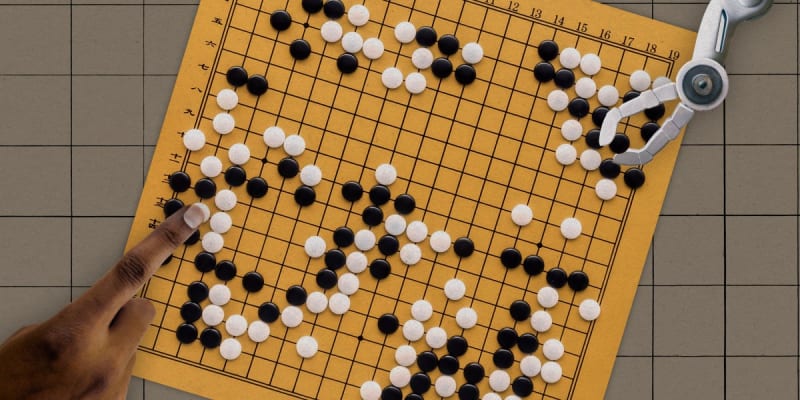
AI Transforms Ancient Go Game, Opens Doors for Women Players
Ten years after AlphaGo stunned the world, AI has revolutionized the ancient game of Go and made professional training accessible to more players than ever. The technology is upending centuries of tradition while helping more women climb the competitive ranks.
In the quiet halls of Seoul's Korea Baduk Association, the ancient game of Go sounds different now. Where wooden bowls of stones once clattered, mouse clicks now echo as players study AI programs that have transformed their 2,500-year-old game.
Ten years ago, Google DeepMind's AlphaGo made headlines by defeating legendary player Lee Sedol. Today, that breakthrough has evolved into something even more remarkable: AI is democratizing access to world-class training and reshaping who gets to compete at the highest levels.
Shin Jin-seo, the world's top-ranked Go player, spends his mornings with KataGo, an AI program that's become his most valuable training partner. He traces the glowing suggestions on his screen, rearranging stones to understand the machine's thinking. "It's almost like an ascetic practice," he says.
The technology has rewritten rules that stood for centuries. Opening moves that were gospel for generations have been replaced by AI's efficient calculations. Strategies that masters once considered flawed are now standard play.
But here's where it gets truly exciting: AI is leveling the playing field in unexpected ways. Professional Go training once required access to elite coaches and training partners, resources traditionally harder for women to access. Now, anyone with a computer can train against the same AI programs used by world champions.
The Korea Baduk Association reports more women are climbing the professional ranks as a result. The technology doesn't care about gender, connections, or geography. It just plays brilliant Go, available to anyone willing to learn.
The Ripple Effect
The transformation goes beyond just women's access. Players from smaller cities and countries without strong Go traditions can now train at levels once impossible. The AI doesn't judge, doesn't tire, and never runs out of patience for another game.
Some worry the technology has drained creativity from the game, as players increasingly memorize AI's calculated opening moves. Others see it differently: the real creativity has simply shifted to later in the game, where human intuition still matters.
Shin himself is optimistic about both AI and human potential. The Korea Baduk Association hopes to arrange a match between him and AlphaGo for the 10th anniversary of the original showdown. Having trained on more advanced programs, Shin believes he could win. "AlphaGo still had some flaws then, so I think I could beat it if I target those weaknesses," he says.
The debate about AI and creativity will continue, but one thing is clear: technology that once seemed like it might replace human players is instead creating more of them. In Seoul's training halls and living rooms around the world, a new generation of players is discovering Go, armed with tools that make mastery more accessible than ever before.
Based on reporting by MIT Technology Review
This story was written by BrightWire based on verified news reports.
Spread the positivity!
Share this good news with someone who needs it