AI Turns Farm Runoff Into Fertilizer, Cuts Carbon
Chinese researchers used artificial intelligence to discover a catalyst that converts polluted wastewater into ammonia fertilizer at room temperature. This breakthrough could slash global carbon emissions while cleaning up rivers and oceans.
Scientists just figured out how to turn one of our worst pollution problems into a valuable resource that feeds the world.
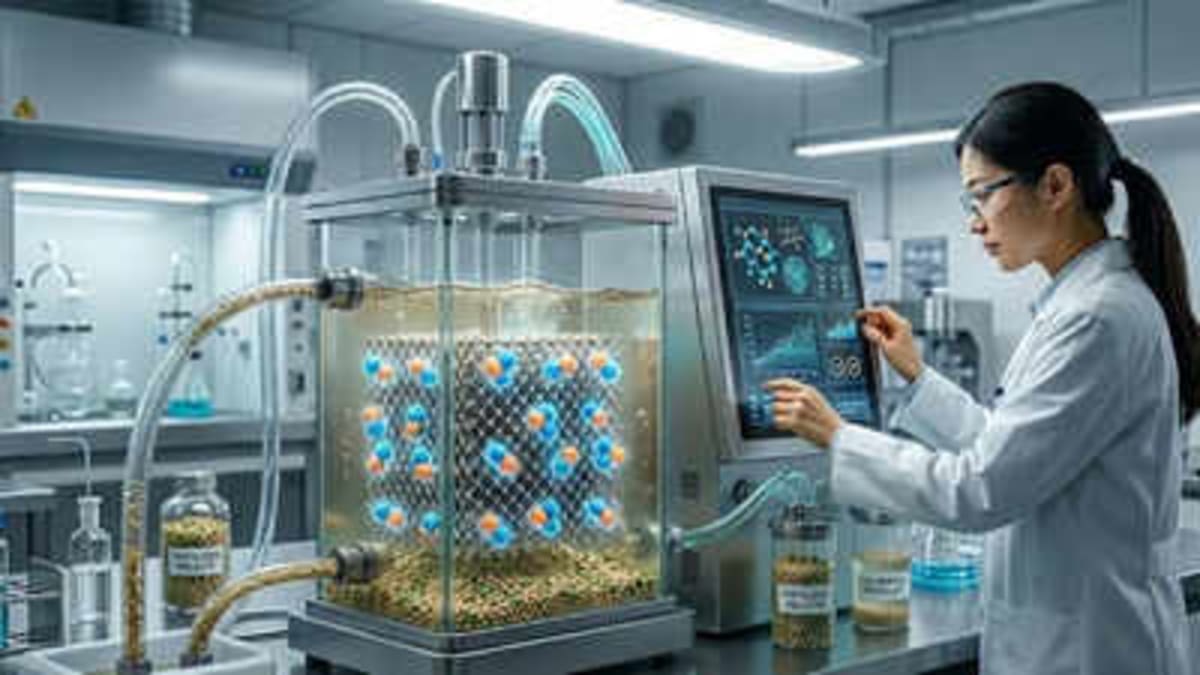
Researchers in China developed an AI-powered system that converts nitrate-heavy wastewater into ammonia fertilizer. The technology achieves nearly three times the efficiency of previous methods, according to findings published in the Journal of the American Chemical Society.
The breakthrough centers on a dual-atom catalyst discovered through machine learning. This catalyst acts like a perfectly coordinated team at the atomic level, working together to break apart the strong nitrogen-oxygen bonds in nitrates found in agricultural runoff.
Here's what makes this special: traditional ammonia production relies on the century-old Haber-Bosch process, which requires extreme heat and pressure. That industrial method produces 1.4 percent of all global carbon dioxide emissions and consumes roughly 2 percent of the planet's total energy.
The new electrochemical process works at room temperature using renewable electricity. Instead of burning natural gas to make fertilizer, it pulls nitrogen straight from polluted water that would otherwise damage ecosystems.
Nitrate pollution creates "dead zones" in oceans and lakes where nothing can survive because the water runs out of oxygen. These zones kill fish, destroy habitats, and cost coastal economies billions in lost fishing and tourism revenue.
The new technology stops pollution before it enters waterways while simultaneously producing nutrients for local farms. It transforms a linear problem into a circular solution.
The Ripple Effect
This innovation addresses multiple global challenges at once. It cleans polluted water, reduces carbon emissions, and produces fertilizer locally without the massive energy costs of industrial production.
The United States Environmental Protection Agency calls managing nitrogen and phosphorus pollution one of the toughest environmental challenges facing modern water systems. The International Energy Agency says tackling ammonia emissions is essential for reaching Net Zero targets by 2050.
Dual-atom catalysts represent cutting-edge materials science, ensuring every single atom contributes to the chemical reaction. Traditional catalysts waste material because only surface atoms participate in the conversion process.
The AI system analyzed countless atomic arrangements to find the optimal pairing of transition metal atoms. This precision allows the catalyst to outperform both single-atom and bulk metal alternatives at industrial scales.
Local farms could eventually receive fertilizer made from their own cleaned-up runoff, powered by solar or wind energy. The technology turns a vicious cycle of pollution and energy waste into a virtuous circle of clean water and sustainable food production.
What started as wastewater might soon help feed communities while protecting the rivers and oceans that sustain life on Earth.
More Images



Based on reporting by Google News - AI Breakthrough
This story was written by BrightWire based on verified news reports.
Spread the positivity!
Share this good news with someone who needs it