AI Unlocks 2,000-Year-Old Scrolls From Vesuvius Eruption
Artificial intelligence has decoded ancient scrolls turned to charcoal by Mount Vesuvius, revealing lost philosophy from 2,000 years ago. Three young engineers split $700,000 for cracking the code on texts that couldn't be physically opened without turning to ash.
Scientists just recovered ancient wisdom that's been locked inside charcoal for two millennia, thanks to a groundbreaking combination of particle physics and artificial intelligence.
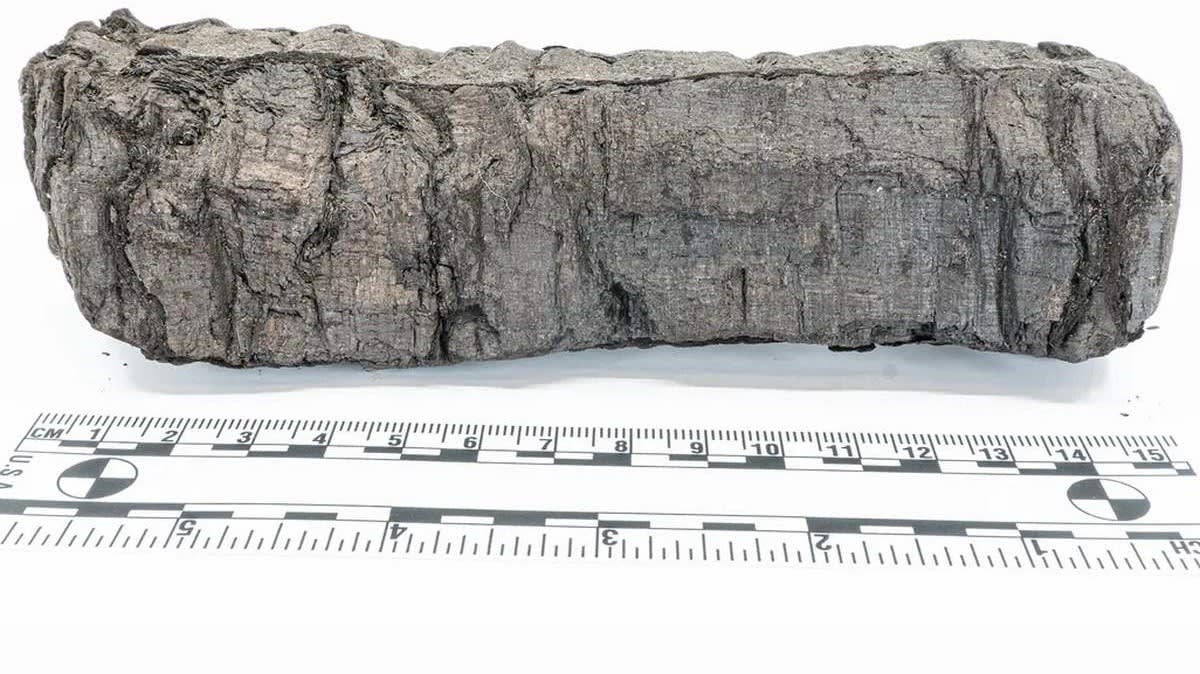
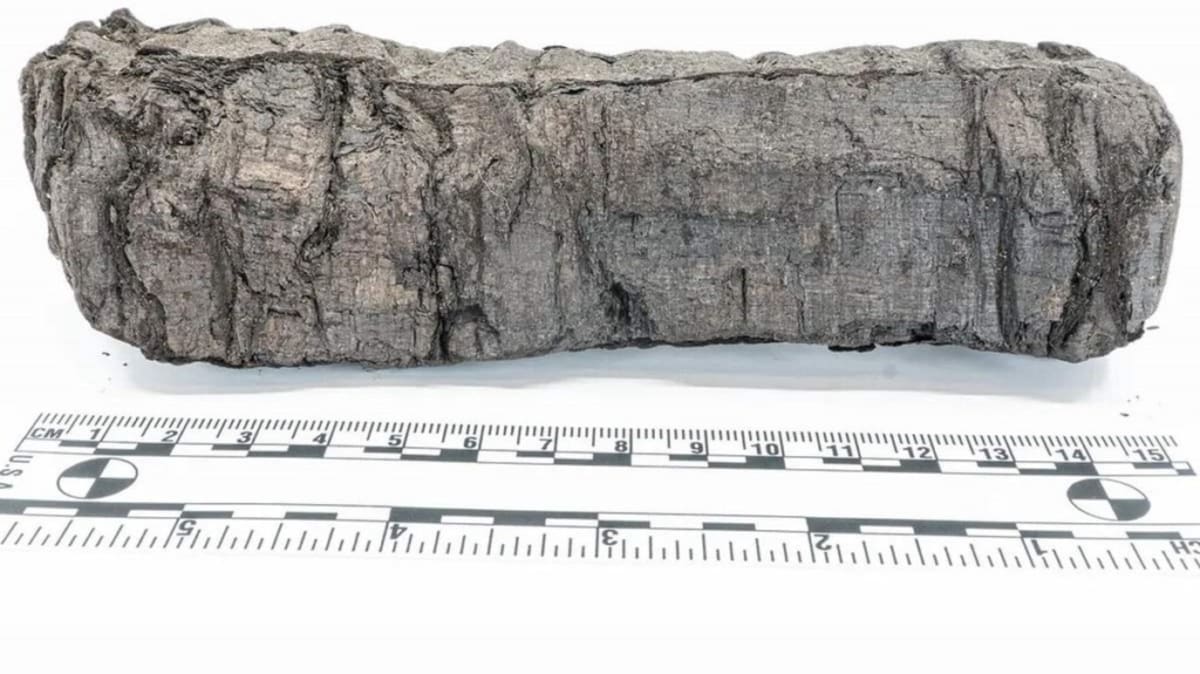
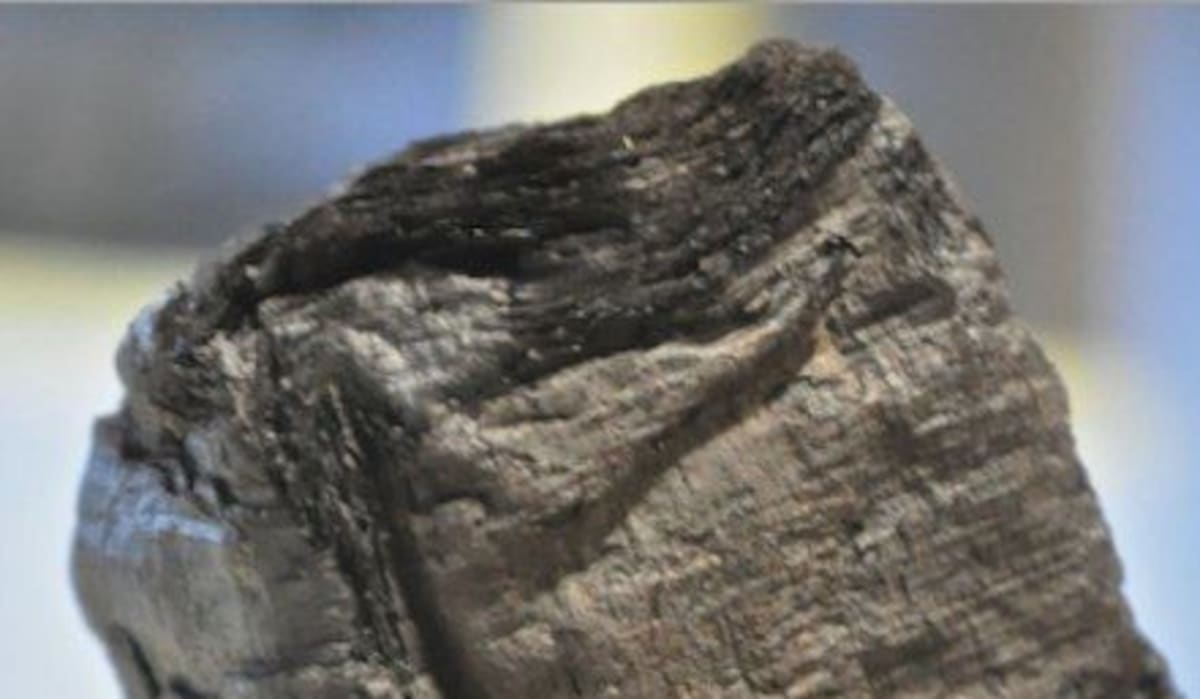
The scrolls were found in Herculaneum, a Roman city buried by the same Mount Vesuvius eruption that destroyed Pompeii in 79 AD. This library of 800 scrolls is the only intact collection from the Classical World, discovered 275 years ago in a villa that may have belonged to Julius Caesar's father-in-law.
For centuries, scholars desperately wanted to read these texts but couldn't. Every attempt to unroll them physically ended in disaster, with priceless manuscripts crumbling to dust.
Enter the Vesuvius Challenge, launched in 2023 by Silicon Valley entrepreneurs Daniel Gross and Nat Friedman alongside University of Kentucky computer scientist Brent Seales. They offered $1 million in prizes to anyone who could teach AI to read the impossible scrolls.
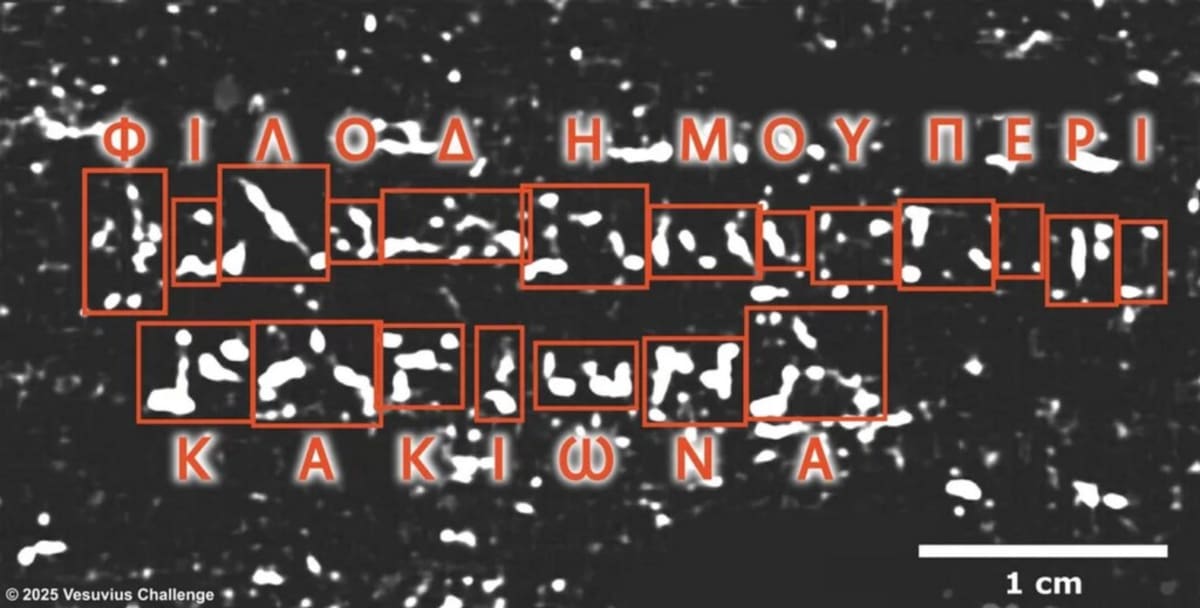
The breakthrough came from three young engineers: Youssef Nader, Luke Farritor, and Julian Schilliger. Their deep learning program decoded passages from a work called "On Vices" by Philodemus, a Greek philosopher who lived in Pompeii 200 years before the eruption.
The team used high-resolution CT scans taken at Oxford's Diamond Light Source particle accelerator. Their AI learned to detect ink on the charred papyrus, making the invisible visible again.
Now researchers at the University of Naples Federico II have fully unwrapped one complete scroll, revealing nearly five feet of text across 20 columns. Professor Federica Nicolardi says the scroll was previously rated "zero" for readability, but virtual unwrapping changed everything.
The newly readable text discusses concepts from Stoic and Epicurean philosophy, including "phronesis" (practical wisdom) and "horme" (impulse). One passage reads: "We will inquire into something, but we will not grasp it, if in some way we depart from ourselves and from our own nature."
Another scroll revealed a surprise: the title "On Gods: Book 8" by Philodemus. Scholars didn't know this work existed, let alone that it stretched across at least eight volumes.
The Ripple Effect
This breakthrough does more than recover lost philosophy. It proves that AI can unlock historical treasures once thought gone forever, opening doors for similar discoveries worldwide.
The scrolls' handwriting suggests some date to the second or third century BC, making them among the oldest in the collection. As the technology improves, hundreds more scrolls await their turn to speak again.
Ancient voices silenced by volcanic fire are finally being heard, one decoded character at a time.
More Images

Based on reporting by Good News Network
This story was written by BrightWire based on verified news reports.
Spread the positivity!
Share this good news with someone who needs it