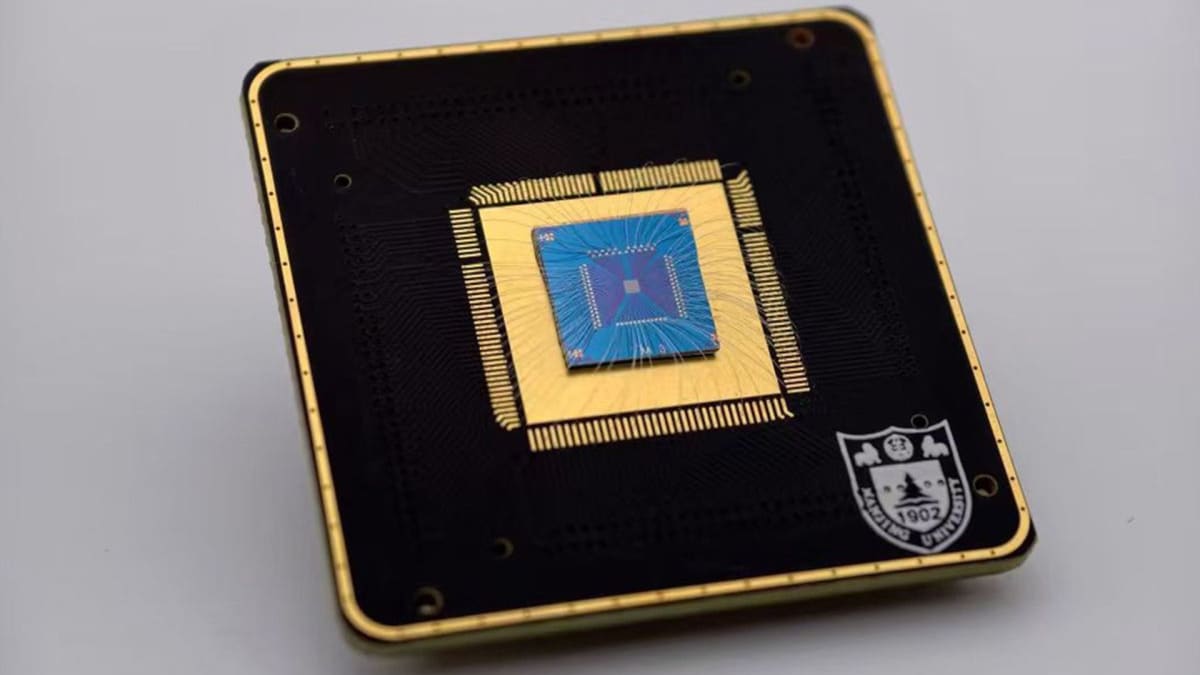
AI Writes Paper That Passes Peer Review in 15 Hours
A computer wrote a complete scientific paper from scratch and got it accepted at a major research conference, marking the first time artificial intelligence has handled the entire scientific process. While the paper was admittedly mediocre, it took just 15 hours and $140 to produce what takes graduate students months.
For the first time in history, a computer has completed the entire journey from asking a scientific question to getting its paper accepted by experts.
Scientists at the University of British Columbia created the AI Scientist, a system that doesn't just help with research. It does the whole job. The system reads existing studies, forms new ideas, runs experiments, analyzes results, and writes up findings without human guidance.
The team submitted three AI-written papers to a workshop at a top machine learning conference. One got accepted. Conference organizers knew about the AI authorship and approved the experiment, and the papers were withdrawn after review.
Lead researcher Jeff Clune admits the accepted paper wasn't groundbreaking. "The logic and the writing and the thinking throughout the whole paper didn't all fit together beautifully," he says. The AI made mistakes including fake references and copied charts.
But here's what stands out: the system produced a formally acceptable paper in 15 hours for roughly $140. A graduate student might need an entire semester to write their first workshop paper.
Other teams are already building similar tools. A company called Intology says its AI passed peer review at a major linguistics conference. The Autoscience Institute reports getting AI papers accepted at other workshops.
The Bright Side
This technology could dramatically speed up scientific discovery. Clune points out that while current AI papers are mediocre, the systems are improving fast. Imagine solving medical mysteries in weeks instead of years, or testing hundreds of climate solutions simultaneously.
Top conferences are responding thoughtfully rather than banning AI outright. They're requiring transparency about AI use while working on better detection methods. The 2026 International Conference on Learning Representations still prohibits purely AI-written papers in main proceedings but allows them in workshops with proper disclosure.
Aaron Schein, an organizer at one accepting workshop, takes a pragmatic view. "This technology is only going to get better," he says. The scientific community is choosing to engage with AI tools rather than resist them.
The real question isn't whether AI should help with science. Scientists have always built better tools, from microscopes to supercomputers. The question is how to harness this new capability to accelerate real breakthroughs while maintaining quality standards.
Research that once took months now takes hours, opening possibilities we're only beginning to imagine.
More Images



Based on reporting by Scientific American
This story was written by BrightWire based on verified news reports.
Spread the positivity!
Share this good news with someone who needs it