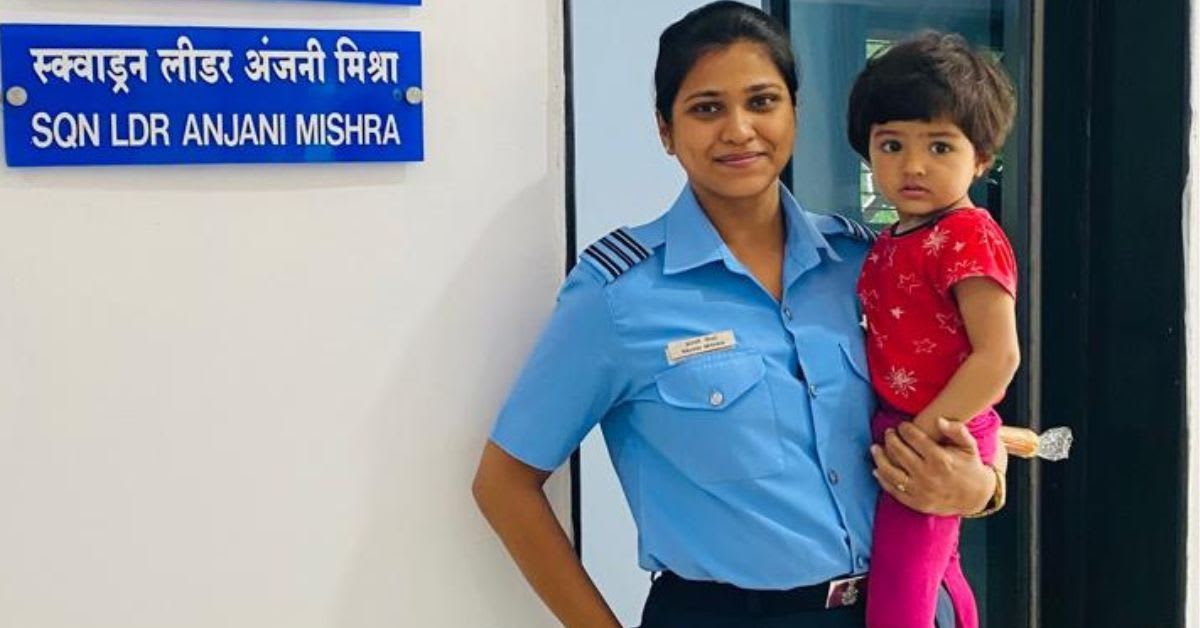
Air Force Mom Fights Postpartum Depression, Now Helps Others
Anjani Mishra thought leaving the Indian Air Force to raise her kids would be easier than military life. Instead, she faced clinical depression and two-hour nights, transforming her struggle into a mission to help overwhelmed mothers everywhere.
When Anjani Mishra traded her Indian Air Force uniform for full-time motherhood, she expected smooth sailing. What followed was the hardest deployment of her life.
As an Air Force officer, Anjani's 4:30 am runs and demanding schedule felt manageable. People praised her supermom abilities, and she believed them. But when she left her career to focus entirely on parenting, everything shifted.
Clinical depression hit hard. Her sleep dropped to barely two hours a night. The woman who once thrived in military discipline now struggled to make it through ordinary days at home.
"Being at a job in the armed forces was easier than being at home and being a full-time mom," Anjani says. The pressure to get everything right while feeling great about it became crushing.
Her second child brought new challenges. Breastfeeding took a toll on her physical and mental health while judgment from others made speaking up feel impossible.
Today, Anjani works as a life coach specializing in maternal mental health. She's sharing an urgent message for families: a new mother's mental health cannot wait.
According to the World Health Organization, around 13% of new mothers worldwide experience depression, rising to 20% in developing countries. In India, studies suggest the rate reaches 22%, affecting more than one in five mothers.
Anjani teaches families to watch for warning signs that often get dismissed. A mother withdrawing from social contact, crying frequently, or not wanting to be around her baby needs help, not judgment.
Sleep, food, rest and nonjudgmental company make a crucial difference. "I cannot stress how important sleep is for new mothers," Anjani says. "Most of them don't get it."
Some moments require immediate action. When a mother says "I don't want to live" or "I can't take it anymore," families must seek medical attention right away, even if the words seem casual.
Why This Inspires
Anjani turned her darkest struggle into her life's purpose. She now helps mothers who feel exactly as she once did, teaching families to recognize distress signals and respond with compassion instead of criticism.
Her message breaks through the silence that surrounds maternal mental health. By sharing her own story, she's creating space for other mothers to speak up without shame.
Through her coaching work, Anjani proves that getting help isn't weakness. It's the brave choice that saves lives and strengthens families.
One mother's honesty about her hardest days is now lighting the way for thousands more.
More Images
%2Fenglish-betterindia%2Fmedia%2Fmedia_files%2F2026%2F09%2F10%2Fpostpartum-depression-support-2026-09-10-17-09-22.jpg)

%2Ffilters%3Aformat(webp)%2Fenglish-betterindia%2Fmedia%2Fmedia_files%2F2026%2F09%2F10%2Fpostpartum-depression-support-2026-09-10-17-13-53.jpeg)
%2Ffilters%3Aformat(webp)%2Fenglish-betterindia%2Fmedia%2Fmedia_files%2F2026%2F09%2F10%2Fpostpartum-depression-support-2026-09-10-17-20-32.webp)
Based on reporting by The Better India
This story was written by BrightWire based on verified news reports.
Spread the positivity!
Share this good news with someone who needs it