Airship Completes 9,320-Mile Pacific Flight as Sky Cell Tower
A solar-powered airship just flew from New Mexico to Japan and back, hovering at 60,000 feet to beam cell service to the ground like a floating tower in the sky. This breakthrough could bring internet to remote areas and provide emergency coverage during disasters.
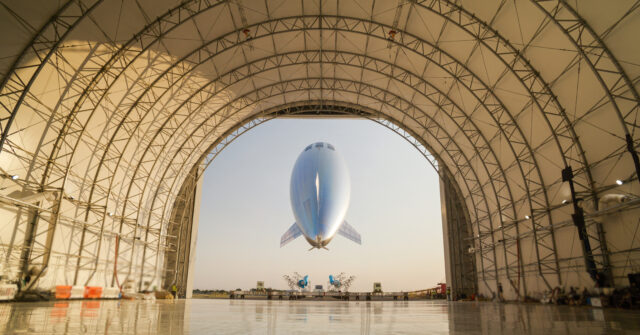
An uncrewed airship just completed a monthlong round-trip journey across the Pacific Ocean, but this wasn't about breaking distance records. It was about proving that cell towers can float in the stratosphere.
New Mexico-based Sceye launched its 270-foot helium-filled platform on August 9, 2026, sending it more than 9,320 miles to Japan and back. The airship cruised at 60,000 feet, twice as high as commercial planes and above the jet stream, powered entirely by solar panels and batteries that kept it running through day and night.
Once over Japan's Shikoku island, the floating platform did something remarkable. It provided 4G mobile service to smartphones, laptops, and drones on the ground, demonstrating how a single airship could replace 500 traditional cell towers.
The technology solves a puzzle that's stumped engineers for decades. Low-Earth orbit satellites are too far away for strong signals, and ground towers can't reach remote areas or survive natural disasters. But a stratospheric platform hovers close enough for powerful coverage while staying above weather and air traffic.
Sceye's airship can carry payloads up to 551 pounds and provide 1 kilowatt of onboard power. That's 25 to 50 times more capacity than competing high-altitude drones, thanks to advances in materials science including graphene, discovered in 2004, which strengthened the hull while keeping it lightweight.
The journey tested the platform's auto-navigation system through typhoon season. When bad weather approached, the airship simply parked itself in a safe spot and waited, then continued once conditions improved. Human operators monitored weather forecasts and set waypoints, while the system handled real-time adjustments.
The demonstration in Japan, done in partnership with telecommunications firm SoftBank, simulated emergency coverage during an earthquake or major disaster. It showed how quickly these platforms could restore communications when ground infrastructure fails.
The Ripple Effect
This technology opens doors beyond emergency response. Remote communities that lack cell service could finally get connected without the massive expense of building tower infrastructure. Islands, mountain regions, and developing areas could leapfrog traditional telecommunications entirely.
The platform stays positioned over the same location for extended periods, making it ideal for both everyday coverage enhancement and disaster scenarios. It's close enough to provide strong signals but high enough to cover vast areas.
Sceye has been refining this technology since 2016, testing progressively larger prototypes before reaching the stratosphere in 2021. This latest flight proves the concept works not just for hours or days, but for weeks at a time across ocean distances.
The sky just became a new frontier for keeping people connected, one floating tower at a time.
More Images


Based on reporting by Ars Technica
This story was written by BrightWire based on verified news reports.
Building Something New? Try the BrightWire Tech Stack Advisor
Compare modern frameworks, cloud hosting, and AI tools tailored to your project budget and scale.
Spread the positivity!
Share this good news with someone who needs it