Alabama Researchers Power Artemis II Moon Mission Success
University of Alabama scientists developed the crucial navigation software that brought NASA's Artemis II crew safely home from the moon. Their breakthrough tool is now shaping the future of American space exploration.
When orange parachutes carried the Artemis II capsule back to Earth on Friday evening, America celebrated a historic return to the moon. But at the University of Alabama in Tuscaloosa, the cheers were especially loud because their team made the journey possible.
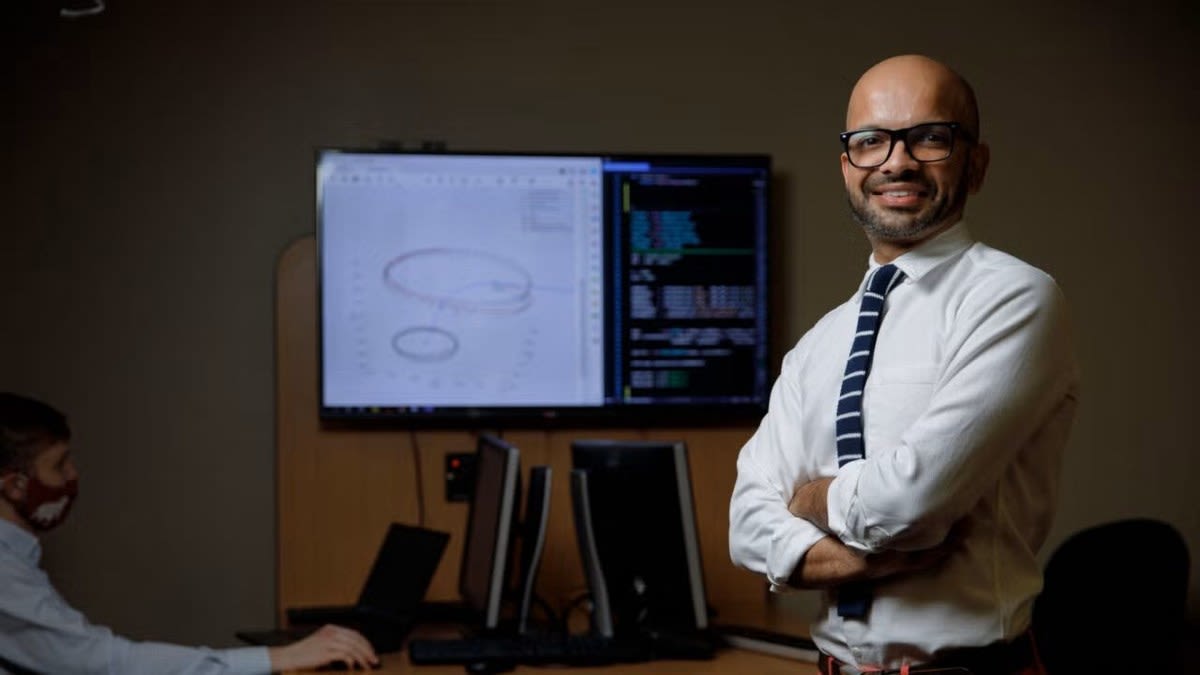
Dr. Rohan Sood and his lab at UA's Astrodynamics and Space Research Laboratory created the navigation brain behind the mission. Their software, called ASSET (Astrodynamics Software and Science Enabling Toolkit), calculated the precise curved path the spacecraft needed to follow through space.
Here's why that matters: unlike driving a car in a straight line, spacecraft must navigate complex curves shaped by gravity, speed, and direction. When NASA stopped moon missions decades ago, all those calculations became outdated. Dr. Sood's team had to rebuild the roadmap from scratch.
The challenge went beyond just crunching numbers. Different NASA centers and private companies all used their own tools that couldn't talk to each other. ASSET solved that problem by creating a common language for sharing data between institutions.
"Every center has their own tools that work great," Sood explained. "But when multiple centers working on the same mission need to share data, they have to figure out how to make these tools talk to each other."
The software now powers not just Artemis missions but also UA's own satellite projects like BAMA-1 and BAMA-2. Universities, federal institutes, and private aerospace companies across the country rely on it daily.
The Ripple Effect
Beyond launching rockets, ASSET is launching careers. One aerospace company using the software has already hired three UA graduates who learned the system as students. The partnership between UA and NASA's Marshall Space Flight Center in Huntsville continues growing stronger, with student robotics competitions and advanced manufacturing research creating more opportunities.
Alabama institutions are proving that groundbreaking space innovation doesn't only happen on the coasts. The state's contributions to America's return to the moon represent a new chapter in both space exploration and homegrown scientific achievement.
As NASA plans future missions, the tools and talent coming from Tuscaloosa will keep playing a starring role in humanity's journey beyond Earth.
Based on reporting by Google: space mission success
This story was written by BrightWire based on verified news reports.
Spread the positivity!
Share this good news with someone who needs it