Alaska Volunteers Free Young Whale After 30 Rescue Attempts
When a two-year-old humpback whale got tangled in a gillnet near Petersburg, Alaska, a team of trained volunteers spent hours in murky waters to set it free. After more than 30 attempts and expert help from a federal whale rescue coordinator, they watched the young whale swim away to safety.
Heath Whitacre was chopping wood at home when he saw the missed calls lighting up his phone. A young humpback whale was trapped in a gillnet in Frederick Sound, and his volunteer rescue team needed him immediately.
Whitacre volunteers with the Petersburg Marine Mammal Center, a local nonprofit run entirely by volunteers who respond to distressed wildlife. The two-year-old whale had tried to swim through a gillnet near Frederick Point and panicked, twisting itself into the netting that wrapped around its tail.
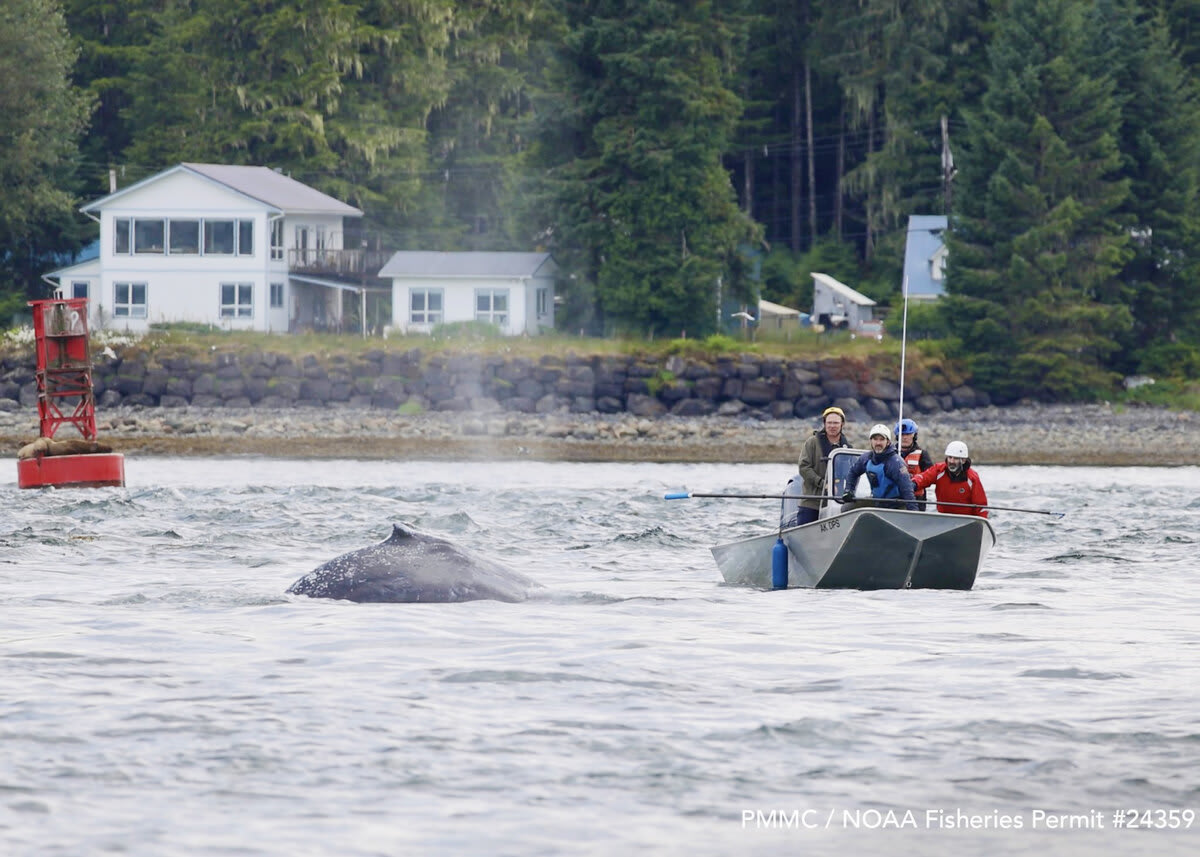
When the first crew reached the whale around 11 a.m. on July 28, they faced an immediate problem. The water near the Stikine River runs thick with glacial silt, making it impossible to see underwater. Even with a GoPro camera, volunteer coordinator Toby Bakos and his team couldn't assess how badly the whale was tangled.
After nearly eight hours on the water with no success, the team had to retreat. Before leaving, they attached a bright green tracking buoy to the net that would beam the whale's location back to them in real time. Then they called in reinforcements.
Ed Lyman arrived the next day. As NOAA's Large Whale Entanglement Response Coordinator, he's spent decades freeing trapped whales across Alaska. He'd just finished teaching a whale rescue training session on nearby Chichagof Island when he got the call.
On July 29, Petersburg assembled what Bakos called an "Avengers team" of volunteers, boat owners, an Alaska State Trooper, and Lyman. After a quick strategy meeting, they loaded rescue gear and headed out to find that green buoy.
Whitacre took the lead position on the main rescue boat, armed with a telescoping pole and a homemade knife attachment. Bakos stood directly behind him, gripping his waist to keep him from falling overboard as the boat pitched in the waves.
The whale had other ideas about being rescued. It kept diving and moving away from the boat, clearly frightened. The murky water meant the team often couldn't even see the whale's tail beneath the surface.
For two hours, they followed the young humpback in and out of the main channel. They missed over and over. Thirty attempts came and went.
Then suddenly, the line popped to the surface. The tracking buoys stopped moving. The whale swam away, finally free.
The Ripple Effect
This rescue showcases how small communities are building networks to protect marine life. Petersburg's all-volunteer team works with NOAA's Alaska Marine Mammal Stranding Network, combining local knowledge with expert training to save whales and prevent future entanglements.
Lyman doesn't just rescue whales. He investigates how they got trapped in the first place, using each incident to teach communities better prevention methods. His training sessions in tiny Alaskan towns like Tenakee Springs create ripples of expertise spreading across the state's coastal waters.
These volunteer networks matter more than ever as whale populations recover and fishing activities continue. When a two-year-old whale gets a second chance at life, it's because everyday people like Whitacre chose to answer their phones and spend hours in cold, murky water doing difficult, unglamorous work.
One young whale is swimming free today because a community showed up.
Based on reporting by Google News - Volunteer Saves
This story was written by BrightWire based on verified news reports.
Spread the positivity!
Share this good news with someone who needs it