AlphaFold Database Adds 1.7M Protein Pairs to AI Library
The world's largest protein structure database just got a major upgrade that could speed up drug discovery and disease research. AlphaFold now predicts how proteins work together, not just alone.
Scientists just unlocked a new dimension in understanding the building blocks of life, and it could transform how we develop medicines.
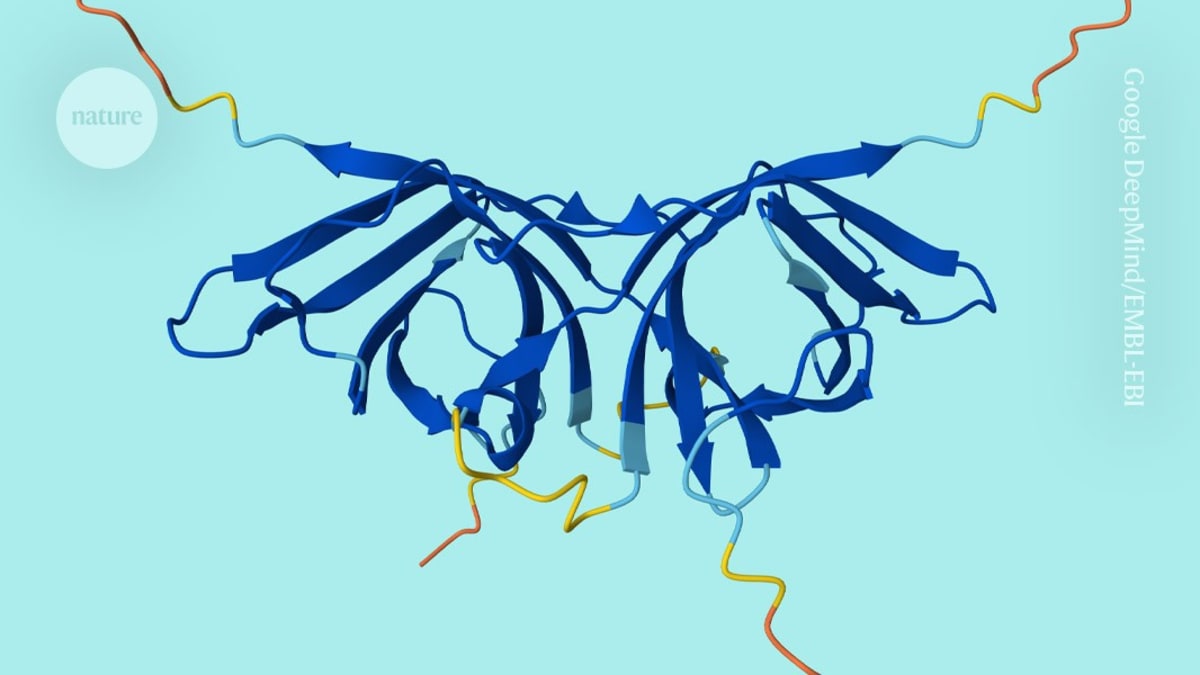
The AlphaFold protein database, used by researchers worldwide, now includes predictions for 1.7 million protein pairs called homodimers. These are two copies of the same protein working together, which is how many crucial proteins actually function in our bodies.
The database already contained 200 million individual protein structures. But that was like having a dictionary of words without knowing how they form sentences.
Many proteins only do their jobs when partnered with a copy of themselves. HIV protease, a key target for AIDS drugs, is one example. Understanding these partnerships is essential for designing effective treatments.
A global team including scientists from Seoul National University, the European Molecular Biology Laboratory, Google DeepMind, and NVIDIA tackled this challenge together. Predicting protein complexes requires enormous computing power, far beyond what single labs could manage.
The team focused on 20 of the most studied species. That includes humans, mice, yeast, and bacteria that cause diseases like tuberculosis.
The Ripple Effect
This upgrade arrives at a perfect time. Since launching in 2021, AlphaFold has become the go-to resource for molecular research. Scientists check it before starting experiments, saving months or years of lab work.
The new capability means researchers can now see how proteins interact across nearly every known species. Drug developers can better identify where medications should attach. Disease researchers can understand what goes wrong when protein partnerships fail.
The database remains completely free to access. Any scientist anywhere can use these predictions to advance their work, whether they're studying rare diseases or developing new antibiotics.
Martin Steinegger, a computational biologist who helped lead the project, calls this "the next level" for AlphaFold. His team proved that what seemed impossibly complex just a few years ago is now available to everyone.
The consortium's approach shows how collaboration solves problems too big for anyone alone. By combining expertise in biology, artificial intelligence, and computing power, they've given the global research community a tool that could help unlock treatments for diseases we haven't yet learned to cure.
More Images


Based on reporting by Nature News
This story was written by BrightWire based on verified news reports.
Spread the positivity!
Share this good news with someone who needs it