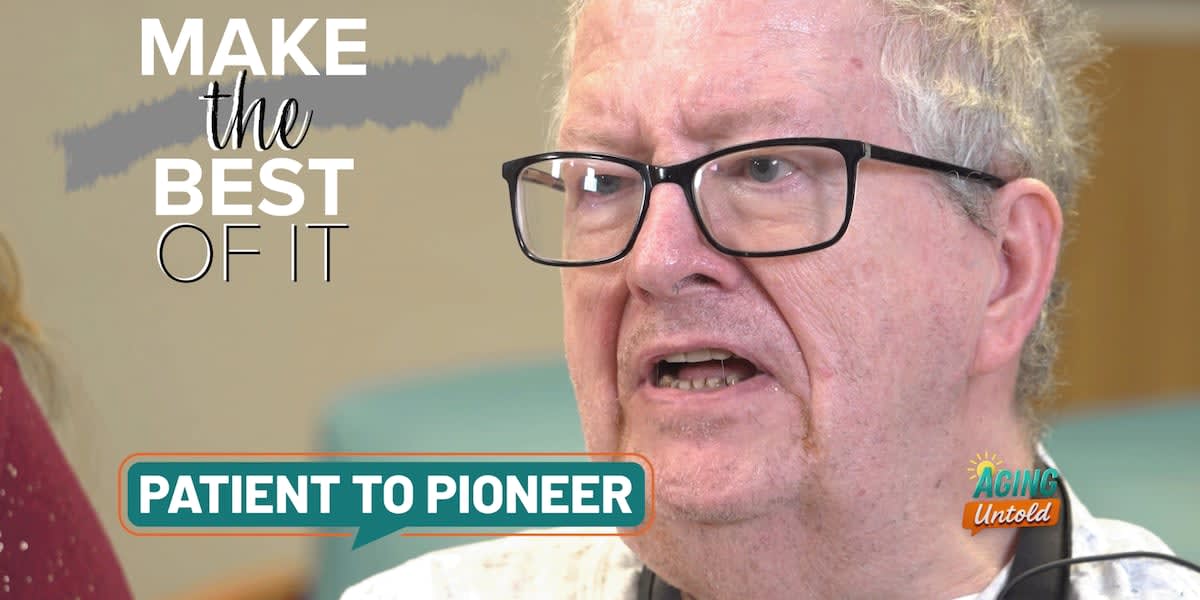
ALS Patient Joins Study to Help Others Live Better
A man with ALS chose purpose over despair, becoming the first volunteer in a Johns Hopkins study aimed at improving quality of life for patients. His decision turned a terminal diagnosis into a legacy of hope.
When Tim Evans received his ALS diagnosis on Valentine's Day 2014, he faced a choice: wait for the disease to take its course, or make his remaining years count for something bigger.
He chose hope.
Tim became the first volunteer in a groundbreaking study at Johns Hopkins Medicine in Baltimore focused on improving quality of life for ALS patients. The research, led by Dr. Nathan Crone, represents new promise for the roughly 5,000 Americans diagnosed with this devastating disease each year.
ALS is a progressive neurodegenerative disease that gradually strips away the ability to walk, talk, and breathe. For Tim, the disease has severely impacted his speech and upper body movement, making him increasingly dependent on his wife Dee for daily tasks.
But instead of letting the diagnosis define him, Tim redefined what it meant to live with ALS.
"Do I just want to sit at home, do nothing, and die?" Tim asked himself. "Or do I want to lend the rest of my life helping others?"
The answer transformed his journey from one of loss to one of purpose. By volunteering for clinical research, Tim turned his own struggle into data that could ease the burden for future patients facing the same diagnosis.
Dee has walked every step of this 10-year journey with him. "Til death do us part," she said, embodying the wedding vow that took on profound new meaning that Valentine's Day a decade ago.
Why This Inspires
Tim's choice reveals something powerful about the human spirit. Facing a disease with no cure, he found a way to reclaim control not by fighting his diagnosis, but by ensuring it wouldn't be meaningless.
His participation gives researchers crucial insights into improving life for ALS patients while treatments are still being developed. Every data point from Tim's experience could translate into better communication devices, more effective care strategies, or deeper understanding of how the disease progresses.
What could have been a story only about loss became one about legacy instead.
Tim's courage reminds us that even in our darkest chapters, we can choose to light the way for others.
Based on reporting by Google: volunteers help
This story was written by BrightWire based on verified news reports.
Spread the positivity!
Share this good news with someone who needs it