Amateur Astronomer Finds 390-Million-Year-Old Impact Crater
A Quebec stargazer planning a camping trip spotted a mysterious 25-kilometre ring on satellite images that turned out to be an ancient meteor crater hidden in plain sight for millions of years. Scientists confirmed the discovery after wading through 50 metres of water to reach the remote site and finding rare shatter cones that prove a massive space rock once struck Earth there.
📺 Watch the full story above
Joël Lapointe was just looking for a good place to pitch a tent when he made a discovery that had eluded geologists for centuries.
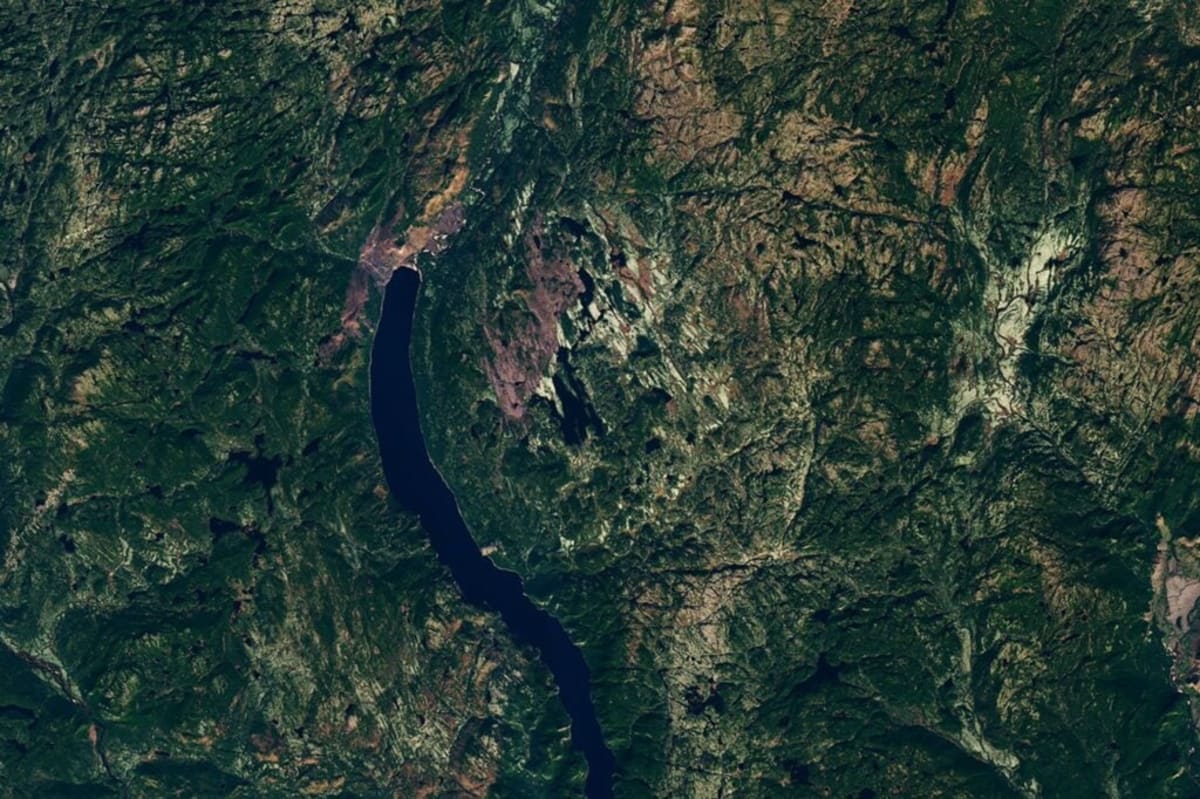
The Quebec amateur astronomer was scrolling through satellite imagery in 2024, scouting camping spots in the remote Côte-Nord region, when he noticed something odd. A nearly perfect ring of ridges circled Lake Marsal, stretching 25 kilometres across.
The formation was large enough to be an obvious landmark, yet it didn't match any known geological structure. Lapointe could have shrugged it off, but he knew exactly where to send his hunch.
He submitted his find to Impact Earth, a project run by Western University planetary geologist Gordon Osinski. The program exists specifically to field tips like this from curious citizens, though Osinski has said the overwhelming majority turn out to be false alarms.
Lapointe's ring was different. It survived the screening process and earned something rare: an actual field expedition.
In October 2025, Osinski and three other researchers flew to the site by floatplane. The aircraft couldn't reach shore, forcing the team to wade through 50 metres of water while hauling their equipment. Osinski, who has led expeditions across six continents, called it one of the most grueling trips he'd ever made.
Once on solid ground, the terrain matched what satellites had hinted at from above. Raised, deformed rock formations suggested a complex impact crater, the kind that develops a central uplift when a massive object strikes at high speed.
The team needed physical proof. They were hunting for shatter cones, branching fracture patterns etched into rock by extreme shockwaves. These formations don't come from volcanoes, erosion, or glaciers. Osinski calls them the only unequivocal evidence of an impact event visible to the naked eye.
They found them. The shatter cones confirmed what Lapointe had spotted from his computer screen: a genuine meteor crater.
The team also documented cliffs of impact melt rock about four kilometres from the structure's center. This forms when collision pressure and heat literally liquefy rock, which then cools into a distinct texture. Together with the shatter cones, this physical evidence separated a confirmed impact from just an interesting shape on a map.
Why This Inspires
This discovery shows how modern science has opened its doors to everyone. You don't need a PhD to contribute to major geological discoveries anymore. You need curiosity, a computer, and the willingness to speak up when something looks off.
Lapointe's find also reminds us that Earth still holds secrets hiding in plain sight. For 390 million years, this crater sat in Quebec's wilderness, weathered by ice ages and covered by vegetation, waiting for someone to connect the dots.
After consulting the Innu Council of Ekuanitshit, whose traditional territory includes the area, researchers are calling the structure Uhackatik. Laboratory analysis dates the impact to the Devonian period, roughly 390 million years ago, when Earth looked completely different.
The crater's softened shape today tells a separate story: nearly 400 million years of erosion gradually transformed a sharp-edged wound in Earth's surface into the gentle ring of ridges that caught one camper's eye.
Sometimes the biggest discoveries start with the smallest questions from the most unexpected places.
More Images

Based on reporting by Google News - Science
This story was written by BrightWire based on verified news reports.
Spread the positivity!
Share this good news with someone who needs it