
Amazing Cheese Cave Discovery Could Help Feed the World and Reduce Food Waste
Scientists have witnessed fungi rapidly evolving in Vermont cheese caves, transforming from green to white in just a few years. This breakthrough discovery could revolutionize how we preserve food and help reduce the staggering 40% of global food production that currently goes to waste.
Sometimes the most wonderful scientific breakthroughs happen in the most unexpected ways—and this heartwarming story proves it perfectly!
It all started with a romantic gesture in 2016, when Tufts University professor Benjamin Wolfe orchestrated a surprise proposal for his former advisor, Rachel Dutton, at Vermont's picturesque Jasper Hill Farm. While the proposal was the main event, Wolfe also collected samples of Bayley Hazen blue cheese from the farm's aging caves for his research. Little did anyone know that these samples would lead to an exciting discovery years later.
Thanks to Wolfe's self-described habit of never throwing samples away "just in case," those cheese samples remained safely stored. Fast forward several years, and graduate student Nicholas Louw returned to the same cheese caves to collect fresh samples. What he found was remarkable: the cheese that had originally been covered in green fungus was now sporting a beautiful white coating instead.
The team made a thrilling discovery—the fungus hadn't been replaced, it had evolved! In the relatively short span of a few years, the Penicillium solitum fungus had undergone natural selection in the dark cheese caves. The key change involved the alb1 gene, which controls melanin production. Melanin acts as protective armor against UV damage and gives the fungus its green color.
Here's where it gets really exciting: living in the dark caves, the fungi no longer needed this sun protection. By evolving to eliminate melanin production, the fungi essentially became more efficient, saving precious energy that could be invested in survival and growth instead.
"You can think of melanin as an armor that organisms make to protect themselves from UV damage," Louw explained enthusiastically. "If you are growing in a dark cave and can get by without melanin, it makes sense to get rid of it, so you don't have to expend precious energy to make it."
This discovery isn't just fascinating from a scientific perspective—it holds tremendous promise for addressing one of humanity's biggest challenges: food waste. Currently, a staggering 40% of food produced worldwide is wasted due to spoilage during growth, transport, or storage. Understanding how fungi and mold evolve and adapt in controlled environments could be the key to developing better food preservation methods.
Imagine a future where this knowledge helps us keep food fresh longer, reducing waste and making nutritious food more accessible to communities around the globe. The implications are truly inspiring!
The research team's findings, published in the prestigious journal Current Biology, demonstrate how curiosity, careful observation, and yes—even a romantic proposal—can lead to discoveries that may help feed our world more efficiently.
This wonderful example of rapid evolution happening right before our eyes reminds us that nature is constantly adapting and teaching us new lessons. Who knew that cheese caves in Vermont could hold secrets to solving global food security challenges? Science truly does work in deliciously mysterious ways!
More Images

Based on reporting by Google: scientific discovery
This story was written by BrightWire based on verified news reports.
Spread the positivity! 🌟
Share this good news with someone who needs it
More Good News
 🚀 Innovation
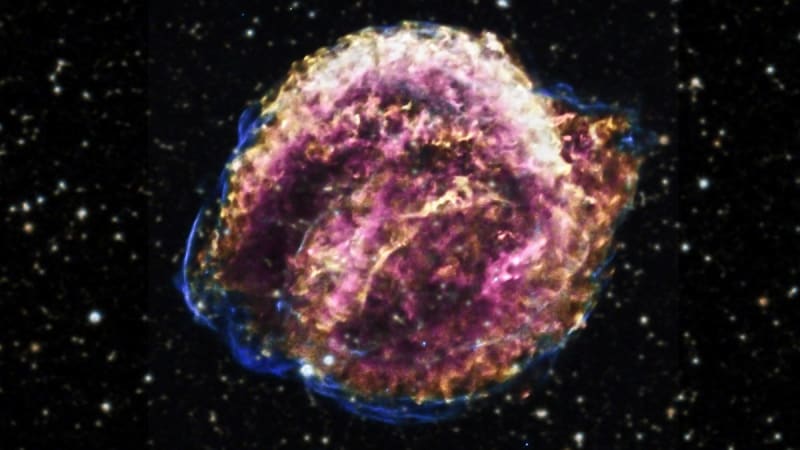
NASA's 25-Year Timelapse Reveals 400-Year-Old Supernova Still Dazzling Scientists
 🚀 Innovation
Philanthropists Fund Hubble-Beating Space Telescope in Just 3 Years for Fraction of Cost
 🚀 Innovation
Four Sisters Build Europe's First Electric Tractor, Win National Energy Award
Joke of the Day
Why don't scientists trust atoms?
Explore Categories
Quote of the Day
"The only way to do great work is to love what you do."
— Steve Jobs