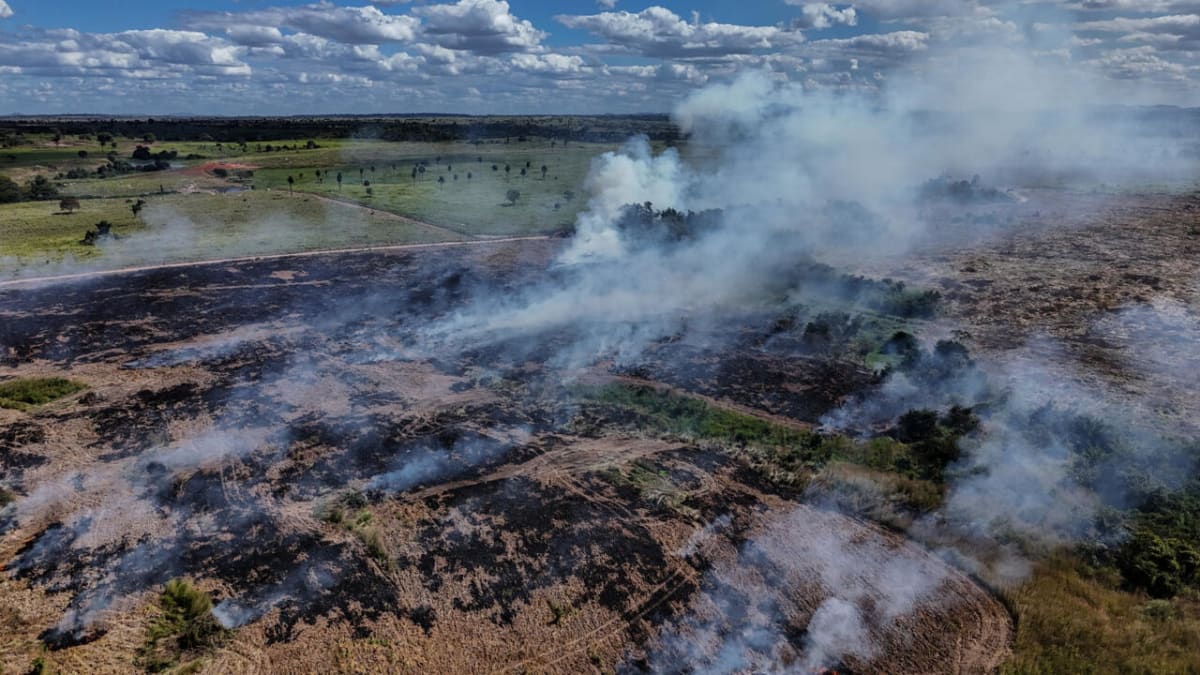
Amazon Deforestation Drops 21% to Lowest Level Since 2019
Brazil's Amazon lost 21% less forest last year, marking the lowest deforestation rate since tracking began in 2019. The progress shows that aggressive enforcement and political commitment can reverse even the most stubborn environmental trends.
Brazil just proved that saving the rainforest isn't just a dream. The country cut Amazon deforestation by 21% last year, reaching the lowest level since records began in 2019.
The MapBiomas monitoring network reported that Brazil lost 985,000 hectares of native vegetation in 2025, down from over 1.2 million hectares the year before. That's roughly 2.4 million acres saved.
President Luiz Inacio Lula da Silva made stopping deforestation a centerpiece of his administration after taking office. His approach focused on ramping up enforcement actions and imposing sanctions on illegal loggers.
The strategy worked across all six of Brazil's major ecosystems, not just the Amazon. Even the Cerrado, a vast savanna south of the rainforest that's been hit hardest by clearing, saw significant improvement.
"We are seeing an increase in enforcement actions and sanctions, which have a direct correlation with the drop in deforestation in all Brazilian biomes," Marcos Rosa, MapBiomas's technical coordinator, told reporters. The consortium includes universities, NGOs, and technology companies working together to track forest loss.
The numbers represent a dramatic turnaround from the previous four years under far-right President Jair Bolsonaro, when logging accelerated. Lula has committed to eliminating illegal deforestation entirely by 2030.
The Ripple Effect
Protecting the Amazon matters far beyond Brazil's borders. The rainforest acts as a massive carbon sink, absorbing greenhouse gases that would otherwise accelerate climate warming worldwide.
When trees stay standing, they benefit the entire planet. The Amazon produces 20% of the world's oxygen and influences weather patterns across South America and beyond.
Brazil's success also demonstrates that environmental destruction isn't inevitable. Political will combined with consistent enforcement can reverse trends that seemed unstoppable just a few years ago.
Other countries watching Brazil's progress now have a roadmap. The combination of monitoring technology, legal consequences, and sustained commitment creates real results.
The fight isn't over yet. Five trees still fall every second in the Amazon, and agriculture accounts for 99% of vegetation loss. But the trend line now points toward hope instead of despair.
Brazil proved this year that forests can make a comeback when people decide to protect them.
More Images
Based on reporting by France 24 English
This story was written by BrightWire based on verified news reports.
Spread the positivity!
Share this good news with someone who needs it

%2Fhttps%3A%2F%2Ftf-cmsv2-smithsonianmag-media.s3.amazonaws.com%2Ffiler_public%2F3f%2F8b%2F3f8ba94f-bec9-40c9-b0c7-1b63c5ebea39%2F1280px-ancient_and_modern_4000_years.jpg)