Amazon Turtle Women Blend Tech and Tradition to Save Species
Seven Indigenous women in Ecuador are rescuing a threatened turtle species using an app and ancestral knowledge. Their work has already saved 208 baby turtles in just one year.
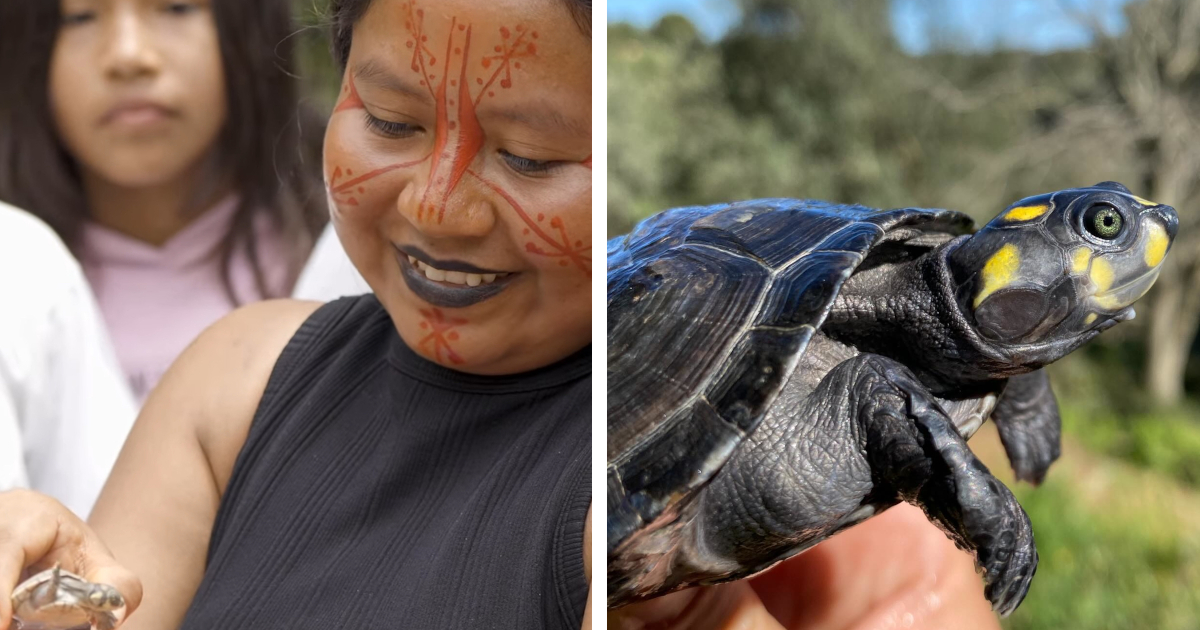
In the Ecuadorian Amazon, a group of seven Indigenous women are bringing a sacred turtle species back from the edge of extinction, one egg at a time.
The Siekopai people have protected charapa turtles for generations, believing these wide-eyed creatures connect the physical and spiritual worlds. But pollution, habitat loss, and hunting have pushed the yellow-spotted Amazon River turtle onto the vulnerable species list.
Janeth Piaguaje and six other women decided to act. Calling themselves Tari Nomiowa'i, or "turtle women," they patrol the banks of the Aguarico River searching for turtle tracks and nests.
When they find eggs, they carefully collect them using techniques passed down through generations. Piaguaje learned the delicate handling process from her father, who taught her exactly when turtles lay their nests and how to transport eggs safely.
The women take the eggs to an incubation facility where baby turtles can hatch protected from predators. They use the Epicollect5 app to track each nest's location, date, and egg count, creating detailed records of their conservation work.
But technology alone isn't enough. The women also spend hours cleaning plastic bags and debris from turtle beaches and caring for hatchlings during their vulnerable first month of life. They feed the babies cassava, sweet potato, and taro leaves until they're strong enough to survive in the increasingly polluted river.
The Ripple Effect
In just one year, the turtle women collected 235 eggs and successfully hatched 208 baby turtles. The entire Siekopai community gathered to release the hatchlings into the Aguarico River, turning conservation into a shared cultural celebration.
Their work preserves more than just a species. It strengthens traditional knowledge, honors spiritual beliefs, and shows younger generations how to protect their ecosystem.
"When we protect turtles, we don't just care for a species," Piaguaje explained. "We honor the spirits of the river, strengthen our culture, and maintain the sacred pact between our community and nature."
The turtle women prove that the most powerful conservation work happens when ancient wisdom meets modern tools.
Based on reporting by Planet Wins Desk
This story was written by BrightWire based on verified news reports.
Play Today’s BrightWire Positive Mini Crossword & Word Game
Keep your mind sharp with our free 5-minute uplifting daily crossword and positivity word puzzle.
Spread the positivity!
Share this good news with someone who needs it


