Amroha's Dholak Makers Keep Ancient Craft Beating Strong
In Amroha, India, thousands of artisans still handcraft the dholak drum the traditional way, sustaining an entire local economy built on wood, goat skin, and generations of skill. Now, government support is helping this centuries-old craft reach even more celebrations across the country.
In the district of Amroha, Uttar Pradesh, the steady rhythm of the dholak drum doesn't just soundtrack India's weddings and festivals. It also keeps thousands of families fed, housed, and thriving.
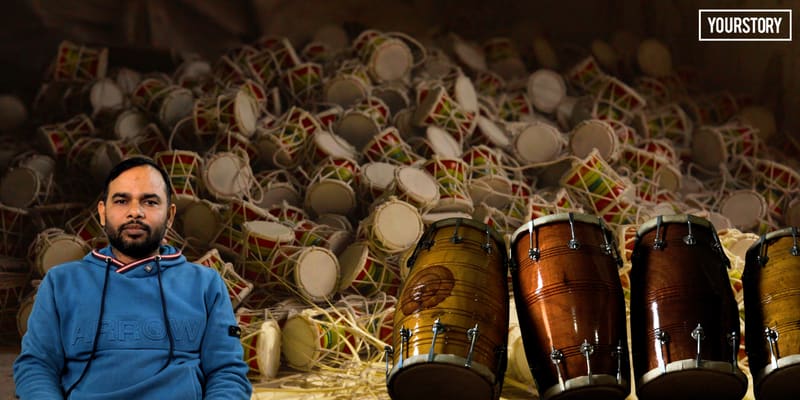
For generations, skilled craftsmen have transformed mango wood and goat skin into one of India's most beloved instruments. The process hasn't changed much over the decades: logs become hollow shells, stretched animal hide becomes sound, and patient hands spend days perfecting each drum's distinctive voice.
Rajeev Kumar Prajapati runs Ram Musical Handicraft and estimates that 90 to 95 percent of dholak production remains handmade, even in workshops with basic machinery. "Machines may assist certain stages, but the instrument still relies overwhelmingly on skilled hands," he explains.
The craft supports an impressive web of livelihoods. Wood cutters source the mango logs, shapers carve the hollow bodies, painters add decoration, and skin-fitters stretch the goat hide that gives each drum its tone. Packers and traders complete the journey, sending finished dholaks to celebrations across India.
Rajeev's own workshop employs 30 to 35 artisans depending on order volumes. Demand follows India's festive calendar closely, with dholaks dominating wedding season and Navratri while smaller drums called damrus spike during Shivratri.
What makes Amroha special is scale. According to local estimates, thousands across the district depend entirely on this single craft for their income. Even when dholaks are sold in distant markets, the wooden frame always comes from Amroha's production ecosystem.
The Ripple Effect
Recognition came when Uttar Pradesh's One District One Product initiative officially named "Musical Instrument (Dholak)" as Amroha's signature product. Government listings count hundreds of small manufacturing units and over a thousand artisans in the local cluster.
The ODOP designation brought tangible support. Workshops now access financing and subsidies that help them buy better tools, streamline workflows, and fulfill larger orders. For artisans who once worked entirely by hand in modest sheds, even small improvements make a real difference.
The craft has adapted smartly to changing markets. Traditional rope-tied dholaks now share shelf space with modern nut-and-bolt variants, both finding eager buyers. Innovation happens without sacrificing the handmade quality that makes Amroha's drums special.
At its core, the process remains beautifully simple: wood becomes hollow, skin becomes sound, and hands shape both with the same patience craftsmen brought to the work generations ago. In Amroha, that ancient rhythm keeps beating strong.
More Images

Based on reporting by YourStory India
This story was written by BrightWire based on verified news reports.
Spread the positivity!
Share this good news with someone who needs it

%2Fhttps%3A%2F%2Ftf-cmsv2-smithsonianmag-media.s3.amazonaws.com%2Ffiler_public%2F15%2F3b%2F153b5427-10f9-4ad6-b039-8823a36efc6f%2Fhd100065orig.jpg)