Ancient Black Hole Breaks Cosmic Speed Limit by 13x
Scientists discovered a supermassive black hole from the early universe growing 13 times faster than physics should allow, challenging our understanding of how these cosmic giants form. The breakthrough could solve a major mystery about how black holes grew so massive so quickly after the Big Bang. ##
A black hole from the dawn of time is rewriting the rules of cosmic growth, and scientists are thrilled about what it means for understanding our universe.
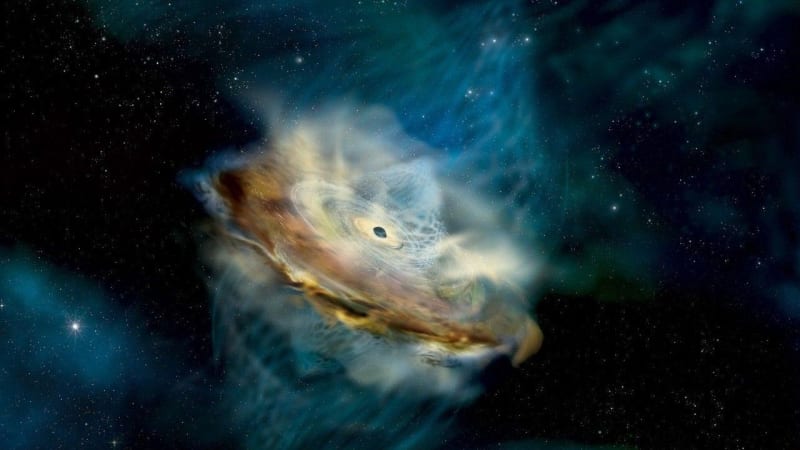
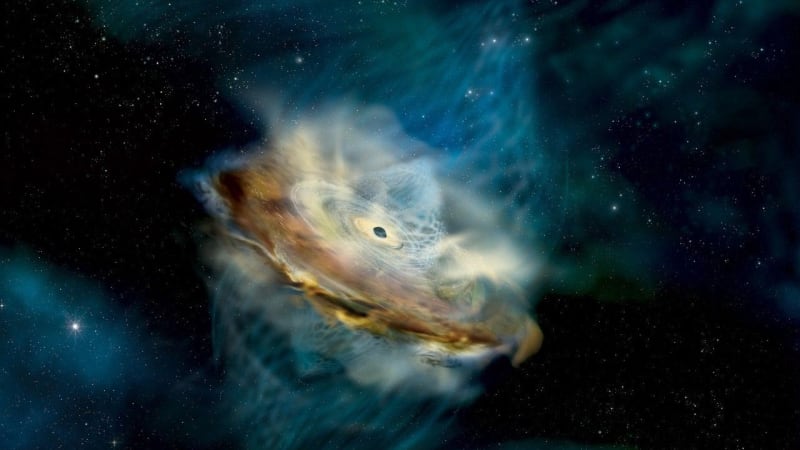
Researchers discovered a supermassive black hole called ID830 that's breaking the speed limit on growth by a factor of 13. Even more exciting, it's producing two types of energy emissions that weren't supposed to happen together, opening new doors to understanding how the universe's earliest giants formed.
ID830 already weighed 440 million times more than our sun just 12 billion years ago, when the universe was only 15% of its current age. That's over 100 times more massive than the black hole at the heart of our Milky Way galaxy.
Black holes normally have a built-in speed limit called the Eddington limit. As they pull in gas and dust, the incoming material creates radiation pressure that pushes outward, naturally slowing down the feeding process. It's like a cosmic traffic cop keeping things orderly.
But ID830 found a way around this limit. The research team, publishing their findings in The Astrophysical Journal on January 21, observed the black hole in multiple wavelengths to understand how it's pulling off this impressive feat.
Scientists think the black hole might be consuming matter from a disk around its middle while shooting radiation out from its poles. This clever geometry means the outward pressure doesn't directly block the incoming food, allowing for a cosmic all-you-can-eat buffet.
Anthony Taylor, an astronomer at the University of Texas at Austin not involved in the study, explained that black holes can temporarily exceed their normal limits before radiation builds up enough to slow them down. There are multiple possible setups where this breakthrough feeding could work.
Why This Inspires
This discovery helps solve one of astronomy's biggest puzzles: how did supermassive black holes get so enormous so quickly after the Big Bang? Understanding these extreme eaters from the early universe shows us that nature is far more creative than our theories predicted.
The breakthrough also demonstrates how much we still have to learn about the cosmos. Every time scientists think they understand the rules, the universe finds an exception that teaches us something new about how reality actually works.
Finding black holes that break the supposed limits isn't just about cosmic record-keeping. These discoveries reshape our entire understanding of how galaxies form and evolve, including the one we call home.
The universe keeps surprising us with possibilities we never imagined, and that's genuinely exciting news for anyone who's ever looked up at the night sky and wondered how it all began.
##
More Images

Based on reporting by Google News - Science
This story was written by BrightWire based on verified news reports.
Spread the positivity!
Share this good news with someone who needs it