Ancient Cave at 7,333 Feet Rewrites Prehistoric History
Archaeologists discovered a prehistoric settlement in Spain's Pyrenees where ancient communities lived for 5,000 years at extreme altitude. The finding challenges everything scientists thought they knew about how early humans used mountain environments.
A cave perched more than 7,000 feet high in the Spanish mountains just proved that prehistoric humans were far tougher and more resourceful than anyone imagined.
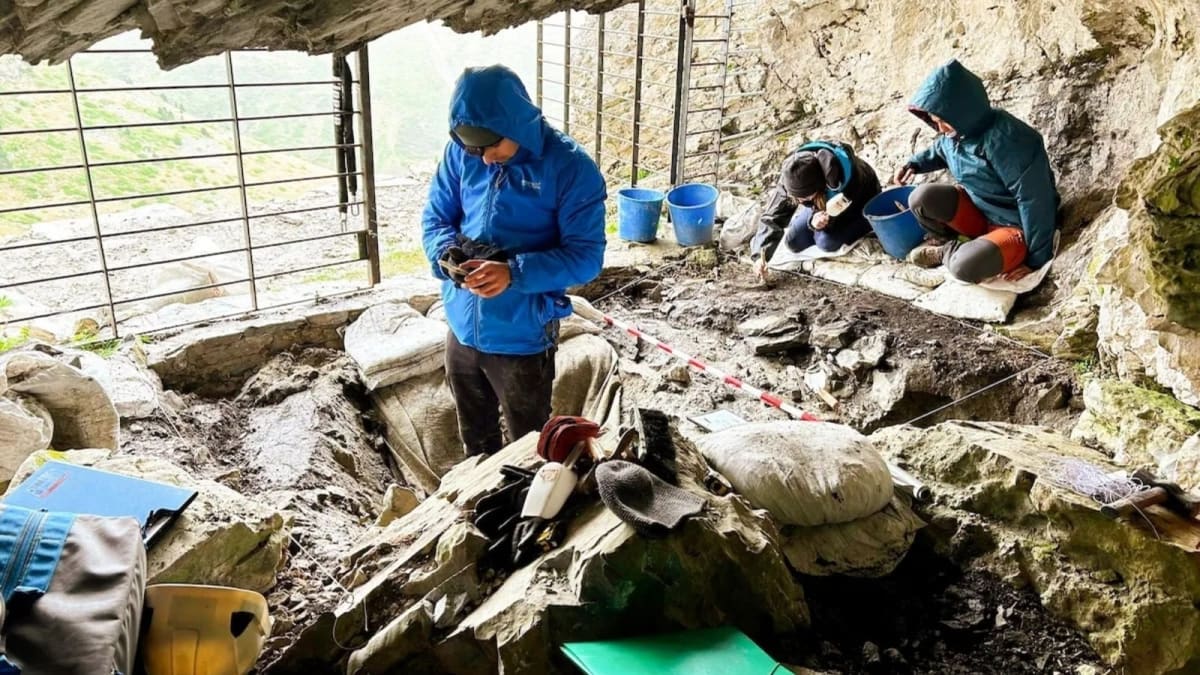
Researchers uncovered evidence that ancient people lived inside Cova 338, a cave in Spain's Núria Valley, for roughly 5,000 years starting around 3000 BC. The site sits at 7,333 feet above sea level, making it the highest prehistoric dwelling ever found in the region.
For decades, scientists believed high mountain areas were just temporary routes for travel or quick seasonal visits. Nobody thought ancient communities actually lived there full time. The evidence from this cave tells a completely different story.
Between 2021 and 2023, teams from the Universitat Autònoma de Barcelona and IPHES-CERCA dug into the cave floor and found treasures that revealed daily life. Hearths showed where families cooked meals. Animal bones indicated what they ate. Ceramic fragments proved they brought supplies and stayed awhile.
Personal items made the discovery even more remarkable. Archaeologists found a pendant crafted from a marine shell and another made from a brown bear tooth. These weren't survival necessities but treasured possessions that people carried to their mountain home.
The cave wasn't occupied continuously. Dating shows people left for periods and then returned, suggesting they followed planned seasonal patterns or economic cycles. This wasn't random wandering but organized use of mountain resources.
One discovery stood out above the rest. Researchers found green minerals identified as malachite, rich in copper. The materials appear to have been processed inside the cave, providing some of the earliest evidence of copper extraction in Western Europe.
The Ripple Effect
This single cave is changing how scientists understand entire prehistoric societies. Ancient communities didn't just survive in extreme environments. They thrived there, developed sophisticated knowledge of mountain resources, and built economic systems around valuable materials like copper.
The findings, published in Frontiers in Environmental Archaeology, show these high-altitude locations weren't marginal spaces at all. They were important strategic and economic centers connected to wider prehistoric networks across the region.
Modern technology makes mountain living easier today, but these ancient families managed it with stone tools and animal skins. Their adaptability and ingenuity laid groundwork for how humans would eventually settle every corner of the planet, no matter how challenging the landscape.
Based on reporting by Google: archaeological discovery
This story was written by BrightWire based on verified news reports.
Spread the positivity!
Share this good news with someone who needs it