Ancient DNA Reveals Surprising Diversity in Plague Victims
Scientists analyzing teeth from a 7th century mass grave discovered that plague victims in Jordan came from across the ancient world. The breakthrough reveals how diverse and connected our ancestors were, even in their darkest hours.
A team of scientists just unlocked a 1,400-year-old mystery hidden in human teeth, and what they found changes how we see our ancient ancestors.
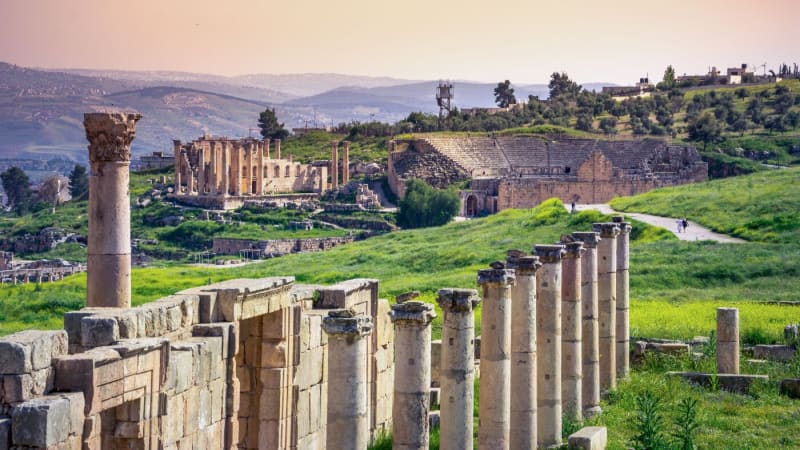
In the year 650, plague swept through Jerash, a bustling city in what is now Jordan. Within days, hundreds of people died so quickly that survivors converted pottery workshops into a mass grave, burying victims without ceremony or possessions.
Now, researchers at the University of South Florida have analyzed DNA and chemical markers from those victims' teeth. What they discovered surprised everyone: the people buried together came from wildly different places, including central Africa, eastern Europe, and Anatolia.
"They had very different childhoods," says geneticist Rays Jiang, who led the study published in the Journal of Archeological Science. "They ate different food. Some drank water from wells, some from cisterns, some from mountain streams."
The team used two cutting-edge technologies to piece together the story. They sequenced mitochondrial DNA and analyzed isotopes like carbon and nitrogen that get locked into tooth dentine during childhood, creating a permanent record of where someone grew up.
The findings paint a picture of Jerash as an incredibly diverse city on a major trade route. Among the victims were likely merchants, workers, pilgrims, and families who had traveled far seeking opportunity in this thriving center of ceramic manufacturing.
Why This Inspires
This research does more than solve an ancient mystery. It shows that human mobility, diversity, and connection aren't modern inventions.
Even 1,400 years ago, people crossed continents seeking better lives, building communities with neighbors from distant lands. The mass grave captured something rarely preserved in ancient cemeteries: proof that our ancestors built multicultural societies long before we had words for it.
The study also reveals humanity's resilience. After earlier plague waves devastated Jerash, new workers arrived to rebuild. When tragedy struck again, the cycle repeated, showing an ancient version of the same determination we see in communities recovering from disasters today.
Modern antibiotics now treat plague extremely effectively when caught early. The bacteria that killed so many in Jerash is the same one that caused the Black Death centuries later, but today it represents a problem we've learned to solve.
These 230 victims, buried hastily in workshops beneath a Roman stadium, now tell a story of hope: humans have always been brave enough to cross borders, start over, and build diverse communities, even knowing the risks.
More Images
Based on reporting by NPR Science
This story was written by BrightWire based on verified news reports.
Spread the positivity!
Share this good news with someone who needs it