Ancient Fossil Reveals Birth 95 Million Years Earlier
Scientists found evidence that an ancient mammal ancestor gave birth to live young 236 million years ago, pushing back the origin of live birth by nearly 100 million years. A rare growth mark in fossilized bone from Argentina revealed the animal's newborn was surprisingly large, just like modern mammals.
A tiny growth ring inside a 236-million-year-old fossil bone just rewrote part of the story of how mammals came to be.
Scientists studying a Chiniquodon theotonicus fossil from Argentina discovered something they had never seen before in ancient mammal ancestors: a neonatal line. This microscopic mark forms when bone growth suddenly speeds up right after birth, and it gave researchers their first real clue about how big the animal's babies were.
The numbers told a surprising story. Using the neonatal line, the team estimated the animal weighed about 1.7 kilograms at birth and roughly 12 kilograms as an adult. That meant newborns were about 14% of their adult body mass.
When researchers compared that ratio to thousands of living animals, the result was clear. Reptiles of similar size produce tiny hatchlings weighing only 0.1% to 0.6% of adult body mass. Birds do slightly better but still fall far below the fossil animal. Only placental mammals give birth to babies as large as 14% of their adult weight.
Dr. Leandro Gaetano, the study's lead author, said the team was amazed to find that this ancient creature grouped with modern placental mammals rather than reptiles or birds. The discovery suggests live birth existed in the mammalian lineage at least 95 million years earlier than scientists previously thought.
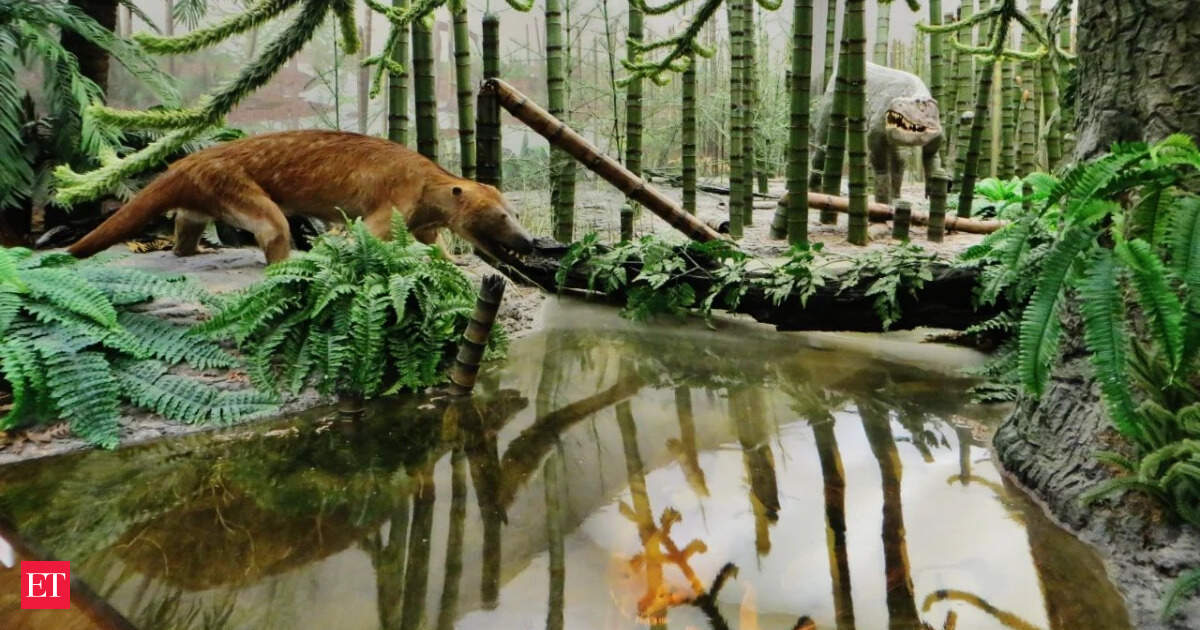
Chiniquodon theotonicus was a cynodont, part of the evolutionary line that eventually led to true mammals. For years, scientists assumed these ancient animals laid eggs. This fossil challenges that assumption and raises new questions about how many other cynodonts might have given birth to live young.
Why This Inspires
This discovery shows how one tiny detail preserved in ancient bone can unlock secrets that have puzzled scientists for generations. The Triassic period was a time of dramatic environmental change, with harsh climates and intense competition for survival.
Researchers believe live birth may have given cynodonts a survival advantage by protecting developing embryos inside the mother's body instead of leaving them vulnerable in eggs. It's a reminder that nature has been solving complex problems through innovation for hundreds of millions of years.
María Miceli Baro, a graduate student who worked on the study, pointed out that no one had ever observed a neonatal line in cynodonts before. The team published their findings in Frontiers in Mammal Science, opening new doors for understanding how mammals evolved their most distinctive traits.
This ancient animal's story connects directly to every mammal alive today, including us.
More Images




Based on reporting by Google: fossil discovery
This story was written by BrightWire based on verified news reports.
Spread the positivity!
Share this good news with someone who needs it