Ancient Fossils Push Complex Life Back 4 Million Years
Scientists in China just unearthed 700 fossils that could rewrite the story of when complex life first appeared on Earth. These ancient creatures lived at least 4 million years earlier than we thought possible.
A treasure trove of ancient fossils discovered in southwestern China is forcing scientists to rethink everything they knew about when complex life first emerged on our planet.
Between 2022 and 2025, an international research team excavated roughly 700 remarkably preserved specimens from the Jiangchuan Biota site in Yunnan province. What they found suggests sophisticated animals were thriving between 554 million and 539 million years ago, pushing back the timeline for complex life by at least 4 million years.
For decades, scientists believed diverse animal forms first appeared during the Cambrian period about 542 million years ago. These newly dated fossils from the earlier Ediacaran era tell a different story entirely.
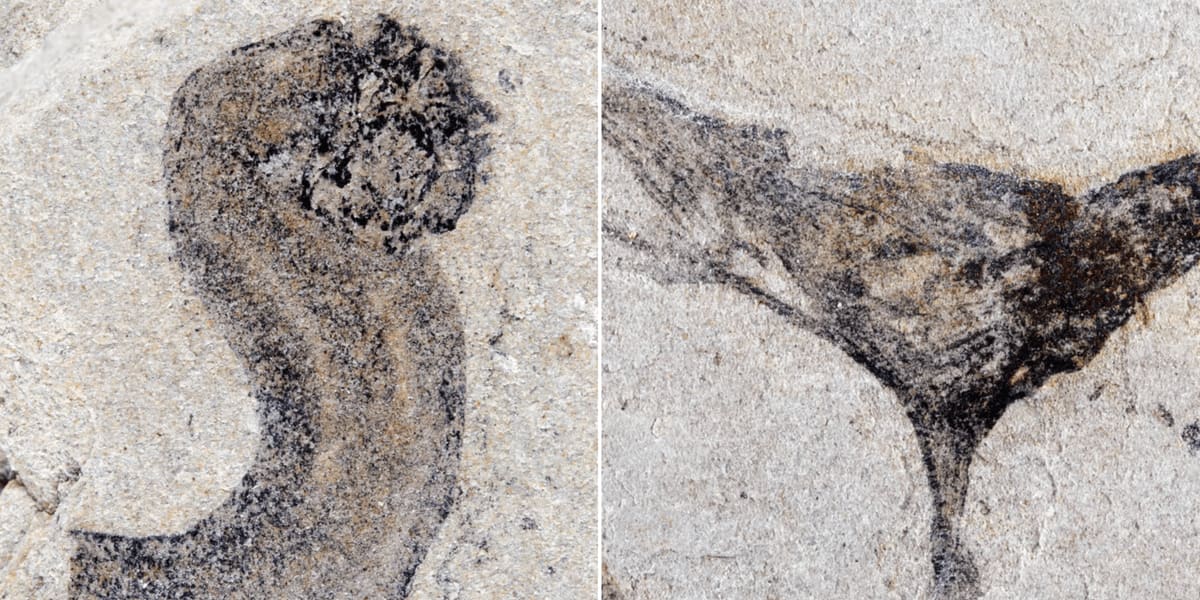
The excavation site spanned just 50 square meters, about the size of a dozen king-size mattresses. Yet this small area yielded an extraordinary variety of creatures: goblet-shaped organisms resembling jellyfish with tiny arm-like appendages, plump sausage-shaped animals without legs, and elongated worms with flat discs that anchored them to the ancient seafloor.
What makes this discovery truly special is the exceptional preservation. The boneless organisms were rapidly buried and compressed between rock layers, creating detailed two-dimensional impressions that captured feeding apparatus, fragile limbs, and even traces of internal organs.
"We found what's been long hoped for, which is a Cambrian-like preservation in the Ediacaran," said Ross Anderson, an associate professor at the University of Oxford and study co-author. "It really is a treasure trove of bilateral fossils, something that we did not have before."
Why This Inspires
The most exciting specimens may represent deuterostomes, the animal group that includes all vertebrates, starfish, and sea urchins. If confirmed, these creatures could be our earliest known ancestors, showing that the building blocks of human evolution existed far earlier than we imagined.
Jo Wolfe, a researcher at Harvard University not involved in the study, called the discovery unusual and significant. "It's blurring the boundaries between what are Ediacaran and Cambrian life-forms," she noted.
This find reminds us how much we still have to learn about our own origins and the incredible journey that led to life as we know it today.
Based on reporting by Google: fossil discovery
This story was written by BrightWire based on verified news reports.
Spread the positivity!
Share this good news with someone who needs it