Ancient Gurukul Schools Offer Lessons for Modern Education
India's traditional Gurukul system taught discipline, character, and respect alongside academics in ways today's schools often overlook. Educators are rediscovering these timeless principles as answers to modern learning challenges.
The ancient Gurukul education system is capturing fresh attention as parents and teachers question what gets lost in today's test-focused classrooms. These traditional Indian schools, where students lived closely with their teachers and learned through daily practice, prioritized character development as much as academic achievement.
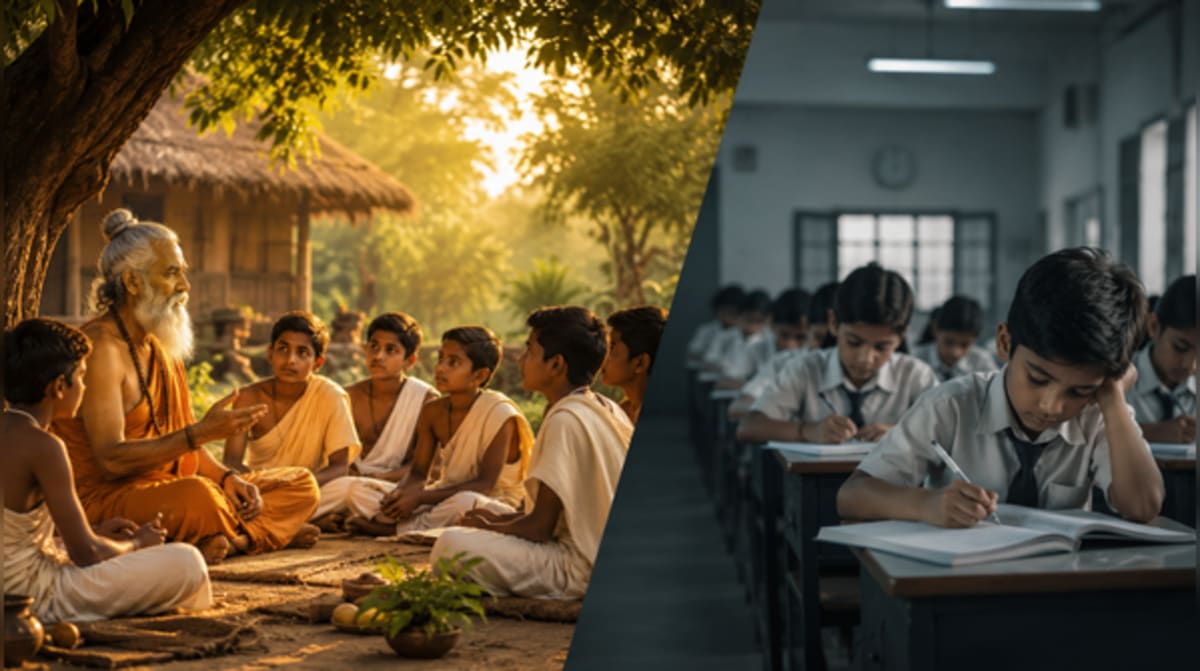
Unlike modern schools that isolate subjects into separate periods, Gurukul education wove learning into everyday life. Students didn't just study concepts in textbooks; they absorbed knowledge through observation, service, and structured routines that made education feel natural rather than artificial.
The system placed discipline at its core, asking students to wake early, follow structure, and embrace simplicity. This wasn't about deprivation but about building the kind of resilience that comfort rarely develops. Children learned that focus, patience, and persistence shape the mind as much as information does.
Respect formed the foundation of every interaction. Students lived in close contact with their guru, creating relationships built on trust, humility, and attentiveness. Teachers weren't just examiners grading performance; they were mentors who knew their students as whole people, not just test scores.
Perhaps most importantly, Gurukul education treated character and knowledge as inseparable. A student could master scriptures or philosophy, but if that learning didn't improve their conduct and awareness, the education was incomplete. The question wasn't just "What did you learn?" but "Who are you becoming?"
The simple, distraction-free environment protected students from constant noise and comparison. Without endless screens and status symbols competing for attention, children had space for reflection and deeper focus. That simplicity created room for genuine growth.
Why This Inspires
This ancient approach challenges our modern assumption that more technology, more testing, and more pressure equals better education. Gurukul schools understood something we're rediscovering: true learning shapes the whole person, not just their ability to perform on exams.
The intimate teacher-student relationships allowed personalized attention that large classrooms struggle to provide. Teachers observed each student continuously, responding to their unique strengths and challenges rather than flattening everyone into grades and rankings.
Today's parents and educators are finding wisdom in these old methods. As children face unprecedented digital distraction and academic pressure, the Gurukul emphasis on discipline, simplicity, and character offers a different path forward.
The lesson isn't about returning to the past but remembering what education can be: a way to build grounded, thoughtful, resilient human beings, not just high-scoring test takers.
More Images



Based on reporting by Times of India - Good News
This story was written by BrightWire based on verified news reports.
Spread the positivity!
Share this good news with someone who needs it