Ancient 'Machine Gun' Found at Pompeii After 2,000 Years
Scientists discovered marks on Pompeii's walls that may prove a legendary ancient repeating weapon actually existed. The mysterious "machine gun" catapult was described 2,300 years ago but never confirmed until now.
Imagine a 2,000-year-old crime scene coming back to life, revealing weapons so advanced they sound like science fiction.
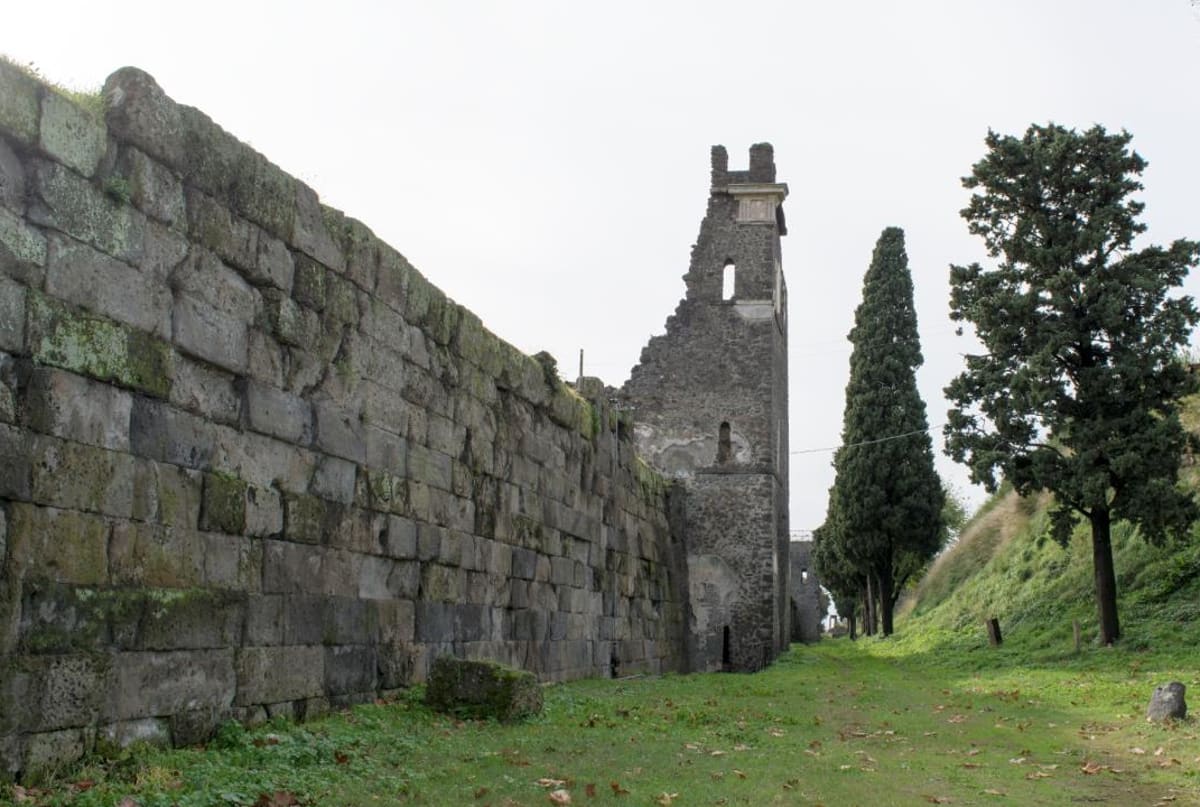
Researchers in Italy just uncovered something extraordinary on the walls of Pompeii: damage patterns that might prove an ancient "machine gun" was real. The marks were perfectly preserved under volcanic ash from Mount Vesuvius in 79 CE, frozen in time like a snapshot of ancient warfare.
The story starts in 89 BCE when Roman commander Lucius Cornelius Sulla laid siege to Pompeii with tens of thousands of troops. His army bombarded the city's fortification walls with catapults and slings until the rebellious town surrendered.
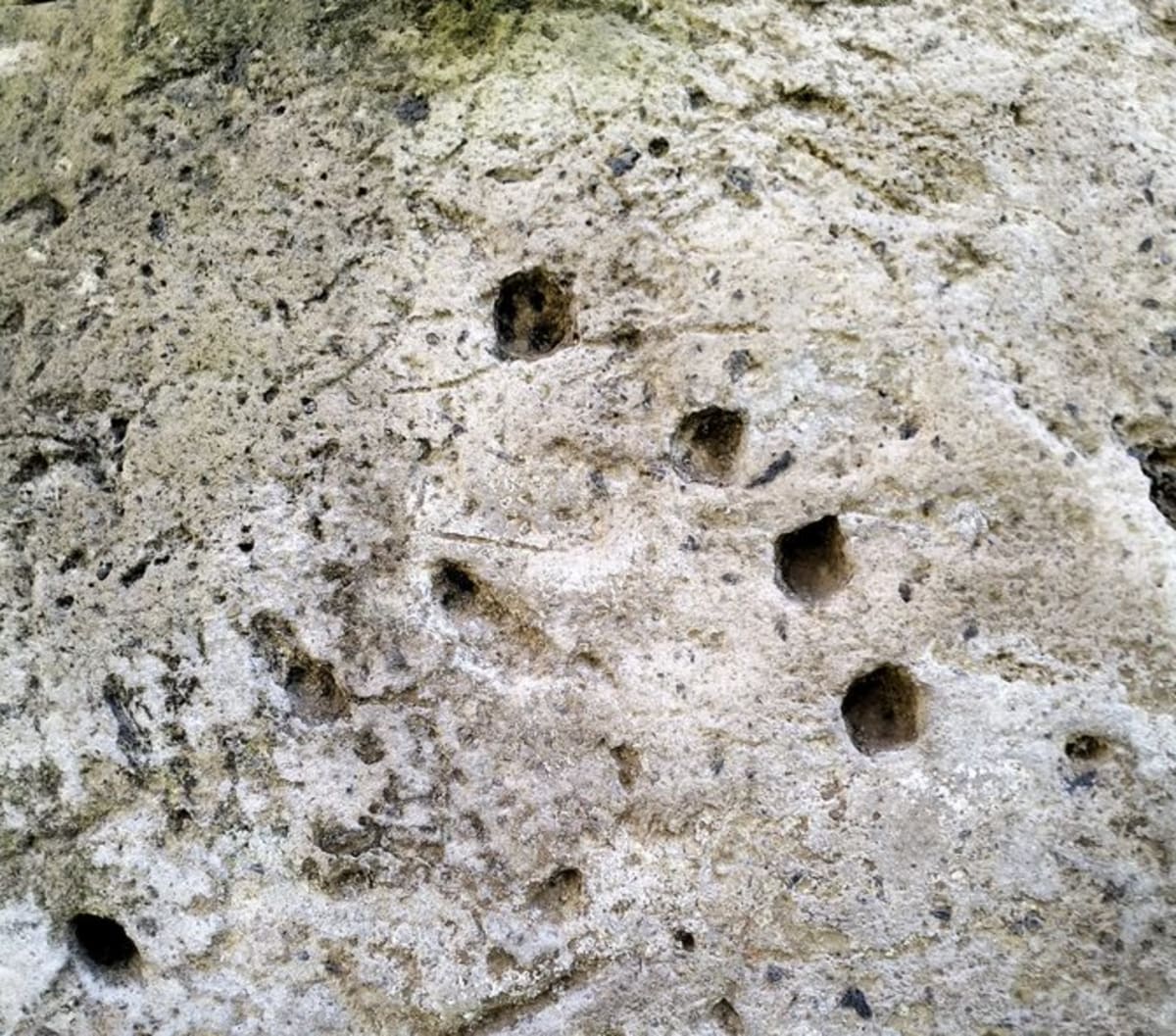
But some of the damage looks different from typical ancient weapons. Clusters of gouges on the northern walls show a fan-like spray pattern, arranged exactly how an ancient Greek engineer said a repeating crossbow would strike.
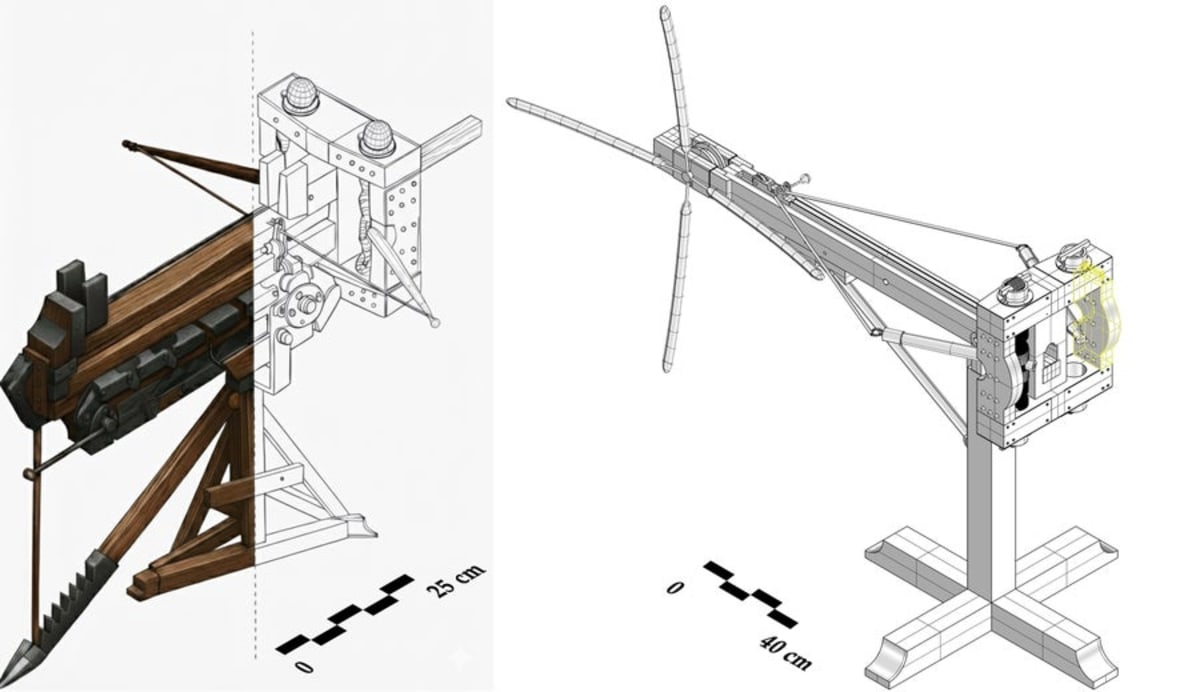
The weapon, called a polybolos, was described in detail by Philo of Byzantium in the third century BCE. He wrote about a giant crossbow equipped with something like a bicycle chain that automatically reloaded iron-tipped darts. Think of it as the ancient world's attempt at rapid fire.
The problem? Nobody had ever found physical evidence it existed. Most historians assumed it was just a theoretical design, too impractical to build.
Dr. Adriana Rossi from the University of Campania Luigi Vanvitelli led the team that analyzed the wall damage using 3D modeling and mathematical calculations. The angles and grooves don't match standard slings or regular catapults. One cluster particularly looks like what you'd see from a machine gun burst.
Why This Inspires
This discovery reminds us that ancient civilizations were far more innovative than we sometimes give them credit for. Engineers 2,300 years ago were designing automatic weapons and solving complex mechanical problems without computers or modern tools.
Even more exciting, the marks survived two millennia of weathering because Mount Vesuvius preserved them under ash. The same eruption that ended Pompeii created a time capsule that's still revealing secrets today.
Some experts think the damage could have come from a regular catapult that kept adjusting its aim. But military historian Michael Taylor notes that if anyone would build a custom repeating catapult, it would be Sulla, who had a known interest in specialized artillery.
The finding opens new questions about ancient technology and what other "theoretical" inventions might have actually been built and used.
After 2,000 years, Pompeii is still teaching us that human ingenuity has always found ways to push boundaries and create the seemingly impossible.
More Images

Based on reporting by Google: scientific discovery
This story was written by BrightWire based on verified news reports.
Spread the positivity!
Share this good news with someone who needs it