Ancient Roman Bottles Reveal 2,000-Year-Old Medical Recipe
Researchers just confirmed that ancient doctors really did use human feces as medicine, exactly as described in texts from 2,000 years ago. The discovery in Roman glass bottles bridges the gap between ancient medical writings and actual practice.
Imagine scraping the inside of a 2,000-year-old bottle and discovering that ancient medical texts weren't exaggerating about their strangest recipes.
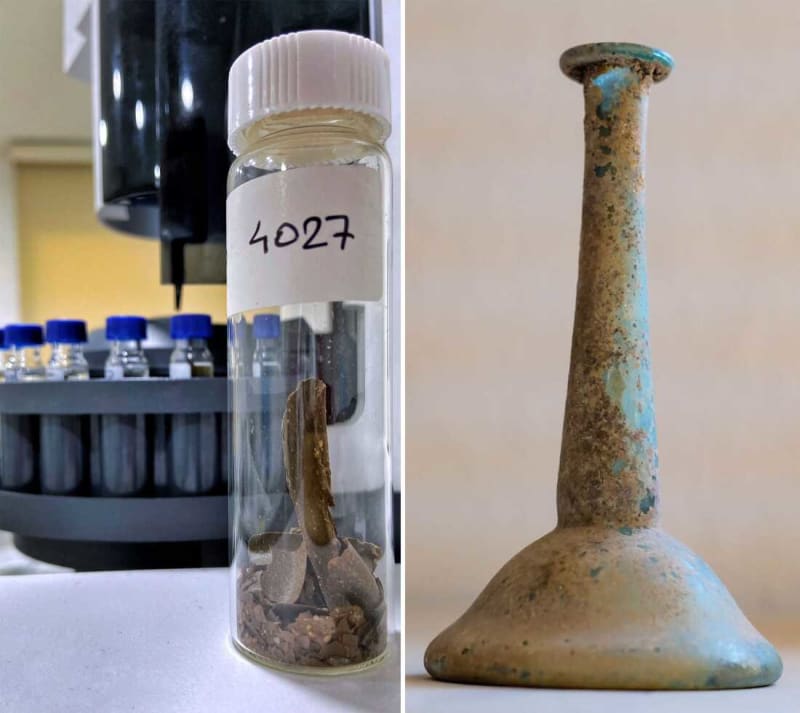
That's exactly what happened when researchers analyzed residue from Roman glass vessels in Turkey. What they thought might be ancient perfume turned out to be human feces mixed with aromatic herbs, perfectly matching a medicinal recipe written by Galen, the famous Greek physician of ancient Rome.
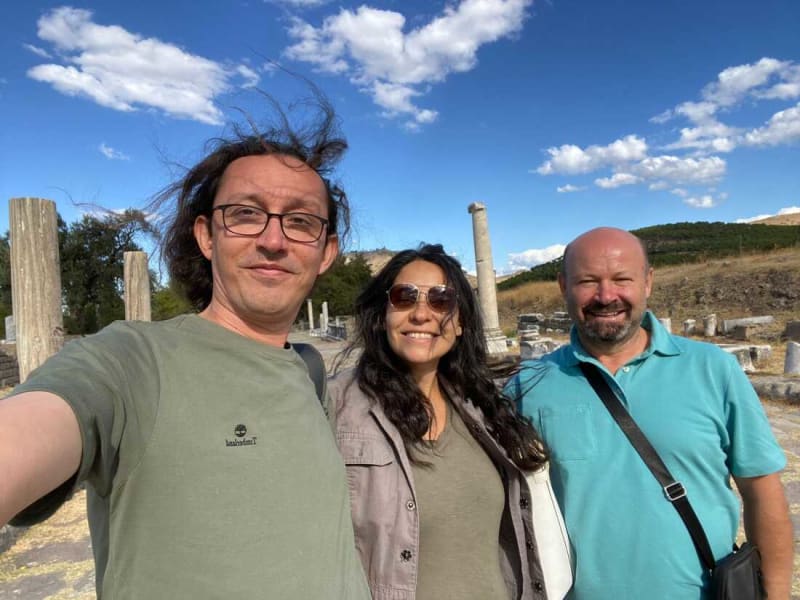
The team traveled to the Bergama Archaeology Museum in western Turkey, escorted by police to access the precious collection. Medical historian Rana Çelebi from Istanbul Medipol University recalls the nervous excitement of handling the delicate vessels. "They were beautiful, and you were touching these thousands-of-years-old vessels," she says.
Out of nine bottles tested, one contained the surprising find. Chemical analysis revealed human feces blended with compounds likely from thyme or oregano, exactly as Galen had instructed for masking the smell of foul medicines.
"This is the first scientific proof which sustains what is written in ancient books," says Maria Perla Colombini, a professor emeritus at the University of Pisa who wasn't involved in the study. Finding these specific molecules after so many centuries is incredibly rare.
Ancient medical texts from Egypt, Greece, Rome, and China all mention using feces from various animals and occasionally humans to treat infections and inflammation. While we don't know how successful these treatments were, the practice wasn't as wild as it sounds.
Why This Inspires
Modern medicine has actually circled back to this ancient wisdom in a surprising way. Today's doctors use fecal transplants to treat severe gut infections caused by Clostridium difficile bacteria, essentially resetting patients' gut microbiomes. The treatment is now sealed in pills or transplanted directly, skipping the aromatic herbs our ancestors relied on.
This discovery transforms ancient medical writings from curious historical footnotes into verified practices. It shows that physicians 2,000 years ago weren't just recording folklore but actual treatments they prepared and administered.
The research team initially planned to recreate the ancient recipe for an educational event where participants could smell and even taste it. "But because now we have fecal matter and oregano, we're not able to do this event," Çelebi says with a laugh.
These delicate glass bottles survived two millennia to tell us something remarkable: the distance between ancient and modern medicine might not be as vast as we think.
More Images

Based on reporting by NPR Science
This story was written by BrightWire based on verified news reports.
Spread the positivity!
Share this good news with someone who needs it