Ancient Star Reveals Why Carbon Built Life Everywhere
Scientists discovered a 10-billion-year-old star still sitting in its birth galaxy, solving a cosmic mystery about how carbon became the building block of all life. The findings explain why this essential element ended up spread throughout the universe.
A star older than almost anything in the cosmos just answered one of science's biggest questions about life itself.
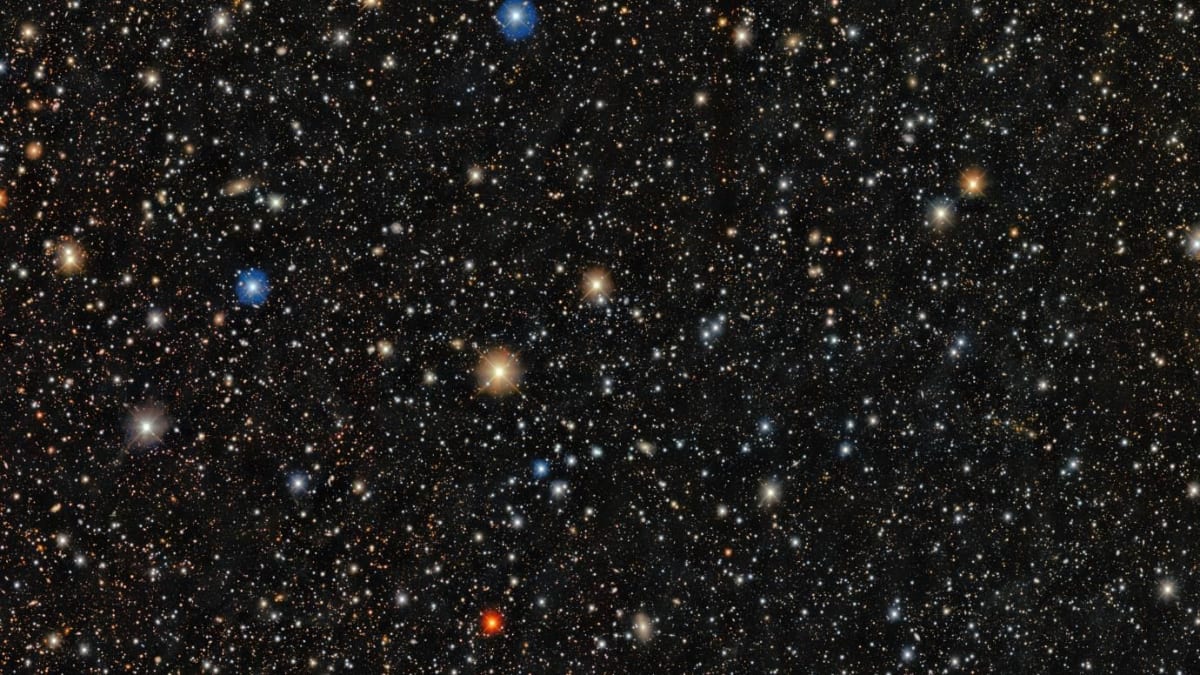
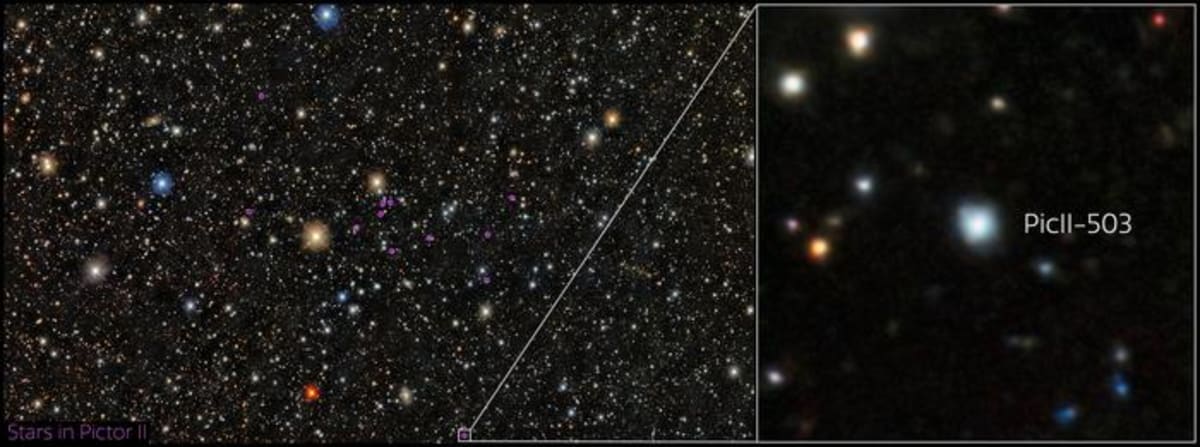
Astronomers spotted PicII-503, a second-generation star born when the universe was still young, sitting exactly where it formed 10 billion years ago inside the dwarf galaxy Pictor II. That's rare. Most ancient stars drift far from their birthplaces, making it nearly impossible to study their original chemistry.
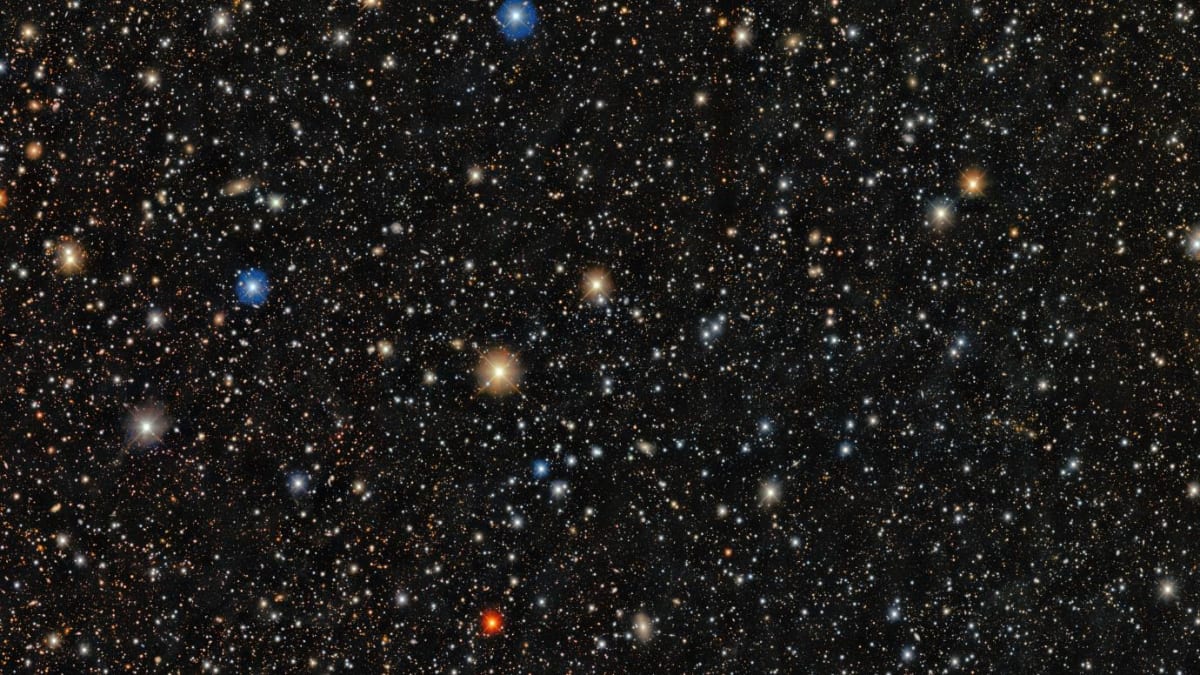
The star sits 150,000 light-years from Earth in the Pictor constellation. Scientists at Chile's Víctor M. Blanco Telescope captured it using the Dark Energy Camera, revealing something stunning about its makeup.
PicII-503 contains almost no iron compared to our sun. It has just 1/40,000th the amount. But what it lacks in iron, it makes up for in carbon, with a carbon-to-iron ratio 1,500 times higher than the sun's.
That extreme ratio gave researchers their breakthrough. Because PicII-503 never left home, they could act as "stellar archeologists" and test theories about why ancient stars are so carbon-rich.
The answer reshapes our understanding of how life's essential ingredient spread everywhere. During a star's violent supernova death, lightweight carbon in the outer shell gets flung much farther into space than heavier elements. Iron and other metals stay closer to the explosion site.
This cosmic catapult effect explains why carbon ended up distributed so widely across the universe. Without that perfect spread, carbon couldn't have become the foundation for DNA, proteins, and every living thing we know.
Why This Inspires
This discovery connects the deaths of ancient stars to the existence of life billions of years later. Every carbon atom in your body once lived inside a star that exploded, scattering its contents across space. Those atoms drifted through galaxies for eons before gathering on Earth and becoming part of you.
The finding also shows how one perfectly preserved star can unlock secrets hidden for 10 billion years. PicII-503 stayed put while the universe changed around it, keeping its original story intact for scientists to read today.
Population II stars like PicII-503 formed when the cosmos had almost nothing but hydrogen and helium. They represent the second wave of stars ever born, making them living fossils from cosmic childhood.
The research confirms that supernovas don't just destroy. They're cosmic gardeners, planting the seeds of future life by spreading carbon far and wide with perfect precision.
More Images
Based on reporting by Live Science
This story was written by BrightWire based on verified news reports.
Spread the positivity!
Share this good news with someone who needs it