Ancient Tamil Name Found in Egypt's Valley of the Kings
Swiss and Indian researchers discovered a Tamil name inscribed in Egypt's Valley of the Kings, suggesting ancient civilizations were far more connected than we thought. The finding points to a vibrant network of trade and cultural exchange spanning Africa, the Mediterranean, and India thousands of years ago.
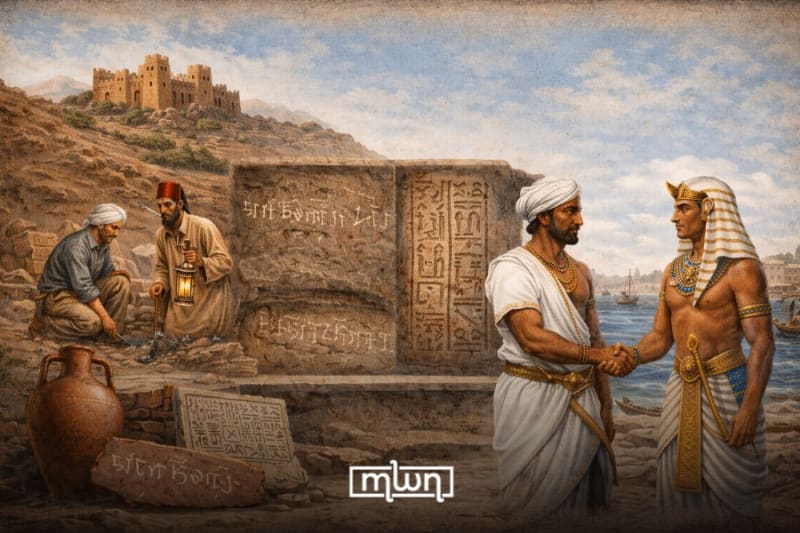
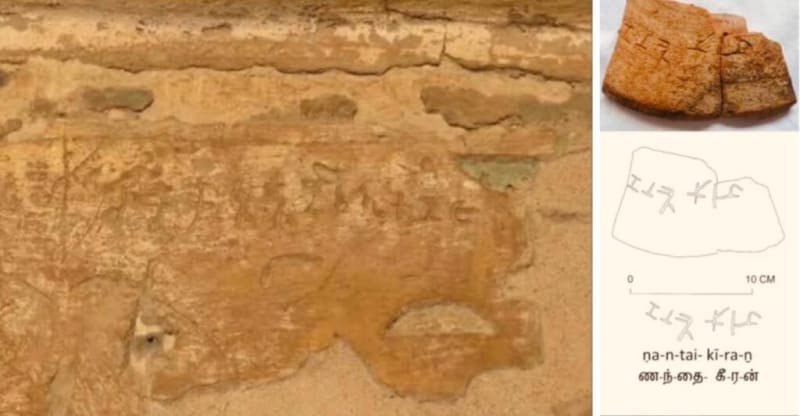
Researchers just uncovered evidence that ancient civilizations across continents were sharing ideas, goods, and culture millennia before modern globalization. Swiss professors Ingo Strauch and Charlotte Schubert, working with Indian archaeologist Dr. Ramakrishnan, found the Tamil name "Sigai Kottran" inscribed in Egypt's Valley of the Kings.
While the discovery awaits peer review and verification, it opens an exciting window into how connected our ancestors really were. The Indian Ocean wasn't a barrier separating cultures but a bustling highway bringing them together.
Ancient texts like the Periplus of the Erythraean Sea describe sophisticated trade networks linking Roman Egypt with India's western coast. Archaeologists have found black peppercorns from India in first-century Egyptian ports, while Roman gold and silver coins turned up across Tamil Nadu.
The Tamil kingdoms of ancient South India possessed impressive naval capabilities. Sangam literature from 300 BCE to 300 CE describes overseas trade, foreign merchants, and thriving port cities like Kaveripattinam.
These weren't just isolated exchanges. Traders carried more than spices and coins across the waves—they shared languages, religious ideas, artistic styles, and technology.
Egypt served as a central hub connecting three continents during Ptolemaic and Roman times. But the network extended further west along North Africa's coastline, reaching places like Morocco through overland and maritime routes.
Morocco sits at a fascinating crossroads of Africa, Europe, and the Atlantic. From Phoenician settlements to Roman cities like Volubilis, the region has always welcomed diverse influences and cultures.
The Ripple Effect
This discovery challenges how we think about ancient history. Modern education often treats civilizations as isolated silos—Egypt separate from India, North Africa disconnected from the Indian Ocean.
But emerging research tells a different story. Ancient people were far more mobile, curious, and connected than we assumed. Ports defined their world, not borders.
The finding invites fresh collaboration between Moroccan, African, European, and South Asian scholars. Together, they could uncover overlooked dimensions of early trade networks that shaped our shared human story.
What seemed like vast oceanic separation on modern maps actually functioned as dynamic corridors of exchange. Our ancestors built bridges across continents long before we thought possible.
More Images
Based on reporting by Google: archaeological discovery
This story was written by BrightWire based on verified news reports.
Spread the positivity!
Share this good news with someone who needs it