Ancient Welsh Cemetery Reveals Extraordinary Female Religious Community
Archaeological excavation near Cardiff reveals a mysterious medieval female religious community, challenging historical understanding of women's roles in 6th-century society. Intricate artifacts and burial patterns suggest a complex, spiritually significant settlement.
Archaeologists have uncovered a fascinating medieval mystery in the grounds of Fonmon Castle near Cardiff, revealing a potential early Christian settlement that challenges our understanding of women's roles in 6th and 7th-century society.
Over four years of meticulous excavation, researchers from Cardiff University have unearthed 58 skeletons in a burial ground where an astonishing 90% of remains belong to women - a discovery that has sparked intense academic curiosity. Dr. Andy Seaman, leading the archaeological dig, believes they may have found evidence of an enclosed religious community that existed during a poorly understood historical period.
The cemetery's layout offers tantalizing clues about its inhabitants. At the site's center, researchers discovered the potential outline of a small building - possibly a shrine or chapel - with graves densely clustered around it. Archaeologist Tudur Davies noted that some burial spots were so desirable that multiple individuals were repeatedly interred in the same location, suggesting a profound spiritual significance to the site.
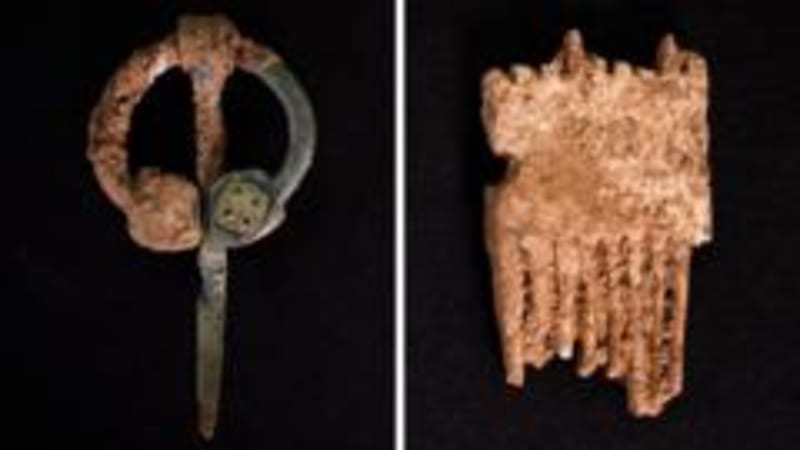
Artifacts found among the graves paint a rich picture of these women's lives. Conservator Clare Emerson carefully restored intricate items including an ornate copper brooch potentially gilded with gold, green-enameled decorative ends, a bone pin with detailed patterning, and an antler comb. Exquisite multicolored glass beads, each merely 3mm wide, hint at the community's sophisticated craftsmanship and aesthetic sensibilities.
Domestic items further illuminate the settlement's complexity. Quern stones for grinding flour, pottery, and glassware indicate this was not merely a burial ground, but a thriving living community. While most burials demonstrated careful preparation, two women were mysteriously discarded in a ditch - one with hands and feet bound - raising provocative questions about social dynamics and potential punishment rituals.
The presence of a few male remains and children adds additional intrigue. Researchers are now investigating whether these individuals were family members, visitors, or held special roles within this predominantly female community. Dr. Seaman emphasizes the significance of their work, noting that this period represents a critical gap in historical understanding: 'We don't really understand early church sites... how they functioned, what they looked like, how they were organized.'
This archaeological investigation represents more than a scientific endeavor; it's a window into a forgotten world where women potentially played central spiritual and communal roles. As research continues, these remarkable women of medieval Wales are gradually emerging from centuries of historical silence, offering profound insights into early medieval social structures and religious practices.
Based on reporting by BBC News
This story was written by BrightWire based on verified news reports.
Spread the positivity! 🌟
Share this good news with someone who needs it
More Good News
🚀 InnovationMedieval Women's Cemetery Reveals Surprising Secrets of Early Religious Life
🚀 InnovationWelsh Cemetery Reveals Stunning Secrets of Medieval Women's Community
 🚀 Innovation