Anglicans Walk Peace Bridge in Conflict-Scarred Derry
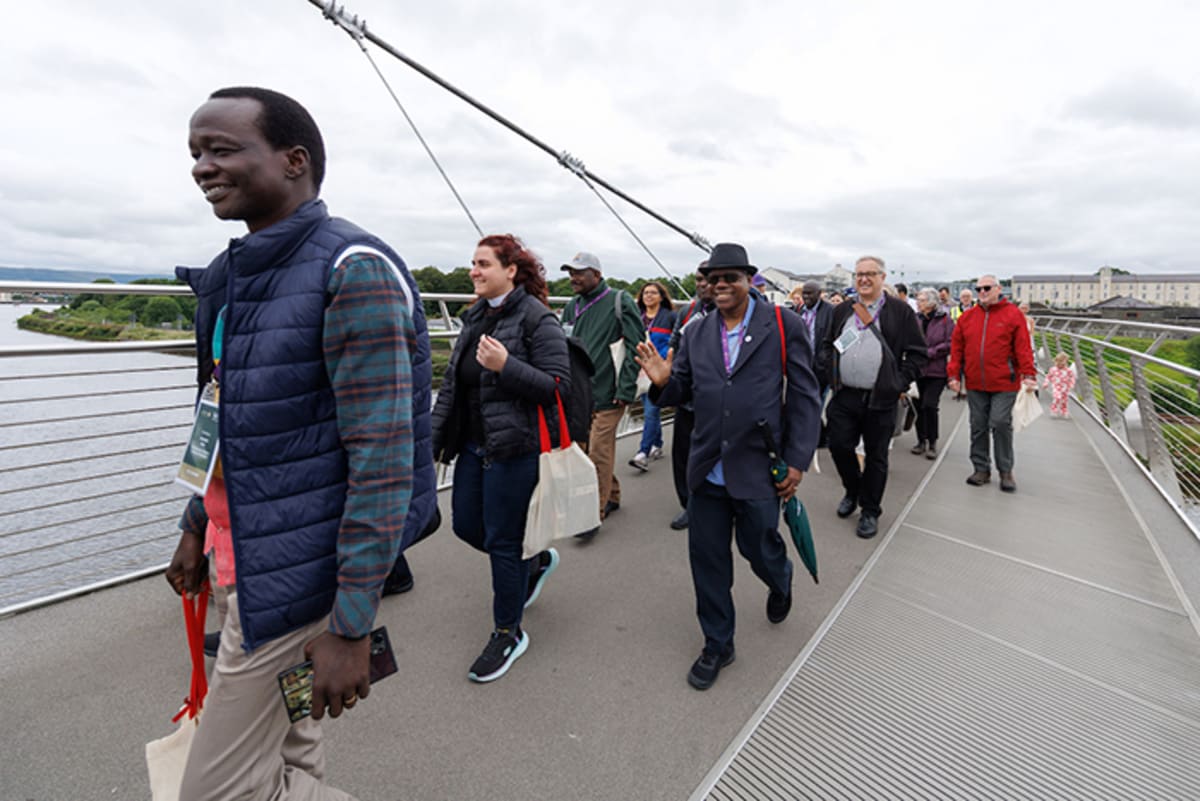
More than 100 Anglican leaders from 38 countries walked through Northern Ireland's historic Derry/Londonderry, crossing the Peace Bridge as a symbol of hope for conflict zones worldwide. The pilgrimage, part of a global church gathering, brought lessons from Northern Ireland's peace process to leaders serving communities torn by violence in South Sudan, Myanmar, and the Middle East. #
When Anglican leaders from conflict zones around the world needed a lesson in peacebuilding, they came to a city that knows the cost of division and the power of bridges.
More than 100 bishops, clergy, and lay leaders from 38 countries walked through Derry/Londonderry on July 1 as part of the Anglican Consultative Council's 19th meeting. Among them were Archbishop of Canterbury Sarah Mullally and Archbishop Hosam Naoum from Jerusalem, who recently completed their own peace pilgrimage in the Holy Land.
The journey began at Ebrington Square, a former British military complex that was closed in 2003 and transformed into a vibrant public space. Bishop Andrew Forster of Derry and Raphoe, who organized the pilgrimage, set the tone for the day with a reminder that resonated across borders: "Peace is always a fragile thing that must be handled with care."
The group then crossed the Peace Bridge, a 235-meter footbridge that opened in 2011 and links the largely Nationalist Cityside with the largely Loyalist Waterside. As they walked over the River Foyle, Bishop Andrew encouraged them to "think about how we can build bridges in our own context."
Those words carried weight for delegates serving communities in South Sudan, Sudan, Myanmar, and the Democratic Republic of Congo. The pilgrimage offered them a chance to see how one divided city found its way toward peace after decades of sectarian violence known as the Troubles.
At the neo-Gothic Guildhall, built in the 1880s and bombed during the conflict, the pilgrims received greetings from local leaders. The building itself tells a story of resilience. It later served as the seat of the Bloody Sunday Inquiry, which led to the UK government's formal acknowledgement that the 1972 killing of civilians was unjustified.
The walk continued along the ancient 17th-century city walls to St Augustine's Church, passing sites that witnessed some of the Troubles' most intense violence. For the international delegates, these weren't just historical landmarks but living proof that reconciliation is possible.
The Ripple Effect
The pilgrimage's impact extends far beyond one day in Northern Ireland. Church leaders returned to their communities with practical examples of how divided societies can heal. The Peace Bridge has become one of Northern Ireland's most powerful symbols of reconciliation, showing that physical connections between communities can help rebuild broken relationships.
For a global church serving some of the world's most conflict-affected regions, Derry's transformation from military occupation to civic celebration offers a blueprint. The city's journey proves that spaces once defined by violence can become gathering places for hope.
Bishop Andrew's invitation to "journey further into the heart of God, journey further into the heart of other people's experiences" captured what makes this pilgrimage more than symbolic. It's a reminder that peace requires understanding the pain of those on the other side of every bridge.
#
Based on reporting by Google News - Reconciliation
This story was written by BrightWire based on verified news reports.
Spread the positivity!
Share this good news with someone who needs it