Animal Testing Falls 36% as Lab Alternatives Take Off
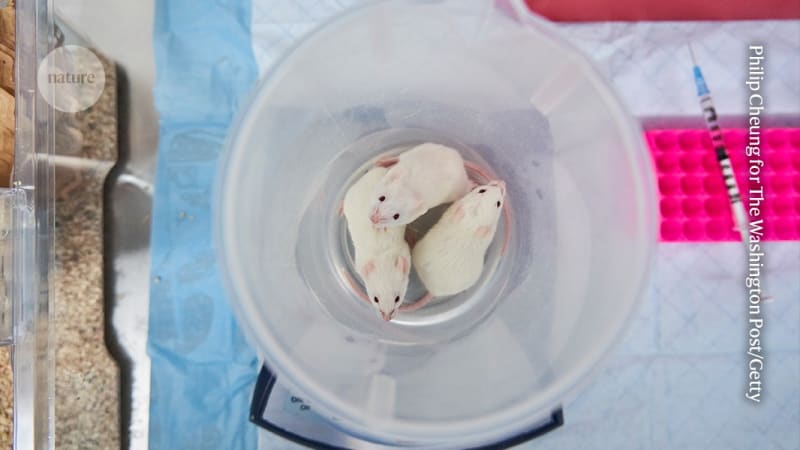
Governments worldwide are racing to phase out animal testing as innovative alternatives like organs-on-chips prove they can predict human drug responses better than mice. The UK just slashed procedures from 4.1 million to 2.6 million in nine years.
After decades of ethical debates, science is finally finding a better way to test medicines without harming animals.
The UK government announced plans last November to eliminate animal testing for skin irritation this year, with dog studies reduced by 2030. Their long-term vision? A world where using animals in science happens only in exceptional circumstances.
The United States is moving just as fast. The FDA announced in April that animal studies will become "the exception rather than the norm" for drug safety testing within three to five years. The National Institutes of Health revealed similar plans to dramatically reduce animal research in studies they fund.
The shift is already working. UK animal procedures dropped from 4.14 million in 2015 to just 2.64 million in 2024. That's a 36% decrease in under a decade.
What changed? New technologies are proving they can do better than animal testing ever could.
Scientists now have organs-on-chips, 3D tissue cultures called organoids, and artificial intelligence models that mimic human biology more accurately than mice or rats. Between 2006 and 2022, biomedical studies using only these alternatives jumped from 25,000 to 100,000 publications. China is so confident in these methods they invested $382 million in 2024 to build infrastructure dedicated to developing them.
The Bright Side
These alternatives aren't just more humane. They're actually more effective at predicting how drugs will work in humans.
Consider sepsis, a severe infection reaction. Researchers developed over 100 therapies that worked beautifully in mice but failed completely in human trials. Why? Human immune systems work differently than rodent systems, and uniform lab mice can't represent the diversity of human patients.
Stanford cardiologist Joseph Wu pioneered "clinical trials in a dish" using stem cells from actual patients with heart conditions. His team grew cells from family members carrying a gene that causes heart failure, then tested drugs on those cells. They pinpointed an effective treatment without using a single animal.
Donald Ingber, a bioengineer at the Wyss Institute who cofounded a biotechnology company focused on organs-on-chips, says the shift is "long overdue." These human-based models represent real people, not approximations based on rodents.
The alternatives still face hurdles. Some biological systems remain too complex to study without animals, and many new methods need validation before regulators fully trust them. But the momentum is undeniable.
The European Commission plans to publish a roadmap this year to end animal testing in chemical safety assessments entirely. What once seemed impossible is becoming reality, one lab at a time.
Science is proving compassion and progress can go hand in hand.
More Images


Based on reporting by Nature News
This story was written by BrightWire based on verified news reports.
Spread the positivity!
Share this good news with someone who needs it