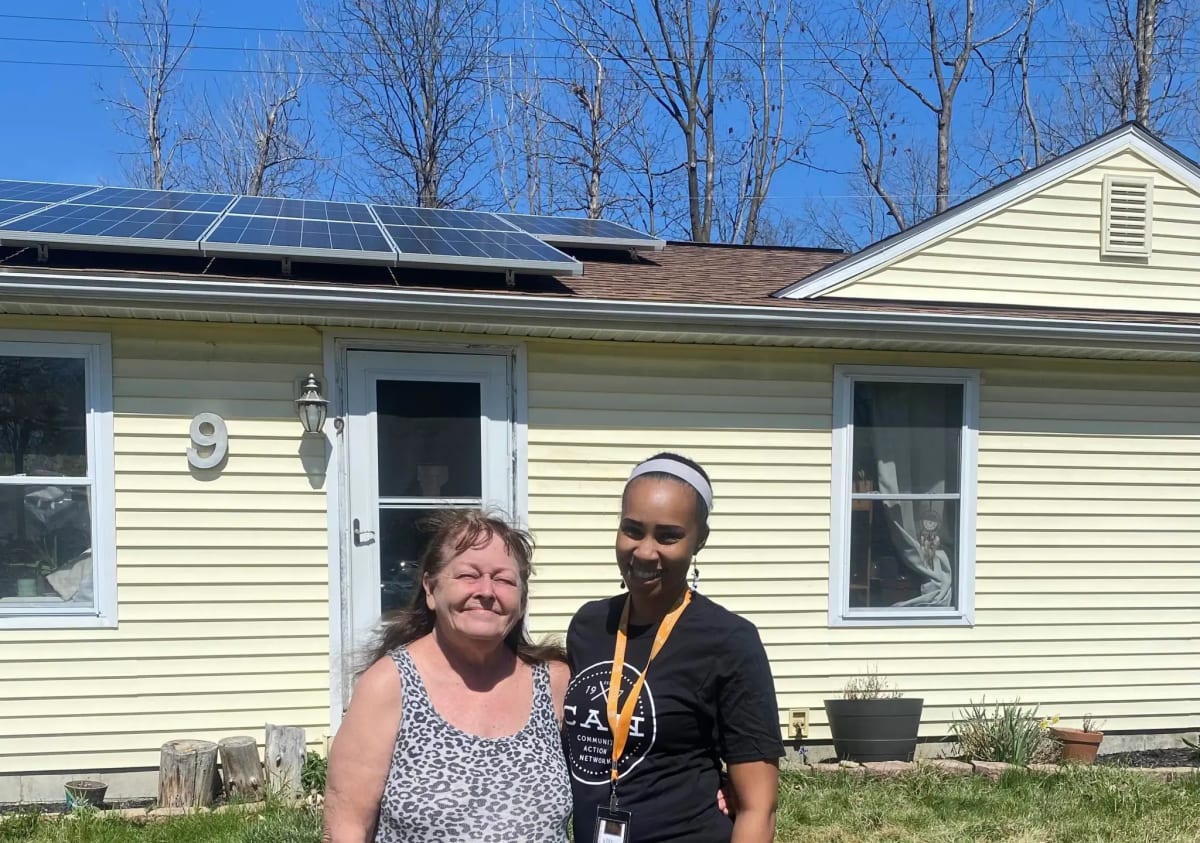
Ann Arbor Launches First City-Owned Green Power Utility
Ann Arbor, Michigan just became the first U.S. city to create its own sustainable energy utility that works alongside the regular power grid. Nearly 80% of voters approved the plan, and over 1,500 residents have already signed up for free solar panels and battery systems.
When Krystal Steward knocked on her neighbors' doors in 2021 offering free home energy upgrades, most people thought it sounded too good to be true. But the longtime social worker kept going, and soon her Ann Arbor neighborhood became the testing ground for something no American city had ever tried.
Ann Arbor just launched the country's first Sustainable Energy Utility, a city-run power program that works right alongside the traditional electric grid. Residents who opt in get solar panels, battery backup systems, and other clean energy equipment installed on their homes completely free, with the city covering all costs and maintenance.
The program starts this spring in the Bryant neighborhood, a community of about 260 homes where many families struggle with high energy bills. A quarter of residents there pay more than a third of their income just on utilities, making it one of Ann Arbor's only areas of unsubsidized affordable housing.
Here's how it works: participating homes stay connected to the regular grid but draw power from their new solar systems first. Any extra energy they generate can be sold back. Residents get two monthly bills, one from the city utility and one from the regular provider, but the total costs less than what they currently pay.
The best part? Renters can participate too, something that rarely happens with green energy programs. The city owns all the equipment, so tenants don't need permission from landlords or upfront cash to benefit from clean power.
Nearly 80% of Ann Arbor voters approved the plan in November 2024, giving city officials a clear mandate to move forward. Executive Director Shoshannah Lenski said the response has exceeded expectations, with over 1,500 people already expressing interest across the city.
The program will serve 100 to 150 customers in Bryant this year, expand to 1,000 next year, and then grow by several thousand annually. The city can also build microgrids, like solar panels on schools that power classrooms during the day and nearby homes at night.
The Ripple Effect
Other cities are watching closely. Ann Arbor's model shows local governments don't have to wait for private utilities or federal programs to bring clean energy to their communities. They can take control of their energy future while lowering costs for residents who need it most.
Even DTE Energy, the private utility currently serving Ann Arbor, supports the program. With power demands rising nationwide, having cities help manage clean energy needs relieves pressure on traditional grids while speeding up the transition away from fossil fuels.
Derrick Miller, who leads the nonprofit that helped launch the program, remembers when the idea seemed impossible. "When we started talking about decarbonizing the neighborhood four years ago, it felt outlandish," he said. "Now, it doesn't feel like anyone can stop us."
Ann Arbor just proved that fighting climate change and cutting energy bills can happen at the same time, one neighborhood at a time.
More Images




Based on reporting by Google News - Clean Energy
This story was written by BrightWire based on verified news reports.
Spread the positivity!
Share this good news with someone who needs it